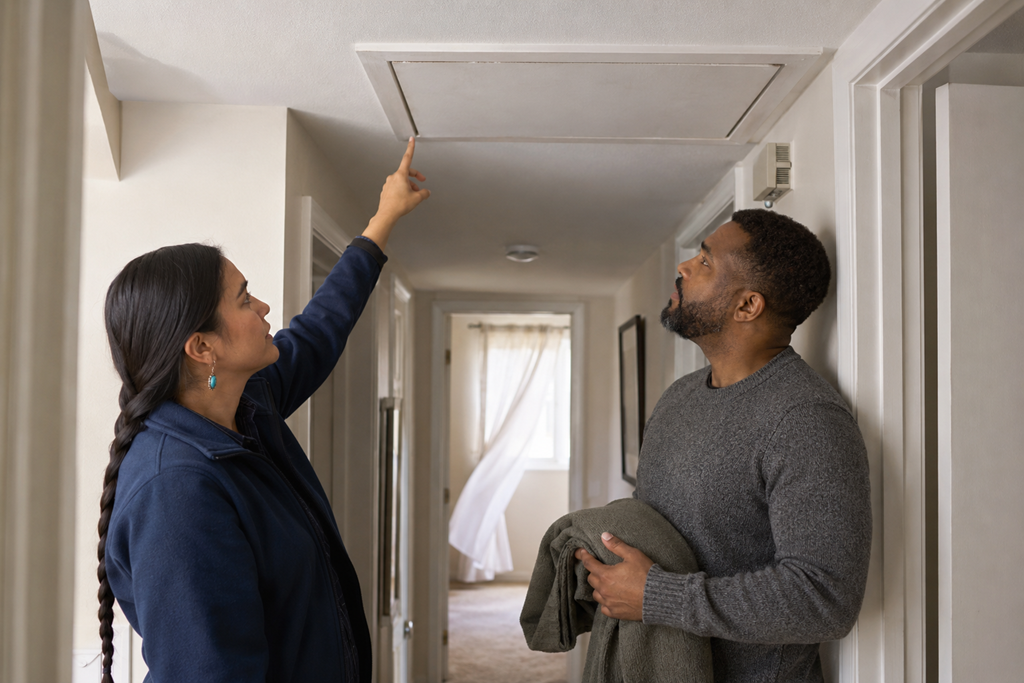
Your home may need better insulation if certain rooms are consistently harder to keep comfortable, your heating or cooling seems to run longer than expected, or drafts and temperature swings show up in the same places again and again. For Sacramento-area homeowners, the question is usually not whether insulation exists somewhere in the house, but whether it is still doing enough to support everyday comfort, energy use, and reasonable expectations before calling a local pro.
This can be confusing because insulation problems do not always look dramatic. A home may not have visible damage, obvious gaps, or a single moment where something clearly fails. Instead, the clues often show up as repeated patterns: one bedroom that never feels right, a hallway that changes temperature quickly, a ceiling that feels warmer than expected, or a home that seems to lose comfort shortly after the system turns off.
Better Insulation Is Usually About Patterns, Not One Clue
A single uncomfortable day does not automatically mean your home has an insulation problem. Sacramento-area homes deal with heat, sun exposure, cool mornings, seasonal rain, and different construction styles. Some rooms naturally feel different based on window placement, shade, ceiling height, or how the home is used.
The more useful question is whether the same comfort issue keeps repeating under normal conditions.
If one room is always harder to cool, or if the upstairs area feels noticeably different from the rest of the home, that pattern may be worth discussing during an insulation estimate or home energy-related evaluation. The same is true if your heating or cooling system seems to work hard, but the comfort does not last very long.
Insulation is not the only possible cause, but it is one of the common areas a qualified professional may consider when comfort problems are persistent.
Uneven Rooms Can Be An Early Signal
Many homeowners first suspect insulation when one room feels noticeably different from nearby areas. A bedroom may feel hot in the afternoon, a home office may feel chilly in the morning, or a nursery may be harder to keep comfortable than the rest of the house.
Uneven comfort does not prove that insulation is the issue. Windows, ducts, air sealing, attic conditions, sun exposure, and HVAC performance can all play a role. But uneven rooms are worth paying attention to because they help describe the problem more clearly when speaking with a local insulation professional.
Instead of saying, “The house is uncomfortable,” it is more helpful to notice where the problem happens, when it happens, and whether it improves or returns quickly. That gives a provider a clearer starting point and may help avoid vague estimates.
Drafts And Temperature Swings May Point To Gaps In The Home Envelope
Drafts are another clue that the home may not be holding conditioned air as well as it should. Some drafts are obvious, such as air movement near doors, windows, attic access points, or older wall openings. Others are subtle and show up as a room that feels hard to stabilize even when the thermostat setting looks reasonable.
Insulation works best as part of the broader home envelope. That means the issue may not be insulation alone. Air movement, small gaps, older materials, or disconnected areas of the home can all affect comfort.
This is why a good conversation with a local pro should not only be about adding more insulation. It should also include where comfort is being lost, what areas are accessible for evaluation, and whether the provider sees signs of air leakage, moisture concerns, or other factors that could affect the recommendation.
Your HVAC System Can Offer Clues, But It Does Not Tell The Whole Story
If your heating or cooling system seems to run often, that can be frustrating. Many homeowners naturally wonder whether the system is too small, too old, or not working properly. Sometimes HVAC performance is the main issue. Other times, the system is working against a home that is not holding temperature well.
Better insulation may help a home retain comfort longer, but it should not be treated as a guaranteed fix for every high bill or comfort complaint. The better way to think about it is this: insulation may be one part of the explanation when comfort disappears quickly or when rooms are difficult to keep consistent.
Before making assumptions, it can help to describe what you are noticing in plain terms. For example, does the system run often during hotter parts of the day? Does one room fall behind while others feel fine? Does the home feel comfortable briefly, then change quickly after the system shuts off?
Those details can help shape a more useful conversation.
Older Homes, Additions, And Remodels Can Create Mixed Conditions
Some Sacramento-area properties have been updated in stages. A home may have an older original structure, a later addition, changed windows, remodeled rooms, or attic areas that were handled differently over time. That can create mixed comfort conditions inside the same property.
One part of the home may feel reasonably comfortable while another area feels harder to manage. This does not always mean something was done incorrectly. It may simply mean different parts of the home were built or improved under different conditions.
This is a good reason not to assume that the whole house needs the same solution. A qualified insulation provider may need to understand the layout, age of different areas, attic access, crawlspace conditions, wall cavities, and prior upgrades before giving a useful recommendation.
Moisture, Odors, Or Damage Should Change The Conversation
Comfort is one reason to ask about insulation, but it is not the only one. If insulation is connected to moisture, stains, musty odors, pest activity, or visible damage, the conversation should be handled carefully.
In those situations, simply adding insulation may not be the right first step. A professional may need to understand whether there is a roof, plumbing, ventilation, drainage, pest, or air movement issue that should be addressed before insulation work makes sense.
This is where a homeowner should be cautious about quick answers. If a provider recommends new insulation without asking about moisture, stains, odors, prior leaks, or access conditions, it may be worth asking more questions before moving forward.
Questions Worth Asking Before Scheduling Insulation Work
When insulation seems like a possibility, the best next step is not always to request the fastest quote. It is often better to prepare a few clear questions so the estimate is based on the actual problem you are trying to solve.
Helpful questions may include:
- Which areas of the home do you need to evaluate before recommending insulation?
- Could drafts, air leaks, ventilation, or duct issues be part of what I am noticing?
- Are there signs that moisture, pests, or prior damage should be addressed first?
- Will the recommendation focus on the whole home or specific problem areas?
- How will you explain the difference between adding insulation and solving the comfort issue?
These questions do not require you to know technical terms. They simply help keep the conversation connected to the lived experience inside the home.
The Biggest Misunderstanding Is Expecting One Simple Answer
Insulation decisions can feel unclear because homeowners often want a direct yes-or-no answer: “Do I need more insulation or not?” In real homes, the answer may be more layered.
A room can feel uncomfortable because of insulation, air movement, window exposure, duct design, attic conditions, or several of those factors together. That does not mean the situation is hopeless. It just means the estimate should explain the reasoning instead of jumping straight to a product recommendation.
A useful insulation conversation should connect the provider’s recommendation to the problems you actually notice. If the explanation feels too broad, too rushed, or too disconnected from your rooms and comfort patterns, it is reasonable to slow down and ask for more detail.
A Better Starting Point For Local Insulation Decisions
Your home may need better insulation when comfort problems show up repeatedly, rooms feel uneven, drafts are noticeable, or heating and cooling do not seem to hold for long. But those clues are starting points, not final answers.
For Sacramento-area homeowners, the practical goal is to describe the pattern clearly, understand what else could be contributing, and ask a local insulation professional to explain the recommendation in everyday terms. That approach can help you compare options more thoughtfully before hiring, scheduling work, or committing to a larger home improvement decision.