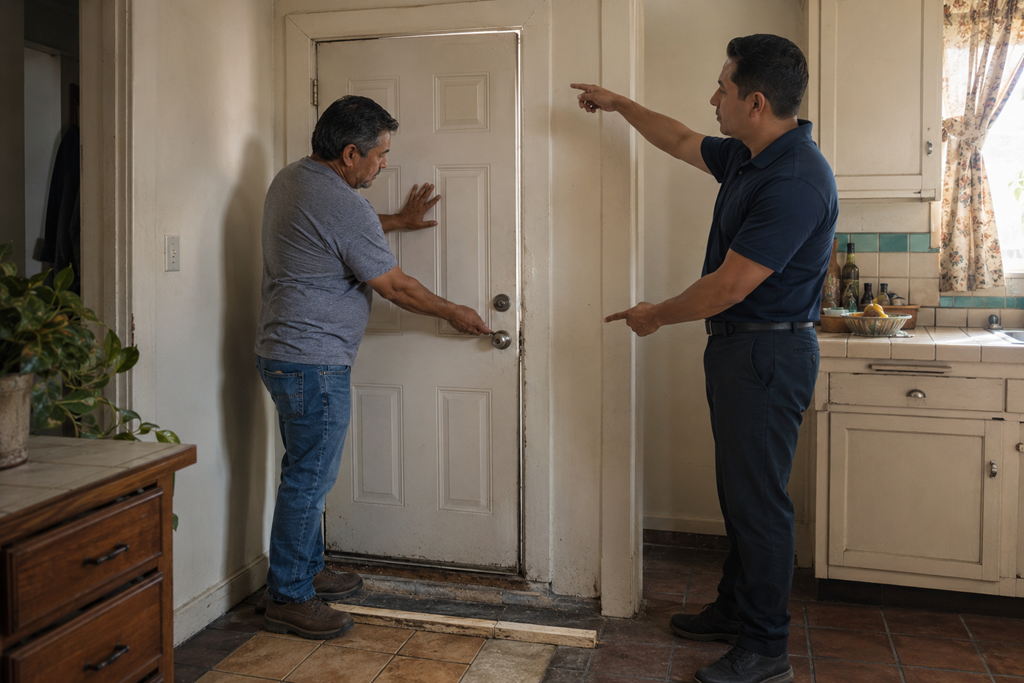
Replacing a door in an older home is rarely just a matter of choosing a new slab and matching hardware. The condition of the frame, threshold, surrounding trim, wall opening, and earlier repairs can all affect what kind of replacement will fit and perform properly. The goal is not to erase the home’s age, but to understand what the existing opening can support before deciding how much work is truly needed.
For Sacramento-area homeowners, this can make door replacement feel less straightforward than expected. A door may look worn but still sit inside a sound opening. Another door may appear acceptable while rubbing, leaking air, shifting near the lock, or revealing problems around the frame.
The most useful starting point is to separate the visible door from the larger opening around it.
An Older Door Is Only One Part of the Decision
A residential doorway is a connected assembly. The door panel, hinges, lock hardware, frame, weatherstripping, threshold, trim, and surrounding wall all contribute to how the entry operates.
In a newer, square opening, replacing the door may be relatively predictable. Older homes can be different because the opening may have changed gradually or been altered during previous projects.
That does not automatically mean the home has a serious structural problem. It may simply mean that a standard replacement should not be selected until the opening has been evaluated.
Common conditions include:
- A frame that is no longer perfectly square
- Several layers of paint or older trim
- A threshold that has been repaired or raised
- Hardware installed in more than one previous location
- An opening built to dimensions that are uncommon today
- Patches from earlier door, siding, flooring, or remodeling work
The important question is not simply, “How old is the door?” It is, “What is happening throughout the opening, and what replacement approach fits that condition?”
A Worn Appearance Does Not Always Mean a Full Replacement
Older doors often show their age through faded finishes, scratches, outdated hardware, small dents, or multiple coats of paint. These visible signs may affect appearance without proving that the entire door system has failed.
A solid door that opens smoothly, closes evenly, locks correctly, and remains well aligned may present a different decision from a door that drags across the floor or leaves uneven gaps around the frame.
This distinction matters because homeowners can otherwise be pushed toward one of two assumptions:
The first is that every old-looking door needs complete replacement.
The second is that a door should be kept simply because it is original to the home.
Neither assumption considers how the door is actually performing.
A qualified door professional should be able to explain which conditions are cosmetic, which involve replaceable components, and which suggest that the frame or complete opening should be included in the project.
Small Operating Problems Can Point to Different Causes
A door that sticks or fails to latch properly does not identify its own cause.
The issue could involve the hinges, hardware, swelling, wear, frame alignment, threshold, or movement in the surrounding opening. More than one condition may be present at the same time.
For example, adjusting a strike plate may help a latch line up. However, that adjustment would not correct a noticeably uneven frame or a threshold that no longer supports a consistent seal.
Likewise, replacing the door panel alone may improve appearance without resolving air gaps caused by the existing frame.
This is why older-home door replacement should begin with observation rather than a predetermined product choice. The replacement scope should follow the condition of the opening—not the other way around.
Original Trim and Architectural Details May Affect the Scope
Many older homes have door casings, molding profiles, transoms, sidelights, or other details that contribute to the appearance of the entry.
Homeowners may understandably want to preserve these features. Preservation may be possible, but it should be discussed before the project scope is finalized.
A replacement that includes the entire frame may affect surrounding trim differently from a door-panel-only project. Existing materials may also be brittle, layered, patched, or difficult to remove without visible disturbance.
This does not mean decorative details must be discarded. It means the homeowner and provider should agree on what is expected to remain, what may need to be removed, and how any disturbed areas will be finished.
A vague promise that the new door will “fit right in” is less useful than a specific explanation of how the replacement will interact with the existing trim and wall surfaces.
Standard Sizes May Not Tell the Whole Story
An older doorway may appear close to a standard size while still differing in ways that matter.
The width can vary from top to bottom. The height can differ from one side to the other. Flooring changes may have reduced clearance beneath the door. Older thresholds or framing layers may also affect the usable dimensions.
For that reason, choosing a door based only on one width and height measurement can create false certainty.
A professional evaluation should consider the opening at multiple points and account for the frame, swing, floor clearance, hardware location, and surrounding materials. Homeowners do not need to perform technical measurements themselves, but they can ask how the opening was evaluated and whether any irregularities were found.
The answer should be understandable. Technical vocabulary should not replace a clear explanation of what is different and why it affects the project.
Sacramento Conditions Can Expose Weaknesses Around the Opening
Sacramento-area homes can experience strong sun exposure, dry periods, heat, and seasonal rain. These conditions may make existing door concerns more noticeable.
Sun exposure can affect finishes and some materials differently depending on the door’s orientation. Seasonal moisture can reveal weak seals or deteriorated areas near a threshold. Temperature changes may also make an already tight or uneven door more difficult to operate.
These conditions should be treated as context, not as automatic proof that replacement is required.
A faded door facing afternoon sun may mainly need finish-related attention. A door with recurring water entry near the lower frame may call for a broader evaluation of the threshold, perimeter, and nearby surfaces.
The visible symptom and the underlying cause are not always the same.
Previous Repairs Deserve Attention
Older doors often carry evidence of earlier work: filled screw holes, added weatherstripping, patched trim, modified thresholds, relocated locks, or extra fasteners.
Previous repairs are not automatically red flags. Some may have been reasonable responses to ordinary wear.
What matters is whether those repairs are still functioning and whether they conceal a condition that affects the new installation.
A replacement professional should not simply build another layer over an unclear condition. The provider should explain whether old materials will remain, be removed, or require further evaluation once the project begins.
Homeowners should also be cautious when a quote assumes that everything behind the visible trim is in good condition without acknowledging that hidden conditions may be discovered.
A trustworthy estimate can explain what is known, what remains uncertain, and how unexpected findings would be discussed.
Questions That Can Make an Estimate More Useful
Before comparing door replacement quotes for an older home, ask a few focused questions:
- Does the current frame appear suitable for reuse?
- Is the opening square and consistent enough for the proposed door?
- What existing trim or architectural details will remain?
- How will the threshold and floor clearance be handled?
- Are any earlier repairs affecting the proposed installation?
- What conditions could change the scope after work begins?
The goal is not to test the provider’s technical knowledge. It is to find out whether the estimate reflects the actual home rather than a standard replacement package.
Clear answers should connect the observed condition to the recommended work.
Be Careful With Quotes That Skip the Existing Opening
A quote can appear detailed because it lists the door material, glass style, finish, hardware, and warranty. Those details matter, but they do not fully describe the installation.
For an older home, the estimate should also make the treatment of the existing opening reasonably clear.
Watch for uncertainty when a provider:
- Recommends a replacement before closely examining the frame
- Focuses entirely on door styles and product upgrades
- Cannot explain whether the existing frame will remain
- Dismisses uneven gaps or operating problems without explanation
- Gives unclear answers about trim, thresholds, or previous repairs
- Pressures you to choose before the installation scope is understood
A provider does not need to predict every hidden condition. However, the provider should recognize visible uncertainty and explain how it will be handled.
The Best Replacement May Not Be the Most Extensive One
Older homes do not automatically require larger, more complicated door projects.
In some cases, the frame remains serviceable and a more limited replacement may be appropriate. In others, keeping the existing frame would carry forward the very alignment, sealing, or deterioration problem the homeowner wants to solve.
The appropriate scope depends on the condition—not on a general rule about old houses.
That is the main perspective to carry into a consultation. Do not begin with the assumption that everything must be preserved or that everything must be removed. Begin by asking which parts are working, which parts are not, and how the proposed replacement addresses the difference.
Let the Opening Guide the Decision
Door replacement in an older home should respect both the building’s character and its current condition.
A thoughtful evaluation looks beyond the door panel to the frame, threshold, trim, operation, seals, previous alterations, and surrounding surfaces. It also distinguishes normal age from conditions that could affect the fit and performance of a replacement.
Before hiring a Sacramento-area door professional, make sure the recommended scope is based on what is actually happening at the opening. A clear explanation of what can stay, what should change, and what remains uncertain can be more valuable than choosing a door style too early.