Weather and sun exposure can change how a deck looks, feels, and wears over time, but the effects are not identical for every material. Wood may dry, fade, check, or absorb moisture; composite boards may become hot and gradually shift in color; and PVC or metal components may expand, contract, or show surface wear. The useful question is not simply whether a deck has been exposed to the elements, but whether the material is aging normally or showing signs that deserve a closer professional evaluation.
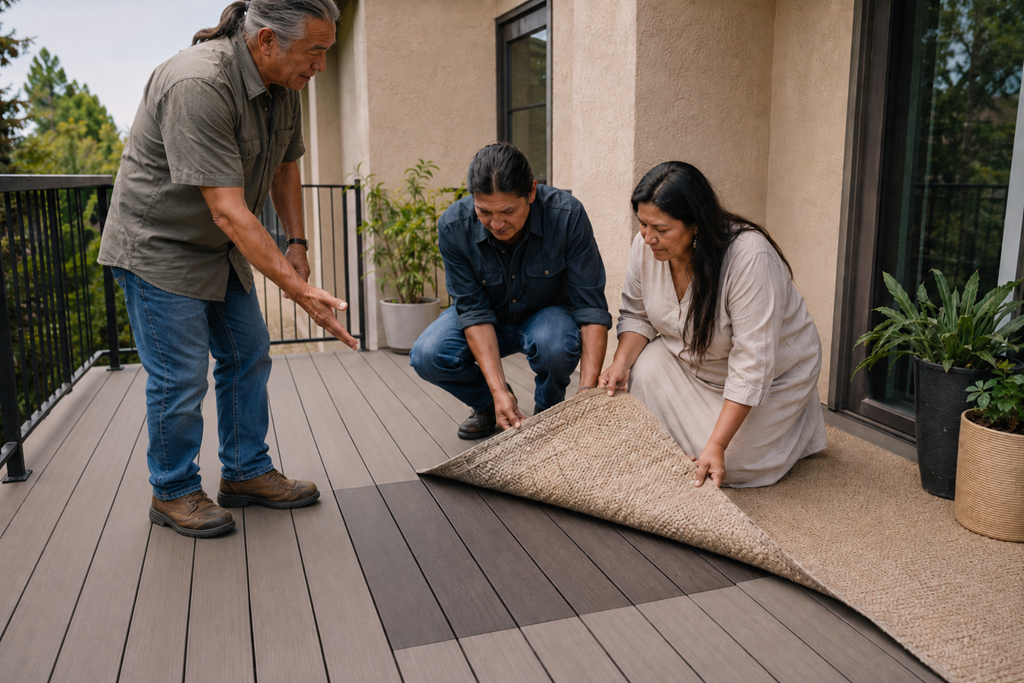
Sacramento-area homeowners may notice that one section of a deck looks noticeably different from another. Boards exposed to strong afternoon sun may appear lighter, drier, or more weathered, while boards beneath a patio cover, tree, outdoor rug, or furniture may retain a darker color.
That uneven appearance does not automatically mean the deck was built incorrectly or that every affected board needs replacement. It often means different parts of the deck have experienced different combinations of sunlight, heat, moisture, shade, and airflow.
Sunlight Can Change More Than a Deck’s Color
Direct sunlight can gradually fade or alter the color of most outdoor deck materials. The amount of change depends on the material, its finish, its color, the direction the deck faces, and how many hours of direct exposure each section receives.
Natural wood commonly becomes lighter or grayer as its surface weathers. A stained or sealed deck may also lose color unevenly when one area receives substantially more sun than another.
Composite and PVC decking are designed for outdoor use, but that does not mean their appearance remains completely unchanged. Some products may experience gradual color variation, especially during their early exposure period or in areas receiving concentrated sunlight.
Sun exposure can also affect how a deck feels underfoot. Darker boards generally absorb more heat than lighter ones, and an open section of decking can feel considerably warmer than an area protected by shade. Reflected sunlight from nearby windows, glass doors, walls, or light-colored surfaces may create additional heat in a concentrated area.
For a homeowner choosing new deck material, surface temperature may matter just as much as color or appearance. This can be especially relevant when a deck will be used by children, pets, or people who regularly walk outside without shoes.
Moisture and Dry Conditions Affect Materials Differently
Sun and heat are only part of the weathering process. Deck materials also respond to rain, irrigation, damp debris, shade, and the transition between wet and dry conditions.
Wood naturally absorbs and releases moisture. As moisture levels change, boards may expand, shrink, develop small surface checks, cup, or form wider gaps. Some movement can be expected, but pronounced or recurring changes may deserve attention.
A shaded area can create a different concern. It may dry more slowly after rain or irrigation, particularly when leaves, planters, rugs, or furniture restrict airflow. Persistent dampness can contribute to staining, surface growth, softened wood, or deterioration around fasteners and framing.
Composite and PVC boards generally absorb less moisture than untreated wood, but water still matters. Moisture can remain beneath rugs, collect near blocked drainage paths, or affect the wood framing supporting the visible deck boards. A surface that looks durable does not make the structure beneath it immune to weather.
This is why evaluating only the top of a deck may provide an incomplete picture.
Wood, Composite, and PVC Do Not Weather in the Same Way
Different deck materials can be appropriate for different properties, but each material has its own pattern of aging.
Natural Wood
Wood offers a traditional appearance, but its color and dimensions can change as it reacts to sunlight and moisture. Depending on the species, finish, and exposure, homeowners may notice:
- Fading or graying
- Small surface cracks or checks
- Changing gaps between boards
- Raised grain or roughness
- Cupping or slight warping
- Darker areas where moisture remains longer
Some of these changes may be cosmetic. Others may point to maintenance needs, installation concerns, or material deterioration. The distinction usually depends on the severity, location, and whether the board remains solid and secure.
Composite Decking
Composite decking is often selected because it does not require the same finishing routine as traditional wood. Even so, it can still be affected by its surroundings.
Direct sun may make darker composite boards noticeably warm. Uneven exposure may create differences between covered and uncovered areas. Dirt, pollen, irrigation residue, and moisture trapped beneath objects can also leave visible patterns.
Homeowners should ask what degree of color change, heat retention, expansion, or surface variation is considered normal for the specific product being discussed.
PVC Decking
PVC decking is highly resistant to moisture absorption, but heat and temperature changes still need to be considered. Boards can expand and contract, which makes proper spacing, fastening, and installation details important.
The material’s color and surface texture can also influence how hot it becomes in direct sunlight. A qualified deck professional should be able to explain how a proposed product is expected to perform in the actual location rather than discussing the material only in general terms.
Fasteners, Railings, and Framing
The visible boards are not the only materials affected by weather.
Fasteners can loosen or show corrosion. Railings may move where connections have weakened. Wood framing beneath composite or PVC boards can retain moisture. Flashing and drainage details can influence whether water moves away from the structure or remains near vulnerable areas.
A deck may therefore have weather-related concerns even when the surface boards still appear attractive.
Uneven Weathering Is Not Automatically Uneven Failure
One of the easiest mistakes is assuming that every color difference represents damage.
An outdoor rug may protect the boards beneath it from sunlight, leaving a darker rectangle when the rug is moved. Furniture may create similar protected areas. A covered portion of a deck may retain its original color longer than an exposed stairway or outer edge.
These differences can be visually distracting without affecting the deck’s stability.
More meaningful concerns include boards that feel soft, move under normal use, remain damp for unusually long periods, pull away from fasteners, or create recurring drainage problems. Loose railings, deteriorated connections, substantial warping, or changes in the supporting structure also deserve more attention than fading alone.
A qualified deck professional should be able to separate three different issues:
- Normal cosmetic weathering
- Maintenance or surface-treatment needs
- Structural or installation-related concerns
Those categories should not be treated as interchangeable. A homeowner should understand which one applies before agreeing to extensive repairs or replacement.
The Surrounding Property Can Matter as Much as the Material
Deck performance is influenced by more than the name of the product.
A deck beside a reflective wall may experience more concentrated heat. A section beneath a tree may collect leaves and remain damp. Irrigation overspray may repeatedly wet one edge. Planters may trap moisture against the surface. Limited airflow beneath a low deck can slow drying.
Installation choices matter as well. Board spacing, drainage, fastening methods, ventilation, flashing, and the condition of the supporting frame can all affect how a deck responds to changing conditions.
This means a material that performs well in one part of a property may behave differently in another. When comparing options, homeowners should discuss the actual exposure of the planned deck rather than relying only on a small indoor sample or a broad product description.
Questions to Ask Before Choosing or Repairing Deck Material
A few focused questions can make a provider’s explanation easier to evaluate:
- Which parts of the deck receive the strongest sun or remain shaded longest?
- What appearance changes are considered normal for this material?
- How warm can the surface feel during prolonged direct exposure?
- What maintenance is expected to manage fading, moisture, or surface wear?
- How will expansion, contraction, drainage, and airflow be addressed?
- Is the concern limited to the surface boards, or should the framing also be evaluated?
- Are the visible changes cosmetic, functional, or structural?
Clear answers should connect the recommendation to the specific deck, its location, and its exposure. A vague claim that one material is simply “weatherproof” or “maintenance-free” does not explain how it will perform on a particular Sacramento-area property.
A Weathered Deck Is Not Necessarily a Failed Deck
Sun, heat, dryness, shade, and seasonal moisture can all leave visible evidence on a deck. Some changes are normal signs of outdoor exposure, while others may reveal maintenance, drainage, installation, or structural concerns.
Before deciding to refinish, repair, or replace a deck, ask the provider to explain what has changed, why it changed, and whether the issue affects appearance, performance, or safety. That distinction can help Sacramento-area homeowners compare recommendations more thoughtfully and avoid treating every faded or uneven board as the same problem.