Roof maintenance matters before rainy weather because small, manageable concerns are easier to evaluate while the roof is dry and access is uncomplicated. Waiting until water is already entering the home can turn a routine inspection question into a more stressful decision involving active leaks, interior damage, and limited scheduling flexibility.
For many Sacramento-area homeowners, the roof is easy to overlook when the weather is dry and nothing appears wrong inside the house. Other maintenance needs are more visible. A sticking door, noisy appliance, or damaged fence demands attention, while a roof concern may remain unnoticed until rain tests the weakest area.
That does not mean every roof needs extensive work before wet weather. It means the period before seasonal rain can be a better time to understand the roof’s condition, separate minor maintenance from larger repairs, and ask a qualified roofing professional what deserves attention.
Rain Should Confirm Readiness, Not Reveal the First Problem
Rain is not a particularly convenient roof inspection method.
Once water begins entering a home, the immediate question becomes how to stop further damage. Homeowners may have less time to compare providers, understand the proposed work, or decide whether a recommendation addresses the cause rather than only the visible symptom.
Before rain arrives, a roofing professional may be able to evaluate concerns under less pressured circumstances. Depending on the roof, this could include looking at drainage areas, roof edges, surface materials, penetrations, flashing, accumulated debris, and signs of previous moisture exposure.
The purpose is not to predict every possible future problem. It is to identify visible conditions that may be easier to address before water begins moving across the roof.
Dry Weather Creates More Room for Better Decisions
A roof concern often feels different when it is discovered during dry weather.
There may be time to request photographs, review the affected area, compare estimates, and ask whether the recommendation involves maintenance, a localized repair, continued observation, or a broader roofing project. That breathing room can help homeowners avoid agreeing to work they do not fully understand simply because rain is already falling.
It can also make provider communication easier to evaluate. A useful explanation should help the homeowner understand:
- What condition was observed
- Where the concern is located
- Whether it appears isolated or widespread
- What work is being recommended
- What could happen if the issue is left alone
- Which parts of the recommendation are preventative and which address existing damage
A provider should be able to explain these points without relying on pressure or vague warnings.
Roof Maintenance Is Not the Same as Roof Replacement
One common misunderstanding is that asking a roofer to evaluate maintenance needs will automatically lead to a replacement recommendation.
Maintenance, repair, and replacement are different conversations.
Maintenance generally focuses on preserving the roof’s current condition and addressing smaller concerns. A repair deals with a specific damaged or vulnerable area. Replacement becomes a broader discussion involving the condition and expected performance of the roofing system as a whole.
Not every stain, loose material, debris accumulation, or drainage concern means the entire roof has failed. At the same time, something that looks minor from the ground may deserve a closer professional evaluation.
The important question is not simply, “Do I need a new roof?” A more useful question is, “What condition is present, and what level of response matches it?”
Dry Conditions Can Hide Developing Concerns
A home can remain completely dry inside even when part of the roof deserves attention.
Small openings, displaced materials, deteriorated transitions, or obstructed drainage areas may not create visible interior symptoms during dry weather. Even after rain, moisture may travel along building materials before appearing somewhere that seems unrelated to the original entry point.
This is one reason a lack of ceiling stains does not necessarily confirm that every part of the roof is in good condition. It only confirms that the homeowner has not observed an obvious interior leak.
Conversely, an old ceiling mark does not automatically prove that the roof is currently leaking. It could reflect a past issue that was already corrected.
A qualified evaluation can help separate active concerns from old evidence, cosmetic issues, and conditions that should simply be monitored.
Sacramento Weather Can Make Timing Easy to Misjudge
Long periods of heat, sun exposure, and dry conditions can make roof preparation feel unnecessary. When rain has not fallen recently, it is natural for homeowners to focus on more immediate projects.
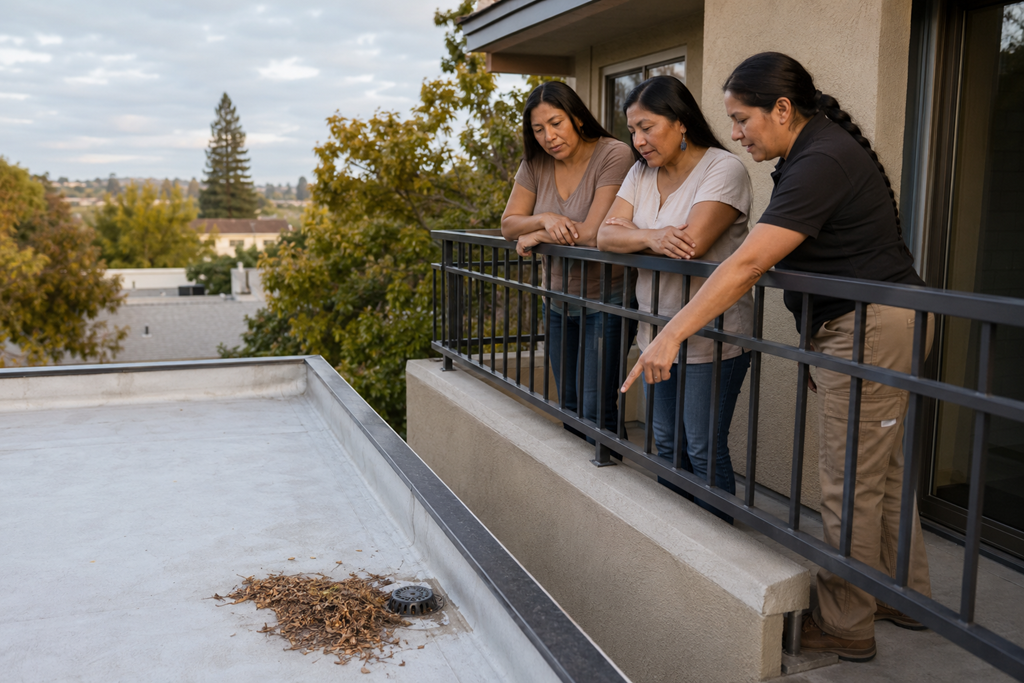
Dry leaves, seed pods, branches, and other debris may also accumulate gradually near roof valleys, edges, gutters, or drainage points. The amount may not look dramatic, but location can matter more than total volume. A small compacted collection near an outlet can be more significant than scattered debris across an open surface.
Sun and heat exposure can also affect roofing materials differently across the same property. A shaded section beneath a tree may age or collect debris differently from a fully exposed section.
These differences are not something homeowners need to diagnose themselves. They are useful observations to mention when speaking with a roofing professional.
Maintenance Should Address the Roof, Not Just Its Appearance
A roof that looks cleaner is not necessarily a roof that has been fully evaluated.
Removing visible debris may be part of maintenance, but appearance alone does not reveal whether drainage is functioning properly, materials are secure, transitions remain serviceable, or a previous repair area needs attention.
Similarly, dark streaks, discoloration, or uneven fading do not automatically identify the type or seriousness of a roofing concern. Some changes may be mostly visual, while others may point to moisture patterns, material deterioration, or recurring debris exposure.
A useful roofing conversation should focus on function and condition rather than making the roof look uniform from the street.
What a Pre-Rain Evaluation Should Help Clarify
Before agreeing to maintenance or repair work, Sacramento-area homeowners should understand what the provider actually evaluated.
A roofing professional may not be able to inspect every concealed component without additional access or investigation. That limitation should be explained rather than hidden. The homeowner should also know whether the recommendation is based on direct observation, interior evidence, photographs, previous repair history, or assumptions about an inaccessible area.
The evaluation should leave the homeowner with a clearer distinction between:
- Work that would be sensible before rain
- Work that can reasonably be monitored
- Conditions that require additional investigation
- Improvements that are optional rather than necessary
- Larger concerns that may justify discussing repair or replacement
The goal is not to eliminate every possible roofing risk. It is to understand the visible condition well enough to make a proportionate decision.
Questions Worth Asking a Roofing Provider
A few focused questions can make a maintenance recommendation easier to evaluate:
- Which specific roof areas caused concern?
- Can you show me photographs of those areas?
- Is the recommendation maintenance, repair, or replacement?
- What part of the work is most relevant before rain?
- Are any areas inaccessible or not included in the evaluation?
- Is this an active problem, a developing concern, or preventative work?
- What should I continue watching after the work is completed?
- Does the estimate describe the materials, affected area, and scope clearly?
Clear answers are often more useful than a long technical explanation. A homeowner should be able to restate the basic concern and understand why the proposed response fits it.
Waiting for a Leak Can Narrow Your Options
Some homeowners postpone roof conversations because they do not want to pay for unnecessary work. That caution is understandable. Roofing recommendations can involve unfamiliar terminology, difficult-to-see conditions, and potentially significant costs.
However, waiting for visible water entry is not the only way to avoid overspending.
Homeowners can request photographic evidence, compare written scopes, ask providers to distinguish preventative work from necessary repair, and seek another opinion when recommendations differ substantially. These steps allow a homeowner to remain cautious without treating an active leak as the first reliable sign that attention is needed.
A provider who communicates clearly should respect reasonable questions and give the homeowner enough information to understand the recommendation.
Preparation Is More Useful Than Urgency
Roof maintenance before rainy weather is ultimately about creating better conditions for a decision.
When the roof is dry and the home is not experiencing active water entry, homeowners may have more time to understand the issue, compare local roofing providers, and decide what level of work is appropriate. Minor concerns can be discussed as minor concerns, while larger conditions can be evaluated without pretending that every roof needs the same solution.
Homeowners should avoid climbing onto the roof or attempting unfamiliar repairs. Ground-level observations, interior moisture signs, previous service records, and photographs taken from safe locations can still provide useful context for a qualified roofing professional.
The practical takeaway is simple: rain should not have to create an emergency before the roof receives attention. A timely, clearly explained evaluation can help Sacramento-area homeowners understand what needs action, what can wait, and what questions to ask before hiring a local roofing provider.