Window replacement usually moves through several distinct stages: an initial estimate, confirmation of the project scope, precise measurements, product ordering or preparation, scheduling, installation, and a final walkthrough. The important thing for Sacramento-area homeowners to understand is that the estimate is only the beginning; several practical details are usually confirmed before anyone removes an existing window.
That gap between getting a quote and seeing new windows installed can sometimes make the process feel less straightforward than expected. A homeowner may think the major decisions were settled during the estimate, only to encounter additional measurements, product confirmations, scheduling conversations, or preparation instructions later. In most cases, those steps are part of turning a proposed project into an installation plan.
The Estimate Establishes The Working Scope
The first visit or estimate generally helps define what the homeowner is considering replacing and what the provider believes the project may involve.
That can include which windows are part of the project, their general size and style, accessibility, visible surrounding conditions, and the type of replacement being discussed. Product preferences, appearance, operation, and other homeowner priorities may also become part of the conversation.
This is an important distinction: an estimate explains the proposed job, but it does not necessarily mean every installation detail has already been finalized.
For a Sacramento-area homeowner comparing providers, that makes the quality of the explanation almost as important as the number at the bottom of the quote. Two estimates can appear similar at first while describing different assumptions about finishing work, interior or exterior trim, disposal, screens, hardware, or other project details.
A useful estimate should make it reasonably clear what the provider expects to do and what still needs to be confirmed.
Final Measurements May Be A Separate Stage
One of the easiest parts of window replacement to misunderstand is the difference between measurements used to prepare an estimate and measurements used to finalize the actual replacement units.
Depending on the provider and the type of window being installed, measurements may be checked again after the homeowner decides to proceed. This gives the company an opportunity to confirm opening dimensions and other details before the replacement products are ordered, prepared, or scheduled for installation.
Homeowners should not assume that a quick measurement during the first visit means nothing else needs to happen before installation.
If a provider returns to verify measurements, that does not automatically mean something went wrong. It may simply be part of moving from a preliminary project discussion to the more exact information needed for the selected replacement system.
Product Confirmation Happens Before The Old Windows Come Out
Window replacement involves more than deciding that an existing window should be replaced.
Before installation, the homeowner and provider may need to confirm details such as window configuration, operation, finish, glass options, screens, hardware, or other choices that apply to the specific project.
Not every project involves the same number of decisions. Replacing one relatively straightforward window may feel very different from replacing several windows of different sizes or styles throughout a house.
This is one reason it helps to review project details before the installation date rather than assuming everything discussed casually during the estimate will automatically be reflected in the final project.
If something matters to you, such as how a window opens, what the interior finish will look like, or whether a particular item is included, it is better to understand how the provider has documented that choice before installation begins.
The Time Between Approval And Installation Is Still Part Of The Project
After the scope and product details are settled, there may be a period when very little appears to be happening at the house.
That does not necessarily mean the project has stalled.
Depending on the job, replacement windows may need to be ordered, prepared, received, checked, or coordinated with the installation schedule before work at the property begins.
This part of the process can be easier to navigate when the homeowner knows what should happen next and who will communicate scheduling information.
Rather than focusing only on a promised installation date, it can be useful to understand the sequence: what still has to occur before scheduling, when the homeowner is expected to hear from the provider, and whether anything at the property needs to be prepared in advance.
Clear expectations make the waiting period much less confusing.
Homeowners Usually Have Some Preparation Before Installation Day
Window installers need usable access to the windows being replaced.
The provider may ask the homeowner to move furniture or belongings away from certain areas, remove or secure window coverings, make arrangements for pets, or provide clear access through parts of the home.
The exact preparation depends on the property and the project, so homeowners should follow the instructions given by their installer rather than assuming every window replacement requires the same setup.
This is also a good time to clarify whether the crew expects to work from the interior, exterior, or both.
Knowing that beforehand can make installation day feel much more predictable, especially when several rooms are involved.
Installation Usually Moves Through The House In A Planned Sequence
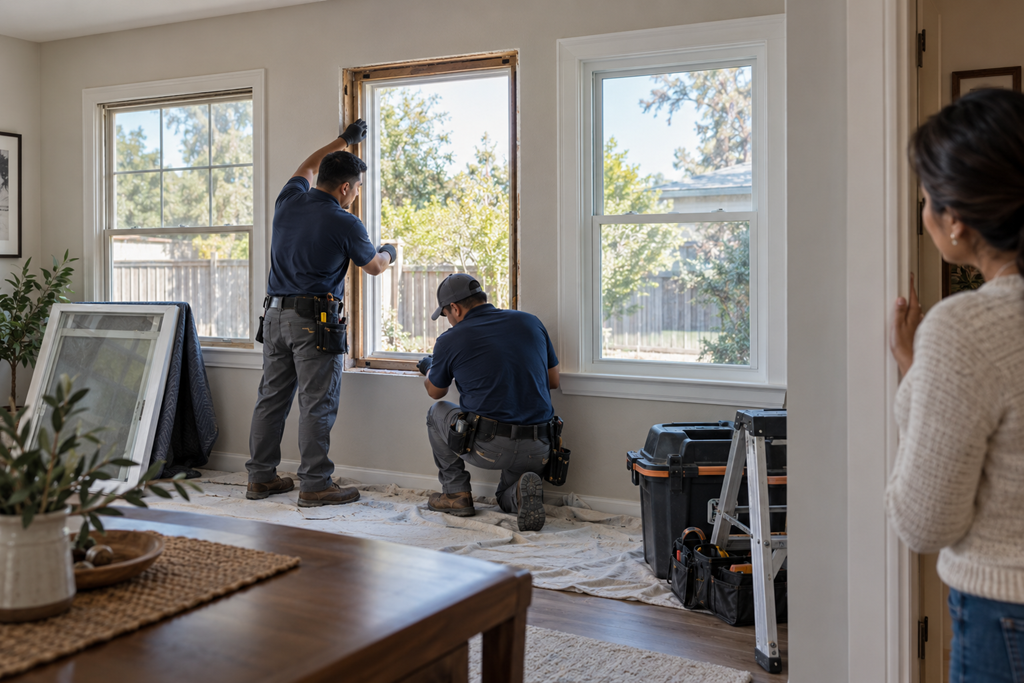
On installation day, the project changes from planning to physical work.
Rather than thinking of whole-house window replacement as every opening being disrupted at once, it is more useful to think of the crew working through the project in a sequence.
Existing units are removed as appropriate for the installation method, replacement windows are placed and secured using the applicable system, and surrounding areas are finished according to the project scope.
Homeowners do not need to understand the technical installation procedure to evaluate whether the process feels organized.
They can pay attention to whether the crew appears to be following the agreed scope, protecting nearby areas, keeping materials reasonably organized, and communicating when a question or unexpected condition appears.
The project should feel like an orderly progression rather than a series of unexplained changes.
Existing Conditions Can Occasionally Change What Happens Next
An estimate is generally based on what can reasonably be evaluated before the existing window is removed.
Sometimes the condition of surrounding materials becomes clearer only after installation work begins.
That does not mean every window replacement will uncover an additional problem. It means homeowners should understand in advance how the company handles a condition that was not visible during the original estimate.
The important question is not whether a provider can promise that nothing unexpected will ever appear. It is whether the homeowner will receive a clear explanation before the original scope changes.
If an installer identifies something that could affect the work, homeowners should have an opportunity to understand what was found, why it matters to the project, and what is being proposed before approving additional work.
Finishing And Cleanup Are Part Of The Installation Experience
A replacement window may be physically in the opening before the surrounding project feels finished.
Depending on the scope, there may still be interior or exterior finishing, trim work, cleanup, removal of old materials, screen or hardware installation, and other final details.
This is why the end of installation should involve more than simply seeing that a new window is present.
The homeowner should have an opportunity to look over the completed areas and understand how the new windows operate. Any remaining items should be identified clearly rather than left as vague promises to be addressed later.
A final walkthrough can also help distinguish between something that is part of the agreed finishing work and something that was never included in the original scope.
A Few Questions Can Make The Process Easier To Follow
Before committing to a window replacement project, consider asking:
- What happens after I approve the estimate and before installation is scheduled?
- Will the windows be measured again before they are ordered or prepared?
- What exactly is included in the quoted scope, including finishing and cleanup?
- What do I need to move or prepare before the installers arrive?
- How will you handle an unexpected condition that changes the proposed work?
- What should I expect during the final walkthrough?
These questions are less about controlling every detail of the project and more about understanding the handoffs between one stage and the next.
The Process Is Easier When Each Stage Is Clear
Window replacement is not simply an estimate followed immediately by someone removing the old windows. There is usually a progression from defining the scope to confirming measurements and selections, coordinating the project, preparing the home, completing the installation, and reviewing the finished work.
For Sacramento-area homeowners, understanding those stages can make it easier to compare providers and recognize where important questions still need answers.
A good window replacement decision is not only about choosing a product or accepting a quote. It is also about understanding what is supposed to happen between the first estimate and the moment the installation is complete.