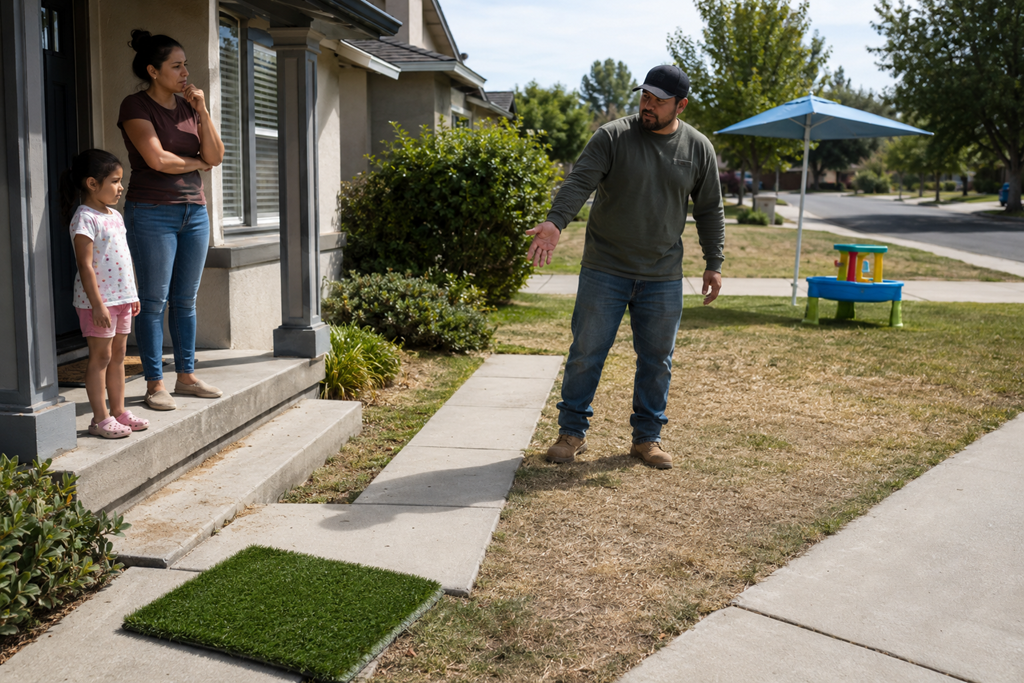
Artificial turf can work in Sacramento yards, but heat changes how the decision should be evaluated. Direct sun, surface temperature, shade, pet use, foot traffic, and nearby patios can all affect how comfortable the turf feels and how well the installation fits daily life, so the right planning is not only about how the grass will look, but how the yard will actually be used.
For many Sacramento-area homeowners, the appeal is easy to understand. A worn lawn, uneven watering, dry patches, muddy pet areas, or constant maintenance can make artificial turf seem like a clean, simple upgrade. But heat adds another layer to the decision. A yard that looks great from the patio door may not feel as comfortable in the hottest, sunniest parts of the day.
That does not automatically mean artificial turf is a bad fit. It means the decision should include comfort, placement, shade, materials, drainage, and realistic use patterns before comparing installers or reviewing estimates.
Heat Changes the Question From Appearance to Daily Use
Artificial turf decisions often start with appearance. Homeowners may imagine a greener yard, fewer bare spots, cleaner edges, and less upkeep. Those are reasonable reasons to start the conversation.
In hot conditions, though, the more useful question is: Where will people and pets actually stand, walk, sit, and play?
A section of turf that mainly fills a side strip may not need to serve the same purpose as a play area, dog run, patio transition, or barefoot path from the house. A small patch near a shaded seating area may create a different experience than a large open area exposed to full afternoon sun.
This is where a qualified artificial turf installer should be able to talk through the yard as a lived-in space, not just a square footage measurement.
The Same Turf Can Feel Different in Different Parts of the Yard
One of the easiest misunderstandings is assuming the whole yard will behave the same way. In reality, heat exposure can vary across one property.
A turf area near a fence, block wall, concrete patio, or south-facing open space may feel different from a section near trees, shade structures, or cooler landscaping. Areas that receive strong direct sun for long stretches may become less comfortable for bare feet, pets, or children during hotter parts of the day.
That difference matters because the most important turf area is not always the largest one. Sometimes it is the narrow path between the patio and side gate. Sometimes it is the spot where the dog pauses. Sometimes it is the area where children run from the house to outdoor toys.
Good planning looks at those everyday routes before the installation is finalized.
Pet Areas Need Extra Thought in Hot Weather
For Sacramento homeowners with dogs, heat is not only about how the turf looks. It is also about comfort, odor control, rinsing access, drainage, and where the pet naturally goes.
A dog may choose the same corner repeatedly because it is convenient, shaded, private, or close to a door. If that area receives strong sun, sits near a fence, or drains poorly, the installer should explain how the base preparation, turf selection, infill choice, and maintenance expectations may affect the result.
This is not a reason to rush into a special product based on a label alone. It is a reason to ask better questions.
A helpful conversation might include where the dog currently uses the yard, how often the area is rinsed, whether the surface will be used barefoot, and whether shade or layout changes should be part of the discussion.
Shade Can Be Part of the Turf Decision
Homeowners sometimes treat shade as a separate outdoor living issue, but it can affect artificial turf comfort. Existing trees, patio covers, umbrellas, pergolas, fences, and nearby structures may all influence how a turf area feels at different times of day.
The goal is not to make every part of the yard shaded. The goal is to understand whether the main use areas will remain practical.
If a family wants a turf area for sitting, children’s play, pets, or regular barefoot use, shade deserves a place in the early conversation. If the turf is mostly decorative or used as a lower-maintenance visual surface, comfort may still matter, but in a different way.
This distinction helps prevent mismatched expectations.
Nearby Hardscapes Can Affect Comfort
Artificial turf does not sit in isolation. Patios, walkways, retaining walls, garden borders, and pool decks can all shape how the yard feels.
Concrete and pavers may already feel hot during parts of the day. If turf is installed directly beside those surfaces, the transition area may become one of the most important comfort zones in the yard. That is often where people walk barefoot, where pets move between the house and lawn, and where children cross from shaded areas to open space.
Before hiring a local pro, it is worth discussing how turf will meet existing hardscapes. The installer should be able to explain not only the finished edge, but also how the area will function under regular use.
Material Choices Should Be Discussed in Plain Language
Artificial turf products can vary in blade shape, pile height, density, backing, infill options, drainage design, and intended use. For a homeowner, that can quickly become technical.
A better conversation starts with plain questions:
- Will this area be used by pets, children, adults, or mostly for appearance?
- Which parts of the yard receive the strongest sun?
- Will people walk barefoot here?
- Is this near concrete, a patio door, or a play area?
- What maintenance will help the turf stay usable in hot, dry conditions?
- Are there different product or infill options that may affect comfort?
The point is not for the homeowner to become a turf expert. The point is to hear whether the installer can connect product choices to real yard conditions instead of only describing appearance.
Heat Can Also Affect Expectations About Maintenance
Artificial turf is often described as low maintenance, but low maintenance does not mean no care at all. In warmer, drier conditions, dust, pet use, leaves, debris, and surface buildup can still matter.
A homeowner may need to understand rinsing expectations, brushing, debris removal, and how heavy-use areas should be cared for. This is especially important when the turf will be used by pets or placed near outdoor dining, play areas, or high-traffic paths.
A good installer should avoid making the project sound effortless in every situation. Clear expectations are more useful than a perfect-sounding promise.
The Biggest Mistake Is Treating Heat as an Afterthought
The most common planning problem is not choosing artificial turf. It is choosing it based only on how the finished yard will look.
A yard can look neat, green, and finished while still creating comfort concerns if the main use areas are exposed, poorly placed, or not discussed in detail. Heat should be part of the first conversation, not something discovered after the project is installed.
This is especially true when a homeowner is comparing estimates. One installer may measure the space and quote the job. Another may ask about pets, shade, foot traffic, drainage, patio transitions, and when the yard is used most. Those questions can reveal whether the estimate reflects the way the yard actually functions.
What to Listen for When Comparing Local Installers
When speaking with Sacramento-area artificial turf installers, pay attention to whether they ask about real use, not just square footage.
Helpful signs include questions about pets, shade, drainage, irrigation removal, base preparation, foot traffic, patio transitions, and comfort expectations. The conversation should feel specific to the property, not like the same explanation given to every homeowner.
Be cautious if the discussion stays only on color, price, speed, or generic product claims. Those details may matter, but they do not answer the heat question by themselves.
A stronger estimate conversation helps you understand why a certain turf, layout, base approach, or maintenance expectation is being recommended for your yard.
A Better Decision Starts With the Hottest, Most-Used Spots
Before committing to artificial turf, stand in the yard and notice where heat and daily life overlap. Look at the route from the patio door, the dog’s usual path, the area children use, the seating zone, and the spots that receive the most direct sun.
Those areas should guide the conversation with a local pro.
Artificial turf may still be a practical choice, but Sacramento heat makes planning more important. When homeowners ask how the surface will feel, how it will be used, and what conditions may affect comfort, they are better prepared to compare providers and choose an installation approach that fits the yard beyond appearance.