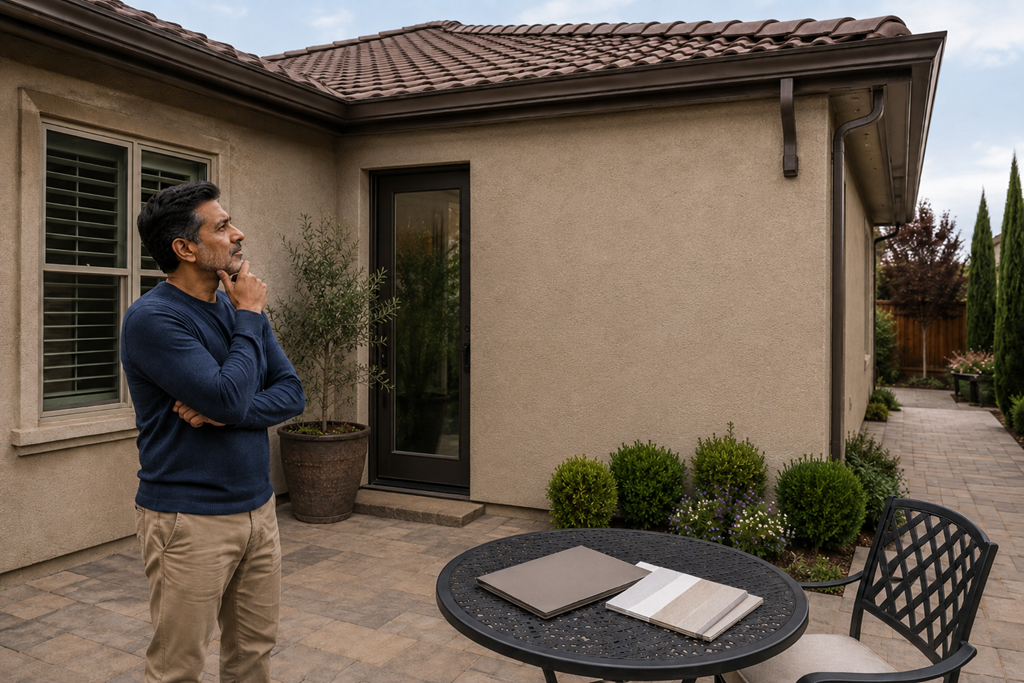
An awning installer may not be the right fit if the recommendation arrives before they have fully understood the space, how you plan to use it, and what the project actually needs to accomplish. A good fit is not just about whether someone sells attractive awnings. It is about whether they ask enough questions, explain the proposed scope clearly, and help you understand the tradeoffs before you commit.
That distinction can be easy to miss. An awning consultation may seem straightforward: look at the area, choose a style, receive an estimate, and decide whether to move forward. But the quality of the recommendation often depends on how well the installer understands the property and your priorities before settling on a solution.
For Sacramento-area homeowners, the goal is not to find an installer who makes the fastest recommendation. It is to find one whose recommendation makes sense for the way the space will actually be used.
A Recommendation That Comes Too Early Deserves a Second Look
One of the clearest warning signs is a solution that seems decided before much has been learned about your project.
An installer may immediately suggest a particular awning size, configuration, material, or operating style after only a quick look at the property. That does not automatically mean the recommendation is wrong. Some projects are relatively straightforward, and experienced professionals may recognize familiar situations quickly.
What matters is whether the recommendation is supported by a real conversation about your needs.
For example, there is a difference between wanting shade over a frequently used outdoor seating area and wanting to reduce direct sun near a particular doorway or window. You may care about appearance, ease of operation, the amount of coverage, how the awning relates to existing outdoor furniture, or how the area is used at different times.
If those questions never come up, the installer may be recommending a product before understanding the problem it is supposed to solve.
A useful way to think about this is that the speed of the recommendation should not exceed the depth of the understanding behind it.
The Installer Should Be Learning How You Use the Space
A strong consultation usually feels like a two-way exchange rather than a product presentation.
The installer should be interested in why you are considering an awning in the first place. They may ask which part of the area you want to cover, when the space is commonly used, what bothers you about the current setup, and which priorities matter most to you.
They should also pay attention to the physical surroundings.
An outdoor area may include doors, windows, rooflines, exterior lighting, gutters, landscaping, furniture, walkways, or other features that influence how a proposed awning fits into the larger space. A recommendation that ignores those relationships may sound simple during the consultation but leave important questions unanswered later.
This does not mean every project needs an elaborate assessment. It means the installer should show that they are recommending an awning for your property rather than simply fitting your property to the awning they already wanted to sell.
An Unclear Scope Can Make Quotes Difficult to Compare
Another warning sign is an estimate that provides a total but leaves you uncertain about what the total actually covers.
A Sacramento homeowner comparing two awning installers may receive proposals that look similar at first glance while describing meaningfully different projects.
One estimate might include certain options, removal of an existing awning, additional installation-related work, cleanup, or follow-up service that another estimate does not. A motorized system may involve different project considerations from a manually operated one. Accessories or upgrades may also be treated differently from one proposal to another.
You should not have to guess which parts of the conversation made it into the written scope.
A useful estimate should make it reasonably easy to understand what is being proposed, what is included, and which items would be additional.
The concern is not that every proposal must use the same format. The warning sign is when basic questions about the scope consistently produce vague answers.
Good Explanations Include Tradeoffs, Not Just Advantages
An installer who is a good fit should be able to discuss choices without presenting every upgrade as an obvious decision.
Different awning approaches can involve differences in appearance, coverage, operation, convenience, maintenance, project complexity, and cost. The most suitable option depends partly on what matters to you.
That makes balanced explanations valuable.
If one option provides a benefit but also comes with a consideration you should understand, the installer should be comfortable explaining both sides. If a simpler option could reasonably meet your needs, you should be able to discuss that as well.
Be cautious when every conversation seems to lead toward the larger, more elaborate, or more expensive option without a clear connection to your priorities.
You are not necessarily looking for the installer who recommends the least. You are looking for a recommendation whose reasoning you can follow.
Pressure Can Make Unanswered Questions Easier to Ignore
A project can become harder to evaluate when the conversation shifts from understanding the work to getting you to commit.
That pressure does not always look aggressive.
It can be repeated encouragement to decide before you feel ready, an unusually strong focus on securing the project during the first conversation, or reluctance to give you enough information to compare the proposal with other options.
A reasonable decision should survive a little time and scrutiny.
If you want to review the written scope, discuss the project with someone else in your household, or compare another estimate, that should not prevent you from understanding the proposal clearly.
A professional may explain legitimate scheduling considerations, product availability, or other practical factors. That is different from using uncertainty itself as a reason for you to make a faster decision.
Your Questions Should Lead to More Clarity
You can often learn a great deal about an installer by what happens after you ask a follow-up question.
Good communication does not require an immediate answer to everything. An installer may need to verify a detail before responding.
The more important issue is whether the response moves the conversation forward.
If you ask why a particular awning configuration was recommended, you should receive an understandable explanation. If you ask what is included in the estimate, the answer should become more specific rather than more confusing. If you ask about another option, you should be able to understand why it may or may not suit the project.
Repeatedly dismissing reasonable questions, changing the explanation, or avoiding specifics can indicate that the working relationship may be difficult even before installation begins.
That matters because communication usually does not become less important once you hire someone.
The Written Proposal Should Match the Conversation
A consultation can feel thorough while still leaving a weak paper trail.
Before agreeing to a project, compare what you remember discussing with what the proposal actually says.
If an important feature, option, responsibility, or expectation influenced your decision, it should not exist only as a casual verbal assurance.
This does not mean every sentence spoken during a consultation needs to appear in an estimate. It means the parts that materially define what you believe you are purchasing should be clear enough that both sides have a shared understanding.
When the written proposal and the verbal explanation seem to describe different projects, ask for clarification before committing.
A Good Fit Should Still Feel Clear After the Conversation Ends
Sometimes the easiest way to evaluate a consultation is to notice how understandable the project feels once the installer is gone.
Can you explain what was recommended and why?
Do you understand what the proposal includes?
Can you identify the important differences between the options you discussed?
Do you know what would happen next if you decided to move forward?
If the conversation sounded convincing in the moment but becomes difficult to reconstruct afterward, important details may not have been communicated clearly enough.
That does not necessarily mean the installer is unqualified. It may simply mean the communication style, planning process, or level of explanation is not the right fit for you.
And fit matters.
A homeowner who wants detailed explanations may be uncomfortable with a provider who communicates mostly in broad assurances. Another homeowner may prefer a much more streamlined process. The important thing is whether you have enough information to make a decision without filling in the gaps yourself.
A Few Questions Can Reveal a Lot
Before choosing an awning installer, a few straightforward questions can help you understand how the recommendation was developed:
- What led you to recommend this particular awning for this space?
- What exactly is included in the proposed scope?
- Are there other reasonable options I should compare?
- What are the main tradeoffs between those options?
- Is there anything about the surrounding area that could affect the project?
- What would be considered additional work rather than part of the quoted scope?
- What should I expect between approving the proposal and completing the project?
You do not need a complicated interrogation.
The purpose of the questions is simply to see whether the installer can connect the recommendation, the property, the scope, and your priorities in a way that makes sense.
The Right Installer Should Make the Decision Easier to Understand
No single awkward answer or imperfect estimate automatically means an awning installer is the wrong choice.
Look for patterns instead.
A recommendation made before your needs are understood, vague explanations about scope, one-sided discussions of options, repeated pressure to commit, and difficulty getting straightforward answers can all suggest that another installer may be a better fit.
The strongest sign is often simpler: after talking with the provider, you should understand the proposed project better than you did before.
That gives you a much stronger basis for comparing Sacramento-area awning installers and deciding which provider you are comfortable trusting with the work.