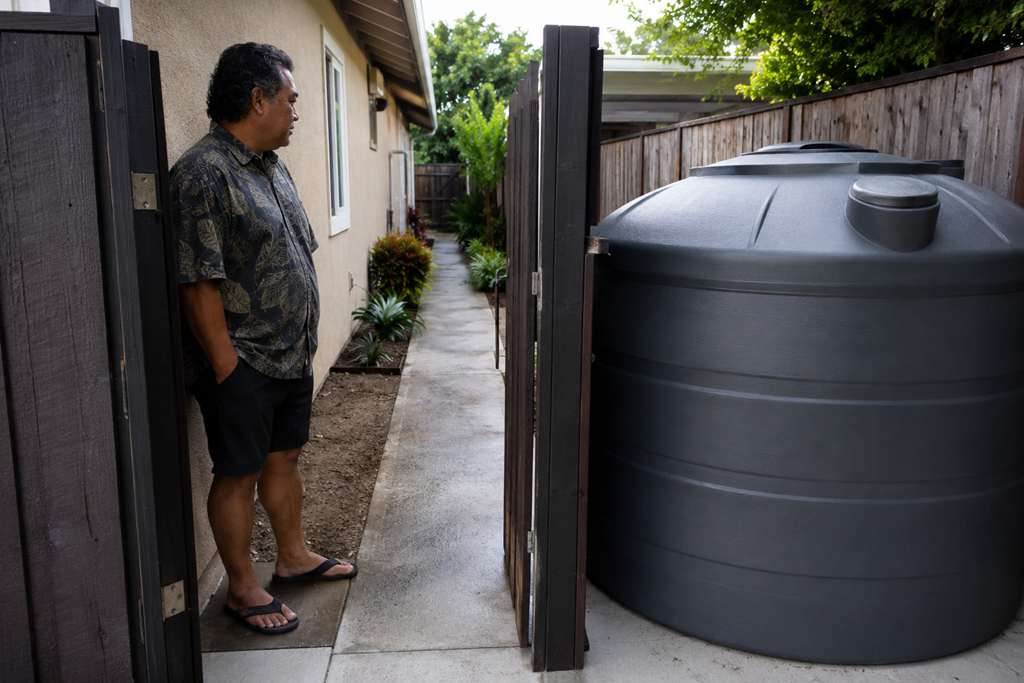
The cost of a rainwater collection system can vary because the system is shaped by more than the size of the storage tank. Roof area, collection goals, storage capacity, filtration, pumps, site access, drainage, existing gutters, and intended water use can all change the scope. Scope can differ. For Sacramento-area homeowners, that means two projects that sound similar at first can require very different system designs and installation work.
That is one reason a single advertised tank price or a rough price-per-gallon comparison may not tell you much about what a complete system will cost at your property. The tank may be one of the most visible components, but the surrounding collection, storage, routing, and delivery setup can matter just as much.
Understanding those differences can make it easier to compare estimates without assuming that every rainwater collection system includes the same things.
The Tank Is Only One Part Of The System
It is easy to think of rainwater collection as purchasing a storage tank and connecting it to a downspout. Some systems can be relatively simple, but others involve several components working together.
Depending on the property and what the homeowner wants the system to accomplish, the project may involve collection points, gutters or downspouts, filtration, storage, overflow management, pumps, controls, piping, and connections to the intended use area.
That means two homeowners considering tanks of similar capacity could still receive noticeably different estimates.
The important comparison is not simply the price of the tank. It is the complete scope required to collect, store, manage, and deliver the water in the way the homeowner expects.
How You Plan To Use The Water Can Change The Scope
One of the first cost questions is also one of the simplest: what do you want the collected water to do?
A homeowner primarily interested in storing rainwater for limited outdoor use may be considering a different system from someone who wants water delivered to several areas of a large property.
The intended use can influence how water needs to be routed, whether pumping is involved, what filtration or other system components may be appropriate, and how much storage makes sense.
This is also an area where assumptions can cause confusion. A homeowner may picture one type of system while a provider is estimating another.
Before comparing prices, make sure the provider understands your intended use and explains what the proposed system is designed to support. The suitability of collected rainwater for any particular use should be discussed with a qualified professional rather than assumed.
Storage Capacity Can Affect More Than Tank Price
Larger storage capacity commonly means a larger or additional tank, but the effects may extend beyond the container itself.
A larger tank can require more suitable placement space. The proposed location may need different preparation, access may become more important, and the relationship between the tank, collection points, and intended use areas may change.
Multiple tanks can create another type of project altogether.
This is why comparing systems solely by tank capacity can be misleading. A larger-capacity system is not simply a smaller system with a bigger container placed in the same location.
The surrounding property has to support the planned configuration.
The Roof, Gutters, And Collection Points Matter
The physical path rainwater takes before reaching storage can affect the work involved.
A straightforward roofline with an existing collection point near the proposed tank location presents a different situation from a property where water must be gathered from several roof sections or routed a greater distance.
Existing gutters and downspouts may also be part of the discussion.
Rather than assuming existing components can automatically become part of the new system, ask the provider to explain what can remain, what needs to change, and what is included in the estimate.
This can reveal scope differences that are not obvious when looking only at storage capacity.
Tank Placement And Property Access Can Change Installation Work
Where a tank fits is not necessarily where it is easiest to install.
A Sacramento-area property might have a narrow side yard, limited gate access, established landscaping, utility areas, patios, fences, or other features that affect how equipment and materials reach the proposed location.
Distance matters too.
A tank positioned close to the collection point and intended use area presents a different layout from one placed farther away because that is the only practical space available.
A provider evaluating the property should be able to explain how the proposed location affects the project rather than simply naming a tank size.
Pumps, Filtration, And Controls Can Add Different Layers
Not every rainwater collection system uses the same supporting equipment.
Depending on the design and intended use, a proposal may include filtration components, pumps, controls, overflow provisions, or other equipment beyond storage.
These components can create an important difference between estimates.
For example, one quote may appear less expensive because it represents a simpler collection-and-storage arrangement, while another may include equipment needed to move or manage the water differently.
Neither price tells the full story without the scope behind it.
When equipment appears in an estimate, ask what function it serves and why it has been included. When equipment does not appear, ask whether it is unnecessary for the proposed system or simply outside that provider's quoted scope.
Site Preparation Can Be Easy To Overlook
The proposed storage area may influence the amount of preparation involved before a system can be installed.
The provider may need to consider the surface, available space, access, nearby property features, drainage considerations, and the physical requirements of the proposed equipment.
There may also be work associated with routing system components through or around existing landscaping and finished areas.
The important consumer question is not how to perform that work yourself. It is whether the estimate clearly identifies the property preparation and restoration, if any, that the provider expects the project to require.
Otherwise, two estimates that initially look comparable may be describing different starting and finishing points.
A Lower Quote May Simply Include Less
Rainwater collection estimates can become difficult to compare when providers organize their scopes differently.
One proposal might include the tank, filtration, pump, routing, preparation, and final connections. Another might quote primarily the storage equipment and basic installation.
That does not automatically make either estimate good or bad.
It does mean the totals should not be compared until you understand what each provider is actually proposing.
A detailed quote can also expose decisions that are still unresolved. If the tank location, storage capacity, intended use, filtration, pumping needs, or routing have not been clearly established, the final project scope may still have room to change.
Questions Worth Asking Before Comparing Estimates
A few focused questions can make the differences between proposals much easier to see:
- What exactly is included in the proposed system?
- What storage capacity are you recommending, and what is that recommendation based on?
- How does my intended water use affect the design?
- Are my existing gutters and downspouts included in the plan?
- Does the estimate include filtration, pumping, controls, and overflow management where applicable?
- What property preparation or access issues are included in the quoted price?
- Is any routing, connection, restoration, or other work excluded?
- What parts of the scope could change after the property is evaluated more closely?
The goal is not to collect the longest possible list of questions. It is to make sure the estimates you are comparing describe substantially the same project.
Look At The Whole System Before Focusing On One Number
The cost of a rainwater collection system is usually easier to understand once the project is viewed as a complete system rather than a storage-tank purchase.
Capacity matters, but so do the collection area, intended use, equipment, routing, tank location, site access, existing property conditions, and what each provider includes in the proposed scope.
For Sacramento-area homeowners comparing options, a useful next step is to ask each provider to explain the complete path from collecting the rainwater to storing and using it. Once that scope is clear, the prices become much more meaningful to compare.