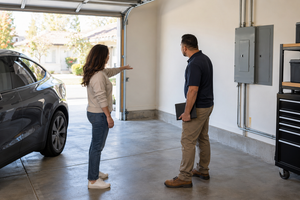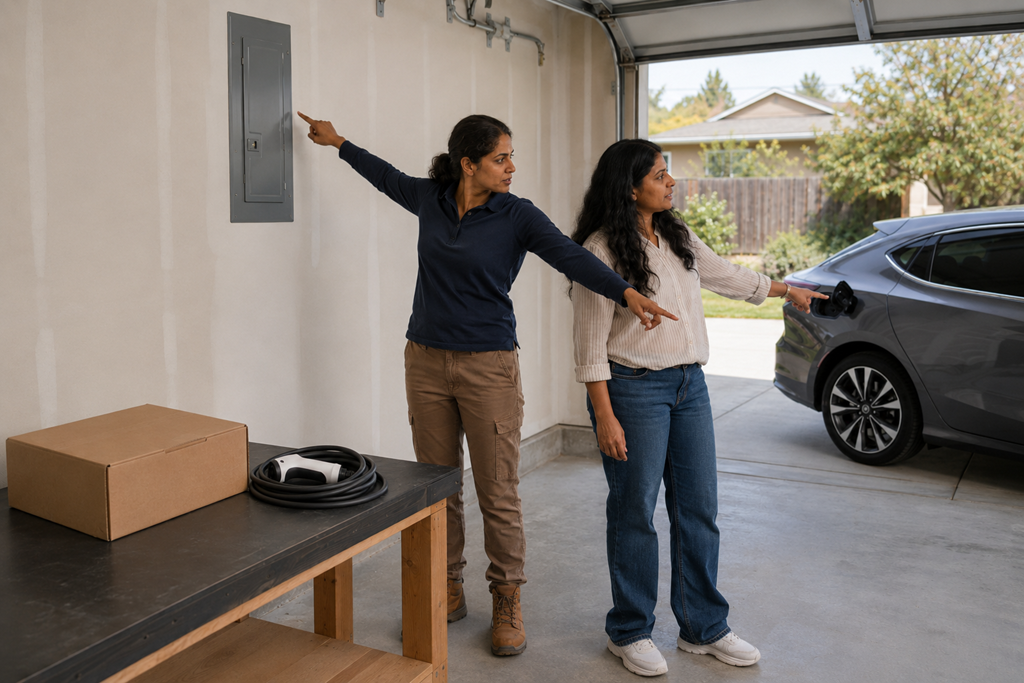
Home EV charging is not simply a matter of finding an outlet and plugging in a vehicle. The right setup depends on how the home’s electrical system, parking location, charging habits, cable path, and future vehicle plans fit together. A charger that looks suitable on paper may still be inconvenient, undersized, unnecessarily expensive, or poorly matched to the property.
For many Sacramento-area homeowners, the decision initially seems straightforward: choose charging equipment, attach it to the wall, and connect the car. The questions usually begin when they consider where the vehicle will park, how far the cable must reach, whether the electrical panel can support the desired setup, and how quickly the vehicle actually needs to recharge.
That is why home charging should be viewed as a coordinated home project rather than a single product purchase.
The Vehicle Is Only One Part of the Charging Setup
A home charging arrangement includes more than the car and the charging unit. It also involves the home’s electrical capacity, the circuit serving the equipment, the mounting location, the parking arrangement, and the way the cable will be handled during everyday use.
Two homeowners with the same electric vehicle may need different setups because their properties and routines are different.
One person may park inside an attached garage a few feet from the electrical panel. Another may park outdoors, around the side of the house, or in a driveway shared by two vehicles. One household may need to replace a modest amount of driving range each night, while another regularly returns home with a much lower battery level.
The charging equipment cannot be evaluated separately from those conditions.
The Best Location Is Not Always the Most Obvious Wall
A charger may fit neatly on a particular garage wall but still be awkward to use.
The charging port may be on the opposite side of the vehicle. The cable may have to stretch behind the car, cross a walking path, pass near stored items, or reach around a garage door track. A household that occasionally changes parking positions may discover that a location designed for one arrangement does not work well for another.
Outdoor parking adds other considerations. The homeowner may need to discuss equipment placement, weather exposure, physical protection, cable storage, and how the charging cord will reach the vehicle without becoming a regular obstruction.
These details can seem minor during installation planning. They become much more noticeable when someone repeats the same charging routine several times a week.
A useful placement decision therefore considers how the charger will be approached, connected, disconnected, and stored—not just where it can be mounted.
The Home’s Electrical Capacity Shapes the Available Options
A charging unit does not create electrical capacity by itself. The home must be able to support the charging load along with the appliances, heating and cooling equipment, and other systems already using electricity.
This does not automatically mean a homeowner needs a major electrical upgrade. It means the existing system should be evaluated before assumptions are made.
Depending on the property, a qualified professional may discuss several possibilities. These could include using available capacity, selecting equipment that operates within a more modest limit, coordinating charging with other electrical demand, or evaluating whether an electrical upgrade makes sense.
The important point is that the desired charging speed should not be chosen before the home’s practical options are understood.
Purchasing equipment first can limit flexibility. A homeowner may end up with a unit that cannot be used at its highest setting, does not fit the proposed location, or requires more project work than expected.
Faster Charging Is Not Automatically the Better Choice
Charging equipment is often compared by maximum output, but the fastest available option may not provide the best value for every household.
The more useful question is whether the setup can restore the amount of range the driver normally uses before the vehicle is needed again.
Someone who drives a limited number of miles and leaves the vehicle parked overnight may not need the same charging capacity as someone with a long commute, unpredictable travel, or multiple drivers using the same vehicle.
A faster setup can still be worthwhile, especially when a household expects its driving needs to change. However, maximum speed should be balanced against installation complexity, electrical capacity, equipment cost, and actual daily benefit.
A well-matched system is one that supports the household’s routine reliably. It does not have to be the most powerful option available.
Parking Habits Can Matter as Much as Driving Habits
Homeowners often estimate charging needs by thinking about mileage but overlook how consistently the vehicle will be parked near the charger.
A garage may technically have space for the electric vehicle, but that space might frequently be occupied by storage, a second vehicle, or a household project. A driveway position may change depending on who arrives home first. Some households rotate vehicles, while others expect to add another electric vehicle later.
These patterns affect cable reach, charger placement, and whether one charging point will remain practical.
Future plans also deserve reasonable consideration. A household does not need to design for every possibility, but it can be helpful to discuss foreseeable changes such as:
- Adding another electric vehicle
- Replacing the current vehicle with one that has different charging capabilities
- Reorganizing garage or driveway parking
- Adding other major electrical equipment to the home
- Converting a garage or changing how the property is used
Planning for a realistic possibility is different from paying for capacity that may never be needed. A qualified provider should be able to explain that distinction without pressuring the homeowner toward the largest project.
Buying the Charger Before Evaluating the Property Can Create a Mismatch
Some homeowners purchase charging equipment because it is discounted, highly rated, or recommended for their vehicle. Only afterward do they ask whether it can be installed where they want it.
That order can make the project more restrictive.
The equipment may require a different circuit arrangement than expected. Its cable may be too short for the normal parking position. The enclosure may not be appropriate for the proposed exposure. Its mounting design may interfere with shelving, doors, or stored items. The unit may also include capabilities the household cannot practically use.
Choosing equipment after discussing the property and routine gives the homeowner a better chance of matching the product to the project.
A provider should not necessarily insist on one particular brand. The more useful conversation is about compatibility, location, operating limits, cable reach, warranty considerations, and who will be responsible for configuring or supporting the equipment.
A Low Installation Quote May Leave Important Work Unexplained
Home charging estimates can be difficult to compare when providers describe the project differently.
One estimate may include equipment mounting, electrical work, surface repairs, testing, and coordination of any applicable approval steps. Another may quote only the most basic electrical portion while leaving other work uncertain.
The lowest number may still represent a suitable project, but homeowners should understand what that number includes.
A clear estimate should help explain:
- Where the charging equipment will be installed
- How the electrical connection will reach that location
- Whether the existing electrical system appears suitable
- What charging capacity the proposed setup is intended to provide
- Whether wall, ceiling, trenching, or surface work may be involved
- Who supplies and configures the charging equipment
- What parts of the project are included or excluded
- What could cause the scope or price to change
The goal is not to demand a complicated technical report. It is to make sure the quotes describe substantially the same project before comparing them.
The Right Provider Should Ask About Everyday Use
A useful home-charging conversation should involve more than a brief look at the electrical panel.
The provider may need to understand where the vehicle normally parks, which side contains the charging port, how much the household typically drives, whether the vehicle remains parked overnight, and whether the family expects its charging needs to change.
Those questions are not unnecessary complications. They help connect the electrical work to the reason the project exists.
Homeowners can also ask a few direct questions before committing:
Questions Worth Asking During an Estimate
- Why is this charging capacity appropriate for my routine?
- Are there other workable options with a different cost or charging speed?
- Will the cable comfortably reach the vehicle in its normal parking position?
- What assumptions are being made about my electrical system?
- What equipment or project work is not included in the estimate?
- Could another electric vehicle be supported later, and what would that involve?
- Who should I contact if the equipment and electrical installation do not work together as expected?
The answers do not need to be filled with technical language. A qualified professional should be able to explain the recommendation in terms the homeowner can follow.
Good Planning Makes Charging Feel Simpler Later
A successful home EV charging setup should fade into the household routine. The vehicle is parked, connected, and ready when it is needed without the cable becoming a daily obstacle or the homeowner wondering whether the system was designed appropriately.
Reaching that point requires looking beyond the charging unit.
The vehicle, home electrical system, parking location, cable route, driving routine, installation scope, and realistic future needs all influence the decision. When those pieces are considered together, Sacramento-area homeowners are better prepared to compare estimates and choose a setup that fits the way they actually live.
The most important question is not simply, “Where can I plug in my car?” It is, “What charging arrangement makes sense for this home, this vehicle, and this household?”