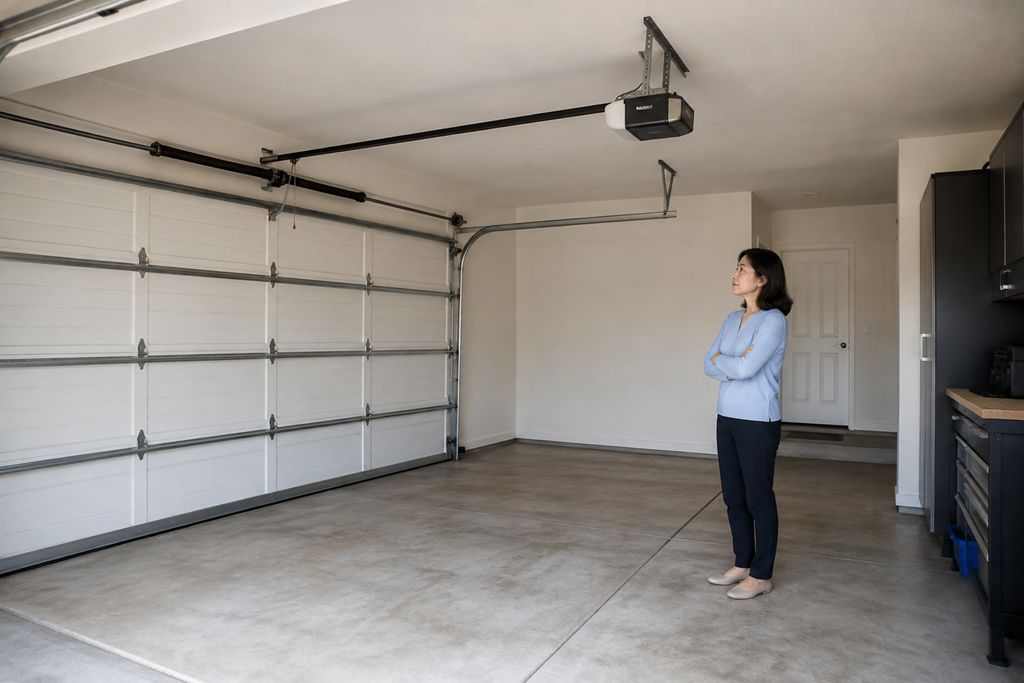
The cost of garage door repair can vary because the visible problem is only one part of the job. What looks like a simple issue with a door, opener, track, spring, panel, or sensor may involve different parts, labor, access conditions, or underlying wear. The more clearly you understand what is being repaired and why, the easier it is to compare estimates without assuming that every repair should cost the same.
For Sacramento-area homeowners, this can be confusing when two garage door problems seem similar but lead to very different repair recommendations. A door that will not open properly, for example, does not automatically tell you which component is causing the problem or how involved the repair may be.
Understanding the factors behind the scope of the work can make an estimate easier to evaluate.
The Visible Problem May Not Reveal the Full Repair
One of the biggest reasons garage door repair costs can differ is that the symptom you notice may not identify the actual source of the problem.
A door may move unevenly, stop partway, make unusual noises, fail to respond normally, or appear physically out of alignment. Those symptoms can involve different parts of the garage door system.
The repair may concern the door itself, its hardware, the opener, safety components, or more than one part of the system.
That does not mean a larger repair is automatically necessary. It simply means the visible symptom and the repair scope are not always the same thing.
A useful estimate should help you understand that connection.
The Part Being Repaired Can Make a Major Difference
Garage door systems contain many components that perform different jobs. Repairing or replacing one component may involve a very different amount of work than addressing another.
A service call involving a sensor or another relatively accessible component is not necessarily comparable with work involving springs, cables, tracks, door sections, opener hardware, or several connected components.
Some garage door components also operate under substantial tension or support significant weight. Those situations are better evaluated by a qualified garage door professional rather than treated as a casual DIY repair.
When comparing estimates, the important question is not simply, “How much does garage door repair cost?”
A more useful question is, “What exactly needs attention on this particular garage door?”
Door Size, Construction, and Design Can Affect the Scope
Not every garage door uses the same materials, dimensions, panels, hardware, or operating system.
A basic single-car garage door may present a different repair situation from a larger door, a heavier door, or a door with specialized panels, windows, finishes, or hardware.
Compatibility can matter as well.
If an existing part must match a particular door system or configuration, the repair may involve different parts or preparation than a more common setup.
This is one reason a price someone else paid for a garage door repair may not tell you very much about what your own repair should cost.
Their garage door may simply be different.
One Worn Component May Not Be the Only Issue
Sometimes a service visit begins with one obvious concern but reveals another condition that deserves attention.
For example, a homeowner may call because one part of the system is no longer operating normally, while an inspection shows additional wear elsewhere.
That can change the recommended scope.
The important distinction is whether the provider can explain why the additional work relates to the original problem.
A broader recommendation should not simply be accepted because more work was suggested. You should be able to understand what was observed, which part needs attention, and whether the additional work is necessary now, optional, or something to keep an eye on.
That explanation can be especially helpful when comparing estimates from more than one garage door company.
The Opener and the Door Are Different Parts of the System
It is also easy to think of the garage door and garage door opener as one piece of equipment.
They are connected, but problems involving the powered opener can be different from problems involving the physical door and its supporting hardware.
A door may have a mechanical issue even when the opener is functioning. An opener can also develop a problem while the door itself remains in serviceable condition.
In some situations, both sides of the system may need evaluation.
Knowing which part of the system is actually involved helps make the estimate more understandable and reduces the chance of comparing two proposals that address different problems.
Access and Existing Conditions Can Change the Work Involved
The physical setup around the garage door can also affect how straightforward a repair is.
A clear, accessible garage may present a different working environment from one where equipment, shelving, stored belongings, vehicles, built-in features, or other obstacles limit access to the door system.
Existing alterations or unusual configurations can matter too.
These details may not be the first thing a homeowner thinks about when considering repair cost, but they can affect how the work is approached.
This is another reason an estimate based on the actual garage and door is generally more informative than a broad price expectation based only on the symptom.
Repair and Replacement Are Not Always the Same Decision
A damaged or worn component does not automatically mean the entire garage door needs to be replaced.
At the same time, repairing one component is not always the most practical option if the provider identifies broader deterioration, compatibility problems, or repeated issues with the existing system.
The useful conversation is about scope.
Ask what can reasonably be repaired, what would remain unchanged, and why replacement is being discussed if it is part of the recommendation.
That helps separate a repair estimate from a replacement proposal instead of treating the two as interchangeable.
A Lower Estimate May Simply Cover Less
When homeowners receive different garage door repair estimates, the price difference can seem like the most important information.
But two estimates may not describe the same work.
One may address only the immediately failed component. Another may include additional hardware, adjustments, related parts, or other work the provider believes should be addressed at the same time.
Neither difference automatically proves that one provider is better than another.
The estimates become more useful when you can see whether they are actually proposing the same repair.
A lower number attached to a narrower scope should not be compared directly with a higher number attached to a broader scope without understanding what each includes.
A Few Questions Can Make an Estimate Easier to Understand
Before approving garage door repair, consider asking:
- What specific problem did you identify?
- Which parts are included in the repair?
- Is the recommendation limited to the immediate problem, or did you find related wear?
- If additional work is recommended, why is it being included?
- Is this a repair recommendation, a replacement recommendation, or are both reasonable options?
- What parts and labor are included in the estimate?
You do not need to become an expert on garage door systems to ask useful questions.
The goal is simply to understand what you are paying to have addressed.
Focus on the Scope Before Comparing the Price
Garage door repair costs can vary because garage doors, components, symptoms, access conditions, and repair scopes vary.
A problem that looks minor from across the garage may involve a different part of the system than expected. Another repair that appears more serious may turn out to be relatively contained.
That is why the most useful starting point is understanding what the provider found and what the proposed repair actually includes.
For Sacramento-area homeowners comparing garage door repair options, a clear explanation of the scope can make different estimates much easier to evaluate. Instead of trying to determine what a garage door repair “should” cost in the abstract, you can compare what each provider is proposing for the particular door in front of you.