Seasonal yard care means adjusting what receives attention as heat, dry conditions, new growth, falling leaves, and seasonal rain change what your property needs. For Sacramento-area homeowners, the main point is not to complete every possible landscaping task at once. It is to identify what matters now, what can wait, and what should be discussed with a qualified landscaping professional before small concerns become harder to manage.
In everyday life, seasonal changes rarely arrive as one obvious event. A lawn may begin looking uneven, leaves may collect in one drainage area, shrubs may grow faster than expected, or a previously healthy planting bed may struggle under stronger sun exposure. Homeowners often notice several small changes at once and are unsure whether they need routine maintenance, a one-time cleanup, an irrigation evaluation, or a broader landscaping plan.
A Yard Can Look Fine While Its Priorities Are Changing
A yard does not need to look neglected before seasonal care becomes worth considering. Some of the most useful work happens when a homeowner notices a developing pattern rather than waiting for the entire property to appear overgrown or stressed.
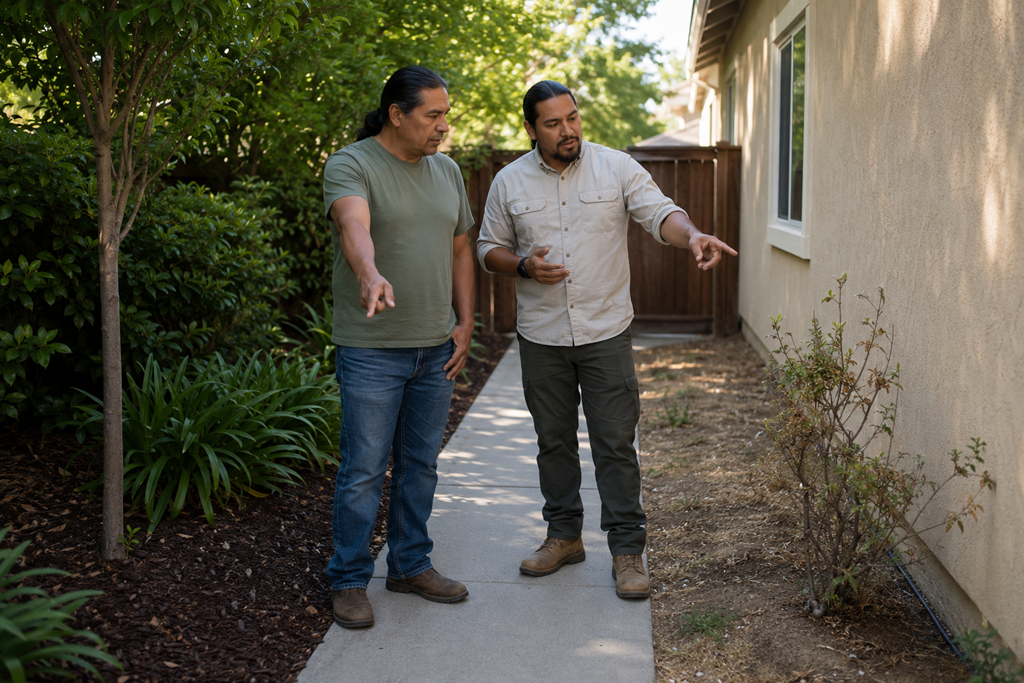
One section of a yard may receive stronger afternoon sun than another. A shaded corner may hold moisture longer. Leaves and seed pods may repeatedly collect near the same walkway, drain, or fence line. These differences can make one part of the property need attention while the rest remains in good condition.
This is why seasonal yard care is usually more useful when it is based on specific observations rather than a general feeling that the whole yard needs work.
Seasonal Care Is About Timing, Not Constant Activity
Seasonal yard care does not mean arranging a major landscaping project every time the weather changes. It means recognizing that the most useful service may change as conditions change.
During hotter and drier periods, homeowners may become more concerned about uneven watering, sun exposure, thinning areas, plant stress, or the amount of ongoing maintenance a landscape requires. When growth becomes more active, trimming, weed management, edging, and general appearance may become more noticeable.
Falling leaves, seed pods, and other debris can create a different set of concerns, especially when material repeatedly gathers near walkways, planting beds, drainage areas, or property edges. Seasonal rain may reveal low areas, runoff patterns, soil movement, or places where water remains longer than expected.
The important point is not that every observation requires professional work. It is that seasonal conditions can reveal which part of the yard deserves a closer look.
The Same Service Name Can Describe Very Different Work
Terms such as “yard cleanup,” “seasonal maintenance,” and “landscape refresh” can sound straightforward, but different providers may use them to describe very different services.
One seasonal cleanup might include removing leaves, cutting back selected growth, clearing planting beds, and hauling away debris. Another quote may cover only basic mowing, edging, and surface cleanup. A landscaping proposal may include irrigation observations, plant replacement, mulch, pruning, drainage concerns, or recurring maintenance.
Homeowners can become frustrated when they assume a familiar service name automatically includes everything they have in mind.
Before comparing estimates, ask each provider to explain exactly which areas of the property are included, what work will be performed, what will remain unchanged, and whether debris removal or follow-up visits are part of the scope.
Timing Can Change What a Provider Can Reasonably Promise
Some yard concerns can be addressed during one appointment. Others may need to be observed over time or reconsidered under different weather conditions.
For example, a landscaping professional may be able to remove accumulated debris immediately but recommend watching how water moves through the area during seasonal rain. A provider may identify a sun-exposed planting area that would benefit from a different long-term approach rather than repeatedly replacing struggling plants.
The timing of trimming, planting, irrigation changes, and other landscape work may also depend on the type of plants involved, their condition, the property layout, and the homeowner’s goals.
A qualified provider should be able to separate work that makes sense now from work that may be better discussed later. Be cautious when every observation is immediately presented as a large project without an understandable explanation.
A Useful Estimate Separates Priorities From Extras
Seasonal yard-care estimates are easier to evaluate when the provider distinguishes between immediate priorities, routine appearance work, optional improvements, and longer-term ideas.
A homeowner may care most about keeping walkways clear and preventing debris from repeatedly collecting near a drainage point. Improving the appearance of several planting beds may be desirable but less important. Replacing plants or redesigning part of the yard may be a future project rather than part of the current service.
When these items are combined into one unexplained total, it can be difficult to understand what the homeowner is actually paying for.
An estimate does not need to be overly technical, but it should help you recognize the service boundaries. You should be able to tell whether the proposal addresses the seasonal issue you originally wanted evaluated or has expanded into a different project.
Questions That Make the Conversation More Useful
A few focused questions can help Sacramento homeowners understand whether a proposed service fits the current condition of the yard:
- Which areas need attention now, and which areas are still in good condition?
- What seasonal condition appears to be contributing to the problem?
- Is this a one-time service or an issue that may return?
- What work is included in the estimate, and what is excluded?
- Are any recommended improvements optional rather than necessary for the current concern?
- What should I reasonably expect the yard to look like after the service?
These questions are not about challenging the provider. They help both sides agree on the actual problem, the proposed response, and the expected result.
Waiting for a Dramatic Problem Can Limit Your Options
One common misunderstanding is that seasonal yard care only matters when a lawn is severely damaged, shrubs are heavily overgrown, or debris has become difficult to manage.
In reality, smaller patterns can be easier to evaluate. Repeated dry spots, recurring debris accumulation, uneven growth, or water collecting in the same place can give a landscaping professional more useful information than a vague request to “fix the yard.”
Early attention does not always mean immediate work. Sometimes it simply leads to a better explanation of what is happening and whether the concern should be monitored, maintained, or addressed through a separate service.
Routine Maintenance May Not Cover Every Seasonal Concern
Homeowners sometimes assume that a recurring mowing or gardening service automatically includes all forms of seasonal care.
Routine service may keep visible growth under control while leaving irrigation performance, drainage patterns, plant health, tree-related debris, soil conditions, or landscape design questions outside the provider’s normal scope.
This does not necessarily mean the existing service is incomplete. It may mean the homeowner needs to ask whether a specific seasonal concern is included or whether a different type of landscaping professional should evaluate it.
Understanding that distinction can prevent repeated appointments that improve appearance without addressing the issue the homeowner is actually noticing.
Comparing Only the Total Price Can Hide Important Differences
Two seasonal yard-care quotes may have different totals because they cover different areas, labor, materials, disposal responsibilities, or follow-up expectations.
A lower quote may be appropriate when the homeowner wants only basic cleanup. A more detailed proposal may make sense when several separate concerns need to be evaluated. The useful comparison is not simply which number is smaller, but which scope most closely matches the current need.
Before choosing a provider, compare what each estimate includes, how clearly the work is described, and whether the provider has explained what the service is expected to accomplish.
A Better Goal Than Trying to Perfect the Entire Yard
The most practical goal of seasonal yard care is not to make every part of the property look perfect at all times. It is to notice how changing conditions affect the yard and respond in a way that matches the homeowner’s priorities, budget, and expectations.
For one property, that may mean addressing debris before seasonal rain. For another, it may mean evaluating a sun-exposed area that requires more attention every hot season. A different homeowner may simply need a clearly defined cleanup before deciding whether any broader improvements are worthwhile.
When speaking with a Sacramento-area landscaping provider, begin with the specific change you have noticed. Ask what may be contributing to it, what the proposed service will address, and what can reasonably wait. That approach makes it easier to choose seasonal work that fits the property rather than committing to a larger or less clearly defined project.