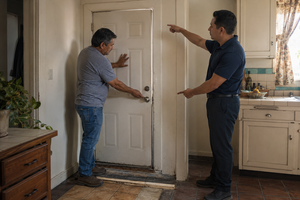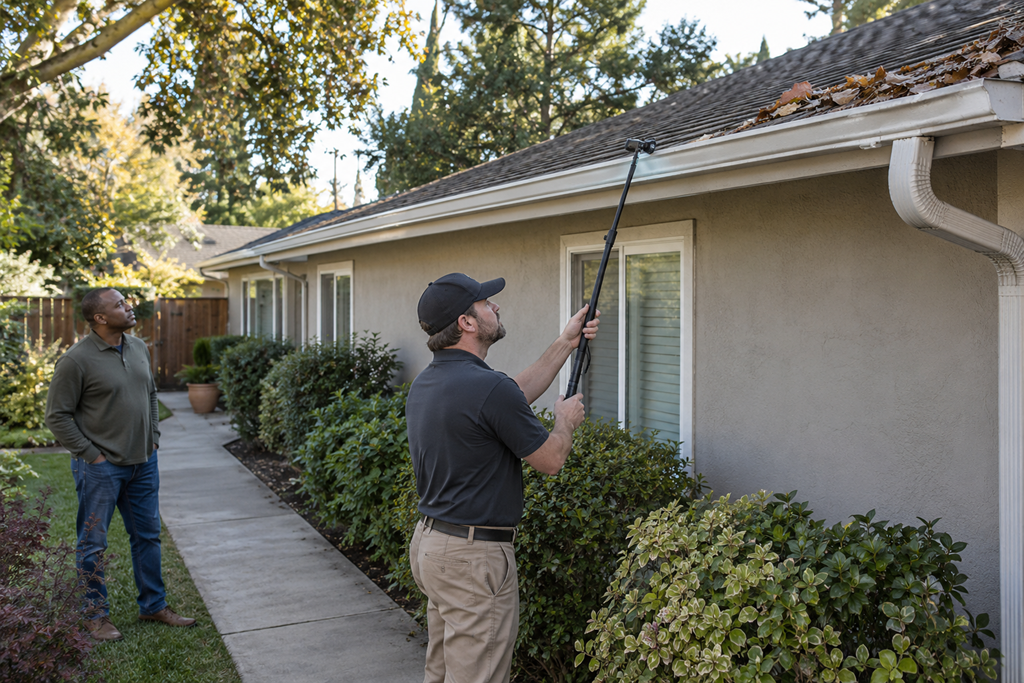
A gutter and roofline inspection is usually a visual assessment of how the gutters, downspouts, roof edges, and nearby exterior components are working together before a homeowner decides what service may be appropriate. For Sacramento-area homeowners considering gutter guards, the inspection is less about receiving an instant yes-or-no answer and more about understanding the current condition, access, debris patterns, and any visible issues that could affect the scope of the project.
That distinction can make the appointment easier to understand. A homeowner may start out thinking mainly about keeping leaves out of the gutters, while the person performing the inspection may need to look at a broader stretch of the roofline before discussing whether a particular gutter guard project makes sense.
The Inspection Usually Looks Beyond The Top Of The Gutter
Although gutters are the obvious focus, they are part of a larger drainage system along the edge of the home.
An inspection may include visible portions of the gutters, downspouts, gutter attachment points, roof edges, fascia, existing gutter protection, and areas where debris tends to collect. The provider may also look at how different sections of the gutter system relate to nearby trees, roof shapes, corners, valleys, or other property features.
This does not automatically mean something is wrong.
The goal is usually to understand the existing setup before discussing what would be involved in adding, replacing, or modifying gutter protection. A gutter guard that works with one type of existing gutter or roofline condition may require different planning on another property.
For the homeowner, this means the inspection can be more useful when it is treated as a fact-finding visit rather than simply a measurement appointment.
Existing Conditions Can Affect The Conversation
One of the most useful parts of an inspection is learning what the provider sees before any project is proposed.
For example, one section of a home may receive considerably more leaves or small debris because of nearby tree coverage, while another side may stay relatively clear. An existing gutter system may also have sections that appear different from one another because of previous work, additions, repairs, or changes to the home.
Those observations can affect what the provider wants to examine more closely.
The important point is not for the homeowner to diagnose the condition. It is to understand whether the provider is evaluating the actual property rather than treating every gutter guard installation as an identical project.
A useful inspection should make it easier to understand what is being observed and why it matters to the proposed scope.
You May Be Asked What You Have Noticed During Rain Or Seasonal Changes
Not everything a provider would want to understand will necessarily be visible during a dry inspection.
A homeowner may be asked whether certain gutters tend to fill with debris, whether water appears to behave differently around particular sections, how often the gutters have historically needed cleaning, or whether there are areas that have been troublesome in the past.
You do not need a technical explanation.
Simple observations can be more useful than trying to identify the cause yourself. Saying that one corner tends to collect more debris or that a particular section has required more attention gives the provider information to consider during the visual inspection.
Sacramento-area properties can also differ considerably in tree exposure, sun exposure, roof configuration, and surrounding landscaping. The point of discussing those conditions is not to assume a particular solution but to help connect what you have observed with what the provider can actually see.
Inspection Methods Can Vary From One Property To Another
Homeowners sometimes expect every gutter inspection to look the same. In practice, the way a roofline is evaluated can depend on the property, access, building height, surrounding obstacles, and what needs to be seen.
Some portions may be visible from the ground or other safely accessible locations. A provider may also use photos, inspection equipment, or other appropriate methods to examine areas more closely.
Not every inspection requires the same level of physical access.
That is one reason it can be useful to ask what the provider was able to inspect and whether any areas could not be evaluated clearly. A limitation does not necessarily indicate a problem, but it should be communicated rather than quietly ignored.
You should not feel responsible for climbing, opening, removing, or accessing difficult areas yourself simply to prepare for the appointment.
The Inspection Should Help Define The Project Before The Estimate
For a homeowner considering gutter guard installation, one of the biggest benefits of the inspection is establishing what the proposed work actually includes.
A provider may need to determine whether the conversation is strictly about installing guards on an existing gutter system or whether there are existing conditions that should be discussed separately before that installation moves forward.
Those are different issues, and they should not be blurred together.
If the provider identifies something outside the original gutter guard request, ask for a plain-language explanation of what was observed, what portion of the property it involves, and whether it changes the proposed scope.
You do not have to make an immediate decision simply because an additional issue comes up during the visit.
A clear estimate should make it possible to see what work is being proposed instead of leaving you to guess which observations from the inspection were incorporated into the price.
A Good Inspection Separates Observations From Assumptions
One of the easiest ways for a gutter or roofline conversation to become confusing is when an observation quickly turns into a conclusion without much explanation.
There is a meaningful difference between a provider saying, in effect, “Here is what I can see” and immediately presenting a broad recommendation without explaining the connection.
Homeowners should be able to ask what was actually observed.
If something appears to involve the roof itself, structural conditions, water intrusion, or another issue outside the provider's normal scope, it may be appropriate to have the relevant qualified professional evaluate it rather than assuming a gutter guard project will address it.
The inspection should help clarify boundaries, not make every exterior concern sound like part of the same job.
Questions Worth Asking Before The Visit Ends
You do not need a long checklist. A few direct questions can help you understand what the inspection revealed and make later quote comparisons easier:
- What areas of the gutters and roofline were you able to inspect?
- Did you see anything that could affect the proposed gutter guard installation?
- Are any areas being excluded from the proposed work?
- Does anything need separate evaluation before installation is considered?
- What preparation or existing-condition work, if any, is included in the estimate?
- If I compare this estimate with another provider, what scope details should I make sure I compare?
The usefulness of the answers often matters more than the length of the explanation. You are looking for a proposal that connects clearly to the property that was actually inspected.
What You Should Understand When The Inspection Is Finished
By the end of a gutter and roofline inspection, you should have a better picture of the existing system, the areas the provider evaluated, anything that may affect the proposed project, and what the next discussion or estimate is based on.
You do not need to become an expert in gutters or roofing.
The practical goal is to understand enough to distinguish between the condition of the property, the scope of a potential gutter guard project, and any separate concerns that may deserve additional evaluation. That makes it easier to compare local providers and ask better questions without feeling pressured to decide during the inspection itself.
A useful inspection should leave the project easier to understand than it was before the appointment.