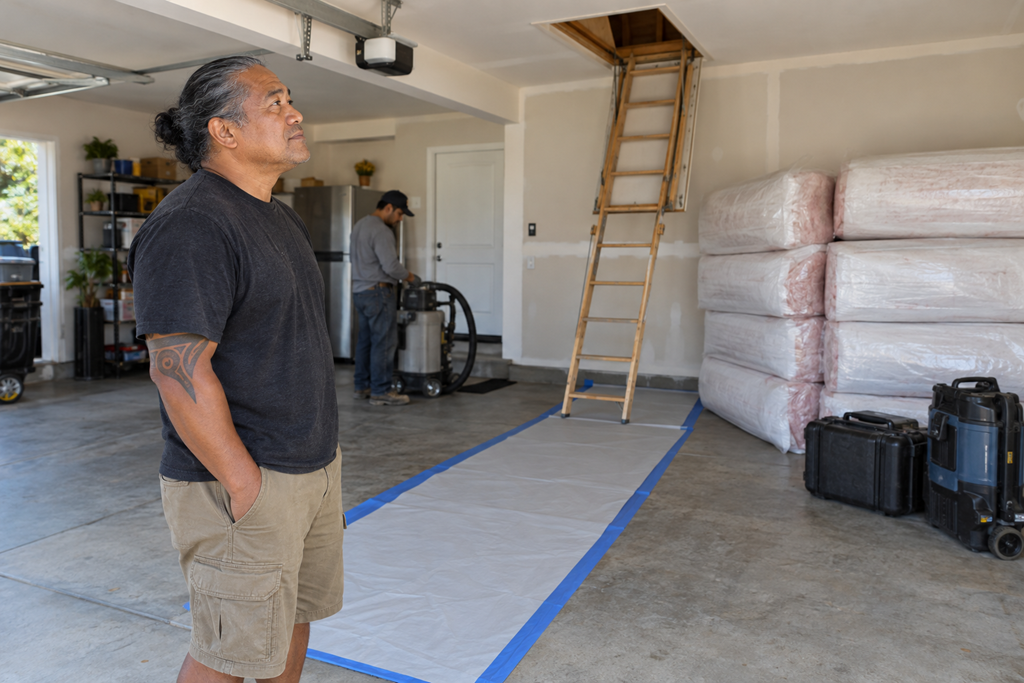
An attic insulation project usually involves more than simply adding insulation. Before work begins, the provider may review attic access, existing insulation, ventilation openings, wiring, stored items, and areas that need protection. During the project, you can generally expect preparation, controlled access to the attic, insulation work, cleanup, and a final walkthrough or explanation of what was completed.
For homeowners, the experience can feel unusual because much of the actual work happens out of sight. You may see materials being staged, protective coverings being placed, equipment being brought near the home, and workers moving between the attic access point and their equipment without being able to see exactly what is happening above the ceiling.
Knowing what the project may involve makes it easier to ask useful questions beforehand and recognize whether the work is progressing the way the provider described.
The Project Often Starts With Protecting Access Areas
Before insulation work begins, the crew generally needs a practical route between its equipment, materials, and the attic access point.
That can mean protecting flooring, temporarily moving small items near the access area, staging materials in a garage or driveway, and keeping the immediate work zone clear.
The amount of preparation varies from home to home. An attic entrance in a garage may create a different setup than one located inside a hallway, bedroom, closet, or other finished area.
This is one reason it is useful to ask where workers expect to enter the attic and which parts of the home they will need to use before the project begins.
You should not have to guess whether furniture, stored belongings, vehicles, or other household items need to be moved. A provider should be able to explain what access they need and what preparation they expect from you.
Existing Insulation Can Change What Happens Next
Not every attic insulation project starts with an empty attic.
Some homes already have insulation that may remain in place, while other projects may include removal of some or all existing material. Additional work may also be part of the agreed scope, such as addressing air leakage or preparing specific attic areas before new insulation is installed.
What matters for the homeowner is understanding which work is actually included.
If an estimate simply says "attic insulation" without explaining whether existing material stays, whether anything is being removed, or whether related preparation is included, ask for clarification before work starts.
The condition and accessibility of the attic may also affect how straightforward the project is. Areas around wiring, mechanical equipment, attic framing, ventilation components, or tight sections of the attic can require more careful planning by the provider.
That does not automatically mean something is wrong. It simply means attic projects are influenced by the space that is already there.
Much Of The Work May Be Happening Where You Cannot See It
One of the unusual parts of an attic insulation project is that the homeowner may see very little of the actual installation.
Depending on the insulation method and project scope, workers may spend much of their time in or around the attic while equipment remains outside, in the garage, or near the attic entrance.
That can make a project seem quiet at one moment and busy the next.
Rather than judging progress only by what you can see from the living area, it helps to understand beforehand how the provider expects the project to proceed.
You might ask how the work will be staged, whether the crew expects to complete the attic in sections, and how you will be informed if the attic conditions differ from what was expected.
Clear communication becomes particularly important when the main work area is hidden from view.
Some Temporary Disruption Is Normal
Even a well-organized insulation project can affect the household for a while.
There may be equipment near the home, workers moving through a designated access area, protective coverings on floors, temporarily restricted access to part of a garage or hallway, and normal project noise.
The degree of disruption depends heavily on the attic location, insulation method, amount of material involved, and whether additional preparation or removal work is part of the project.
Before scheduling, ask what parts of the property the crew expects to use and whether you need to plan around any temporary access restrictions.
That conversation can be especially useful if you work from home, have pets, need regular garage access, or have other household routines that could overlap with the project area.
The goal is not to eliminate every inconvenience. It is to know what is likely to happen so ordinary project activity does not come as a surprise.
Unexpected Attic Conditions Can Affect The Original Plan
An attic cannot always be fully understood from the living space below.
Once the provider has better access, conditions may become clearer than they were during an initial estimate or inspection.
If something is discovered that could change the agreed scope, timing, or price, you should expect an explanation before assuming that additional work is automatically part of the project.
A useful distinction is the difference between an unexpected condition and an unexplained change.
Unexpected conditions can happen in home-service projects. Unexplained changes are a communication problem.
If the provider recommends work that was not included in the original agreement, ask what was found, why it matters to the insulation project, whether the additional work is necessary for the agreed scope, and how it would change the project.
You do not need to make a rushed decision simply because workers are already at the property.
Cleanup Is Part Of The Project Experience Too
When the insulation work is finished, the project should transition from installation to cleanup and completion.
Materials and equipment should be removed from the work areas, temporary protective coverings should be addressed, and the attic access area should no longer look like an active staging zone.
Depending on the provider and scope, the final conversation may include an explanation of what was installed, what areas were addressed, whether anything differed from the original plan, and what documentation is available for the completed work.
Because homeowners may not be able to comfortably or safely inspect every part of an attic themselves, this final explanation can be valuable.
You can ask the provider how they confirm that the agreed work was completed rather than feeling that you need to personally enter an unfamiliar attic space.
A Few Questions Can Make The Project Easier To Understand
Before the scheduled work begins, useful questions include:
- Where will the crew access the attic?
- What areas of the home or garage need to remain clear?
- Is existing insulation staying in place or being removed?
- What preparation is included in the quoted scope?
- How will you communicate if attic conditions change the plan?
- What should I expect during cleanup and the final review?
These questions are less about learning how insulation is installed and more about understanding how the project will affect your property and what you are paying the provider to do.
The Best Expectation Is A Clearly Explained Process
For Sacramento-area homeowners, an attic insulation project does not need to feel mysterious simply because most of the work happens above the ceiling.
A well-explained project should give you a reasonable understanding of how the crew will access the attic, what preparation is included, what work is being performed, how unexpected conditions will be handled, and what happens before the project is considered complete.
You do not need to become an insulation expert. You simply need enough information to understand the agreed scope, recognize when something has changed, and ask better questions before committing to additional work.
That makes the project easier to follow from the first day of preparation through the final cleanup.