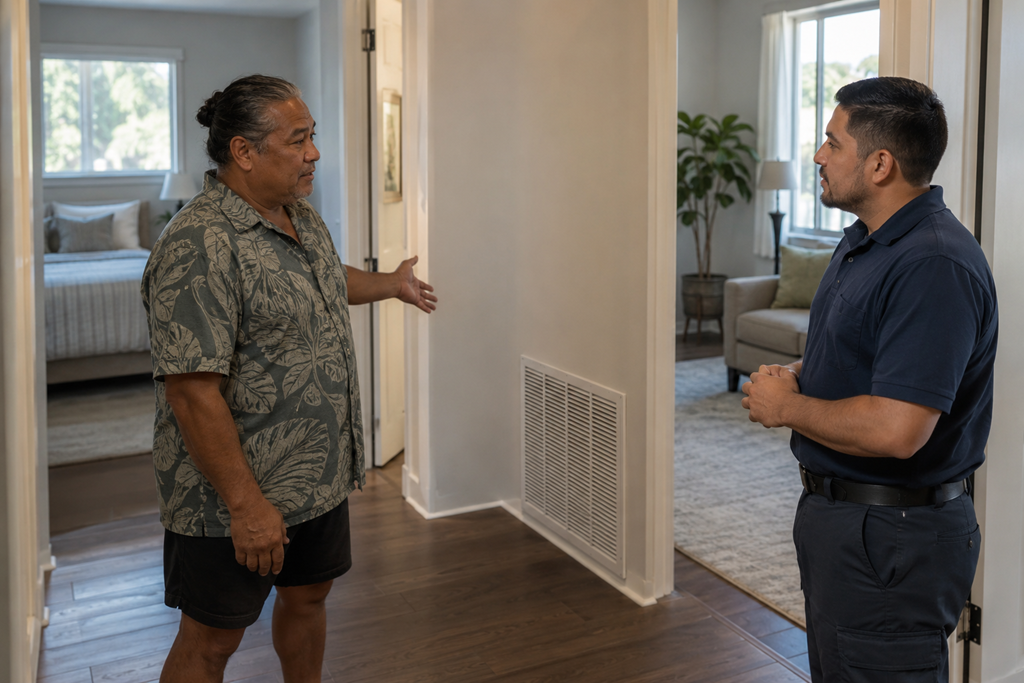
During an HVAC system inspection, a technician typically looks at the major parts of your heating and cooling system, checks how the system is operating, and notes visible signs of wear, damage, airflow concerns, or maintenance needs. The goal is usually to understand the system’s current condition and identify anything that may deserve attention—not to assume that every finding requires an immediate repair or replacement.
For Sacramento-area homeowners, an inspection can be especially useful when the system has been running differently than expected, before a season of heavier use, after moving into a home, or simply when you want a better understanding of the equipment you already have.
The exact inspection can vary depending on the type of system, its age and configuration, accessibility, and why the visit was scheduled. Still, there are several things you can generally expect.
The Inspection Usually Covers More Than One Piece of Equipment
An HVAC system is made up of multiple components that work together. Because of that, an inspection typically involves looking beyond a single vent, thermostat, furnace, heat pump, or outdoor unit.
A technician may observe accessible indoor and outdoor equipment, look at visible connections and components, consider airflow, and operate the system to see how it responds under normal conditions.
That does not necessarily mean every component will be disassembled or extensively tested. An inspection is primarily an evaluation of the system and its condition. If something suggests a deeper problem, the technician may recommend additional diagnostic work.
One useful distinction for homeowners is that an inspection can uncover questions without immediately answering every technical question about the system.
Expect Some Observation Before Any Recommendations
A good portion of an HVAC inspection may look uneventful from a homeowner's perspective.
The technician may spend time observing the equipment, listening while it operates, checking accessible areas, and comparing what happens at different points in the system.
This matters because HVAC problems do not always present themselves as a single obvious failure. A room that feels uncomfortable, unusual system cycling, inconsistent airflow, or an unexpected sound may have several possible explanations.
The inspection provides an opportunity to gather information before jumping to conclusions.
If you scheduled the visit because of a particular concern, explaining what you have noticed can also provide useful context. You do not need to diagnose the problem yourself. Simply describing what you experience—such as when it happens and whether it seems consistent or occasional—is often more useful than trying to name the cause.
The Technician May Operate the System During the Visit
Seeing the system running during an inspection is normal.
The technician may use the thermostat or other system controls to observe how the heating or cooling equipment starts, operates, and responds. Depending on the system and the purpose of the appointment, this can help reveal whether something behaves differently than expected.
You may also notice the technician moving between indoor equipment, supply or return areas, and the outdoor unit.
For the homeowner, this can make the visit seem less like a single-point inspection and more like an evaluation of how several pieces work together.
That broader view is important. A concern you notice in one part of the house does not necessarily mean the cause is located in that same place.
An Inspection Is Not Automatically a Repair Appointment
One of the easiest misunderstandings is assuming that anything discovered during an inspection must be fixed during the same visit.
That is not always the case.
An inspection may identify routine maintenance needs, a condition worth monitoring, something that deserves additional evaluation, or an issue for which the technician recommends repair or replacement.
Those are different situations.
If a recommendation is made, you can ask the technician to explain what was observed and why it matters. Unless there is a legitimate immediate safety concern, you should not feel that simply scheduling an inspection means you have already agreed to additional work.
This distinction can be particularly helpful when comparing Sacramento-area HVAC providers. Clear communication about what is being inspected, what was found, and what is optional versus necessary makes it easier to understand the recommendation before making a decision.
Some Findings May Be More Important Than Others
An HVAC inspection can produce several observations, but they may not all carry the same significance.
For example, one finding could involve routine upkeep while another could warrant closer investigation. A technician might also notice something that is currently functioning but showing signs of age or wear.
Ask for those distinctions.
A useful inspection should leave you with a clearer sense of what the technician observed and how the findings are being prioritized. It should not simply leave you with a long collection of technical terms.
You can ask whether an item is:
- a maintenance consideration
- something to monitor
- something that needs further diagnosis
- a repair recommendation
- a possible replacement consideration
- a safety-related concern
The goal is not to challenge every recommendation. It is to understand what each recommendation actually means before deciding what to do next.
The Condition of the System May Matter More Than Its Age Alone
Homeowners sometimes expect an inspection to produce a simple judgment based mainly on how old the equipment is.
Age can provide context, but an inspection is also about observable condition and performance.
Two systems of similar age may not have the same maintenance history, operating conditions, equipment configuration, or current concerns. Likewise, older equipment is not automatically being condemned simply because a technician inspects it.
If replacement is brought up, ask what specific observations led to that recommendation.
That helps shift the conversation from a broad statement such as "the system is old" toward a clearer discussion of what the technician actually found.
You Should Have an Opportunity to Discuss the Findings
The end of the inspection is often one of the most useful parts of the visit.
This is when the technician can explain what was observed, whether anything appears to need attention, and what options may be worth considering.
You do not need an HVAC background to ask useful questions.
A few straightforward questions can include:
- What did you find during the inspection?
- Which findings matter most?
- Is anything simply something to monitor?
- Does anything require additional diagnostic work?
- If you recommend a repair, what observation is that recommendation based on?
- If replacement comes up, what conditions led you to raise that option?
- Is there anything about the system I should keep an eye on going forward?
Clear answers should help you understand the decision rather than pressure you into making one.
An Inspection Should Leave You Better Oriented
An HVAC inspection is not simply a search for something to sell or replace. At its most useful, it is a structured look at how the system is operating and what its visible condition suggests.
You may finish the appointment learning that the system appears to need only routine attention. You may learn that one concern deserves further diagnosis. Or the inspection may reveal a repair or replacement issue worth discussing in more detail.
The important part is understanding the difference.
For Sacramento-area homeowners, knowing what an HVAC inspection typically involves makes it easier to follow the visit, ask useful questions, and evaluate any recommendations before authorizing additional work.