Adding an awning can make a patio, window, or entry more comfortable, but the best result usually depends on more than choosing a fabric color or a style you like. Before moving forward, it helps to understand exactly what you want the awning to change, where it can be mounted, how sunlight and rain reach the area, and what the installer is including in the proposed scope.
For many homeowners, the decision begins with a simple frustration. A patio becomes too hot in the afternoon, sunlight creates glare through a window, or a doorway receives more rain exposure than expected. An awning may appear to be a straightforward solution, but questions about placement, projection, mounting, operation, and coverage can quickly make the project feel less simple.
The most useful starting point is not the awning itself. It is the specific problem the awning is supposed to solve.
Begin With the Area You Want to Improve
An awning can provide shade, reduce direct sunlight, create a more comfortable transition between indoor and outdoor spaces, or offer limited protection from light rain. However, one awning may not accomplish all of those goals equally well.
A patio awning intended to shade an outdoor dining table may need a different position and projection than an awning intended to reduce sunlight entering a west-facing window. Coverage for a doorway may involve different clearance and drainage concerns than coverage for a large seating area.
Before comparing products, consider what happens in the space now:
- What time of day does the area become uncomfortable?
- Is the main concern heat, glare, light rain, or protecting furnishings?
- Which part of the patio, window, or entry needs coverage?
- Does the problem occur regularly or only under certain conditions?
- Do doors, windows, walkways, or outdoor furniture affect the usable space?
These observations give an installer something more useful than a general request for “more shade.” They help define what a successful installation should actually change.
The Position of the Sun Can Change the Result
A large awning does not automatically create shade in the exact place where it is needed. The direction and angle of sunlight can cause the shadow to fall differently throughout the day.
This can be especially noticeable for Sacramento-area homeowners dealing with strong afternoon sun. An awning mounted high above a patio may create helpful overhead shade while allowing lower-angle sunlight to reach beneath it later in the day. A deeper projection, adjusted mounting position, drop shade, or different design may be worth discussing, but every property will have its own limitations.
Looking at the area only during a morning estimate may not reveal what happens during the hottest part of the afternoon. Photos taken at different times can help a provider understand how the sunlight moves across the space.
The goal is not necessarily to block every ray of sunlight. It is to make sure the proposed awning addresses the time and location that matter most to the homeowner.
Placement Can Be More Important Than Appearance
Awning fabrics, frame colors, and decorative styles are highly visible, so it is natural to focus on appearance first. However, placement usually has a greater effect on whether the awning functions as expected.
The installation area may include:
- Exterior doors that swing outward
- Windows that need to open freely
- Gutters and downspouts
- Roof edges and trim
- Exterior lighting
- Utility equipment
- Vents or drainage routes
- Walkways and seating areas
- Landscaping close to the structure
A proposed awning should fit around these features without creating new access or clearance problems. It should also direct water away from areas where runoff could become inconvenient.
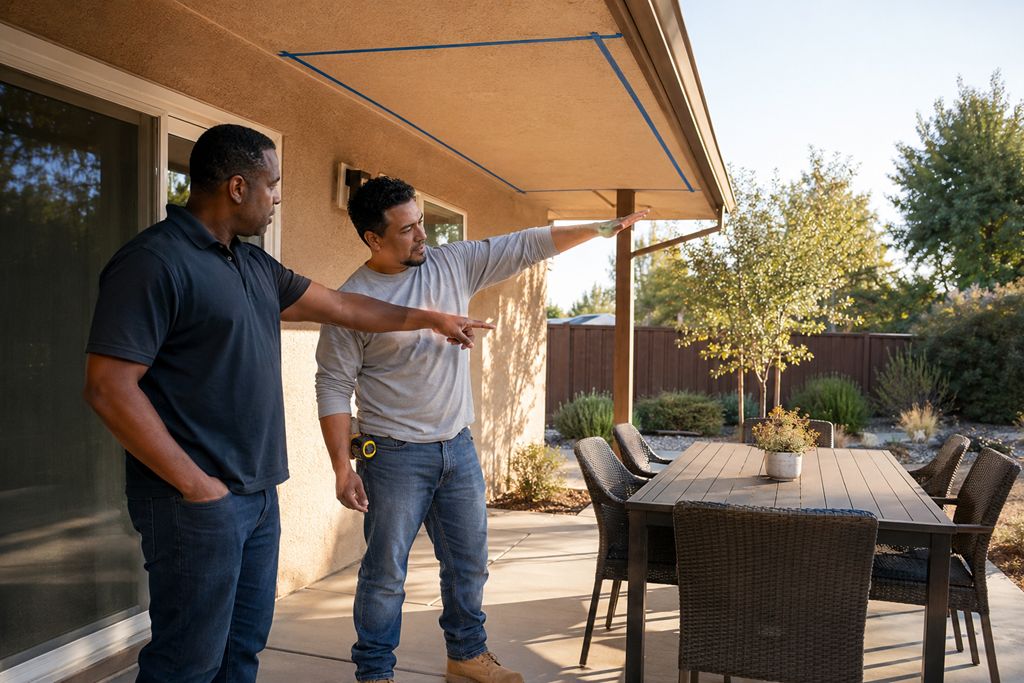
A helpful estimate should show where the awning will begin, how far it will project, how low its front edge will sit, and what will remain accessible underneath it.
The Exterior Surface Does Not Tell the Whole Story
Homeowners may assume an awning can be attached anywhere there is enough open wall space. In reality, the visible exterior material is only one part of the mounting decision.
Stucco, siding, brick veneer, trim, and other finishes may cover the structural areas needed to support the awning. The installer may need to determine what is behind the exterior surface, whether the proposed attachment points are suitable, and whether the surrounding material is in appropriate condition.
This is one reason a photograph or rough measurement may not be enough for a final proposal. An on-site evaluation can help identify obstacles such as limited mounting height, uneven surfaces, damaged trim, unusual framing conditions, or conflicts with gutters and rooflines.
A qualified provider should be able to explain the proposed attachment area in understandable terms without expecting the homeowner to evaluate the structure independently.
Fixed and Retractable Awnings Create Different Experiences
A fixed awning remains extended and provides consistent coverage. A retractable awning can be opened when shade is wanted and closed when the homeowner prefers an unobstructed view or more sunlight.
Neither option is automatically better. The practical choice depends on how the space will be used.
A fixed awning may appeal to someone who wants dependable coverage over a small window or entry. A retractable model may be more useful over a patio where the homeowner wants shade during hot afternoons but open sky at other times.
Retractable systems may be operated manually or with a motor. Motorized models may involve electrical planning, controls, sensors, and additional components that should be clearly addressed in the estimate.
Homeowners should also ask how the awning is intended to be used during wind, rain, and periods when the property is unattended. An awning can improve an outdoor area without functioning as an all-weather roof.
Fabric Color Is Only One Part of the Product Decision
The visible fabric matters, but it should not be the only basis for comparing awnings.
Other factors may include:
- The amount of projection
- Frame construction
- Fabric durability
- Resistance to fading
- Water-shedding characteristics
- Manual or motorized operation
- Hardware visibility
- Available mounting options
- Cleaning and maintenance expectations
- Manufacturer and installation warranty terms
A fabric sample viewed indoors may also look different when exposed to full sunlight. Darker fabrics may create a different visual effect than lighter fabrics, while patterns may appear stronger or softer across a large extended surface.
It can be useful to view samples outdoors near the installation area rather than relying only on a small catalog image.
A Bigger Awning Is Not Always a Better Awning
It is easy to assume that maximizing width and projection will produce the most useful result. Greater coverage can help in some situations, but it may also affect mounting requirements, visual proportions, clearance, cost, operation, and exposure to weather.
The appropriate size should relate to the actual area being used. An awning that extends beyond the seating area may provide little added benefit if the extra shade falls across an unused walkway. A design that appears generous on paper may feel too low, too visually heavy, or poorly positioned once installed.
A provider should be able to explain why a particular width, height, and projection are being recommended. The explanation should connect the measurements to the homeowner’s goals rather than relying only on what will physically fit.
Make Sure the Estimate Describes the Same Project You Discussed
Two awning estimates can appear similar while covering different products or different amounts of work. A lower price may reflect a smaller awning, a manual system instead of a motorized one, different fabric, fewer preparation tasks, or exclusions that are not immediately obvious.
A useful written estimate should make the proposed installation understandable. Depending on the project, it may address:
- Awning type and approximate dimensions
- Fabric and frame selection
- Manual or motorized operation
- Proposed mounting location
- Support or preparation work
- Electrical work, when applicable
- Removal of an existing awning
- Delivery and installation
- Cleanup and disposal
- Warranty coverage
- Responsibilities or work that are excluded
The purpose is not to demand an unusually long contract for a straightforward project. It is to make sure the homeowner and provider are discussing the same scope.
Questions That Can Make the Consultation More Useful
A few focused questions can reveal how carefully a provider has considered the property:
- Where will the shade fall during the time of day I am most concerned about?
- Why are you recommending this mounting height and projection?
- Will doors, windows, gutters, lights, or walkways remain unobstructed?
- How will rainwater leave the awning?
- What conditions require the awning to be retracted?
- What preparation or electrical work is included?
- What maintenance should I expect?
- What is excluded from the estimate?
- Who provides warranty service if an operating component develops a problem?
Clear answers should help the homeowner understand the recommendation. A provider who cannot explain the proposed placement, product, or scope may not yet have enough information to offer a reliable plan.
Watch for Assumptions That Can Lead to Disappointment
Several common assumptions can make an awning project harder to evaluate.
One is expecting the awning to cool an entire patio equally throughout the day. Shade moves as the sun moves, and some portions of the space may remain exposed.
Another is treating an awning like a permanent roof. Many awnings provide useful shade and limited weather protection, but their intended use may not include heavy rain, strong wind, or leaving a retractable system extended in changing conditions.
Homeowners may also focus heavily on fabric selection while giving less attention to mounting height, projection, drainage, and operation. Those less decorative details often determine how the awning feels in everyday use.
Finally, it can be difficult to compare estimates when each provider recommends a different size or system. Rather than comparing only the final price, compare the problem each proposal is designed to solve.
Observe the Space Before Committing
A little observation can make an awning consultation more productive. Notice when the area becomes hot, where the shadow line moves, which doors and windows are used, where people normally sit, and where rainwater currently travels.
Photos taken at the time the problem is most noticeable can help communicate conditions that may not be present during the estimate.
This does not require the homeowner to design the installation. It simply gives the provider a clearer picture of how the area is used and what the homeowner expects the awning to improve.
A Good Awning Decision Starts With a Clear Purpose
Before adding an awning, define the problem, study the proposed placement, understand the mounting area, and confirm what the estimate includes. Style and color still matter, but they should support a design that works with the home and the way the space is actually used.
For Sacramento-area homeowners, a thoughtful consultation should make it easier to understand where the awning will provide coverage, how it will operate, and what limitations to expect. When those details are clear before installation, comparing local providers and choosing an appropriate system becomes much more manageable.