Before planning a home theater, it helps to think less about the biggest screen or loudest speakers and more about how the room will actually be used. Sacramento-area homeowners often start with equipment ideas, but the better early question is whether the space, seating, wiring, sound, lighting, and daily routines can support the experience they want.
A home theater can sound like a single project, but in real life it is usually a collection of smaller decisions. Where will people sit? Will afternoon light hit the screen? Can sound travel through shared walls or nearby bedrooms? Is the room mostly for movies, sports, gaming, family nights, or everyday TV? These questions matter because a home theater that looks impressive on paper can still feel uncomfortable, inconvenient, or hard to use if the planning starts in the wrong place.
A Good Home Theater Starts With the Room, Not the Equipment
The most common mistake is treating a home theater like a shopping list. A large screen, surround sound, projector, receiver, streaming devices, seating, and lighting can all matter, but they do not matter equally in every room.
A smaller room may need different choices than a large open living area. A room with bright windows may need more attention to glare. A space near bedrooms may need a different sound plan than a detached bonus room. A room used by children, guests, or multiple family members may need simple controls more than advanced features.
This is why a qualified home theater installation professional will usually want to understand the room before recommending equipment. The goal is not just to install devices. The goal is to make the devices work together in the space where people will actually use them.
The Seating Plan Shapes More Than Comfort
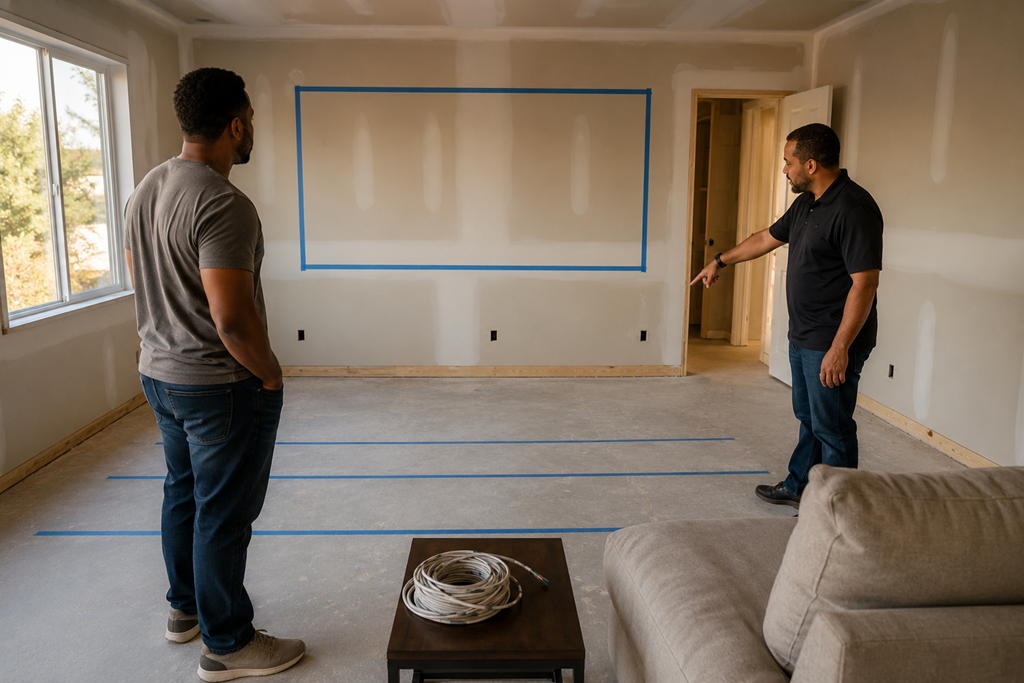
Seating is easy to think about late in the process, but it should be considered early. The distance between the seating area and the screen affects screen size, viewing angle, speaker placement, walkway space, and whether the room feels natural or crowded.
For example, a screen that feels exciting in a showroom may feel too large when placed close to a sofa. A speaker layout that seems standard may not fit well if seating is pushed against the back wall. A sectional that works for family lounging may block wiring paths, vents, or side speaker locations.
Before asking what screen to buy, it can be more useful to ask where people will sit most often and whether that location supports the viewing experience. The right setup should fit normal use, not just the ideal version of movie night.
Lighting Can Change the Whole Experience
Lighting is one of the easiest parts of home theater planning to underestimate. A room may look fine during an evening conversation but still create screen glare during afternoon viewing. Windows, overhead lights, reflective floors, glossy furniture, and bright wall colors can all affect how a screen looks.
This does not always mean the room needs a major remodel. Sometimes the planning issue is simply understanding where light enters, when the room is used, and whether the screen location makes sense. Window coverings, dimmable lighting, screen type, projector brightness, and room layout may all be part of the discussion.
Sacramento-area homes can receive strong sun exposure, so it is worth paying attention to natural light before equipment decisions are finalized. The best home theater plan considers the room at the times people are most likely to use it.
Sound Needs a Realistic Plan
Good sound is not only about volume. It is about balance, placement, room surfaces, and how sound moves through the home.
Hard floors, tall ceilings, open layouts, large windows, and bare walls can affect how audio feels. So can shared walls, nearby bedrooms, home offices, nurseries, and outdoor living areas. A system that is powerful enough for one household may be too much for another if the room carries sound into the wrong places.
This is especially important when comparing installation estimates. One proposal may focus mostly on equipment, while another may account for speaker placement, wiring, room conditions, and how the household uses the space. The second estimate may seem more detailed because it is addressing more than just products.
A practical sound plan should help the room feel immersive without making the system difficult to live with.
Wiring and Control Simplicity Are Easy to Miss
A home theater can become frustrating if the wiring is messy, hard to access, or planned after everything else. Power locations, cable pathways, equipment storage, ventilation, internet connection, remote controls, and device compatibility can all affect the final result.
This is where a professional consultation can be especially useful. The homeowner may know what they want the room to feel like, while the installer can identify where wiring, mounting, signal strength, or equipment placement may create limitations.
Simple controls also matter. A system that requires several remotes, confusing app switching, or repeated troubleshooting may not get used as often as expected. For many households, ease of use is part of the value of the installation.
Budget Conversations Should Include the Whole Experience
When people think about home theater costs, they often focus on visible items like the screen, projector, speakers, or seating. Those items matter, but they are not the only cost drivers.
The room layout, wiring access, wall mounting, speaker placement, lighting adjustments, equipment storage, network needs, and finish expectations can all affect the scope of the project. A clean installation in an existing finished room may require different planning than a setup in a room that is already being remodeled.
Before comparing quotes, it helps to understand what each estimate includes. One provider may include setup, calibration, cable management, and basic user guidance. Another may price mostly around equipment and installation labor. Neither approach should be assumed without asking.
The clearer the scope, the easier it is to compare providers fairly.
Questions Worth Asking Before You Commit
A home theater consultation does not need to become a technical exam. The most useful questions are often practical:
What screen size makes sense for this room and seating distance?
How will natural light affect the viewing experience?
Where will speakers, wiring, and equipment be placed?
Will the system be simple for the household to use?
What parts of the estimate are equipment, labor, setup, or finishing details?
Are there room conditions that could change the recommendation?
These questions help keep the conversation focused on the actual project instead of drifting into equipment features that may or may not matter for the home.
Watch for Plans That Skip the Everyday Details
A home theater plan can feel incomplete when it jumps straight to products without discussing the room. That does not automatically mean the provider is wrong, but it may be a reason to ask more questions.
Some signs that the planning conversation may need more detail include vague equipment recommendations, little discussion of seating or lighting, unclear wiring plans, no explanation of what the estimate includes, or pressure to choose a package before the room has been reviewed.
The issue is not whether every detail must be decided immediately. The issue is whether the plan gives the homeowner enough information to understand what is being proposed and why.
A Better Plan Makes the Room Easier to Enjoy
Planning a home theater is not just about creating a dramatic entertainment space. It is about making a room easier to use, easier to understand, and better suited to the way the household actually watches, listens, relaxes, and spends time together.
Before hiring a local pro or comparing estimates, Sacramento homeowners can make better decisions by thinking through the room first: seating, light, sound, wiring, controls, and daily habits. When those basics are clear, equipment choices become easier to evaluate and the project is less likely to feel rushed, confusing, or disconnected from real life.