Replacing a front door is not only a design choice. Before committing, it helps to understand whether the project involves the door slab alone, the entire frame and threshold, or repairs to the surrounding opening. The right scope depends on how the current door operates, seals, locks, and fits—not simply on how old or worn it looks.
For many homeowners, the decision begins with something easy to notice: a worn finish, an outdated appearance, a sticking door, a loose handle, a visible gap, or a lock that has become difficult to align. What is less obvious is whether the door itself is causing the problem or whether the frame, threshold, hinges, hardware, or surrounding structure is also involved.
Understanding that distinction can make conversations with Sacramento-area door professionals more useful and estimates easier to compare.
Begin With the Reason You Are Considering Replacement
A front door can affect appearance, security, privacy, weather protection, natural light, and everyday convenience. Before choosing a replacement, identify which of those concerns is actually driving the project.
A homeowner who dislikes the style of an otherwise sound door may have different options from someone whose door no longer closes evenly. A worn finish does not automatically mean the frame needs to be removed. In the same way, replacing only the visible door may not correct a problem caused by a shifted frame or damaged threshold.
It helps to describe what happens during normal use rather than simply saying that the door is old. For example:
- The door rubs against the frame during part of the year.
- The lock does not line up unless the door is pushed or lifted.
- Light is visible around one edge when the door is closed.
- The lower portion of the frame shows moisture staining or deterioration.
- The door closes properly but no longer fits the appearance of the home.
These details help a qualified professional evaluate the reason for replacement instead of assuming that every concern requires the same solution.
A Door Slab and a Complete Door System Are Not the Same Project
One of the most important distinctions is whether the estimate covers a replacement door slab or a complete prehung door system.
A door slab is the movable door panel. Replacing it may allow the existing frame, threshold, and surrounding trim to remain in place when those components are still suitable. The new slab must be fitted so the hinges, latch, lock, and clearances work with the existing opening.
A prehung system generally includes a door already mounted within a new frame. Depending on the product and project, it may also include a threshold, weatherstripping, and other components. Installing it usually involves removing more of the existing entry assembly.
Neither approach is automatically better. The appropriate scope depends on the condition and alignment of the current opening, the desired door, and what the homeowner wants the project to accomplish.
Terminology can vary, so an estimate should clearly state which components are being replaced rather than relying only on phrases such as “new front door” or “complete installation.”
The Opening Matters as Much as the Door
A front door can appear worn even when the opening around it remains sound. The reverse can also happen: the door may look acceptable while the frame, threshold, or surrounding materials contribute to poor operation.
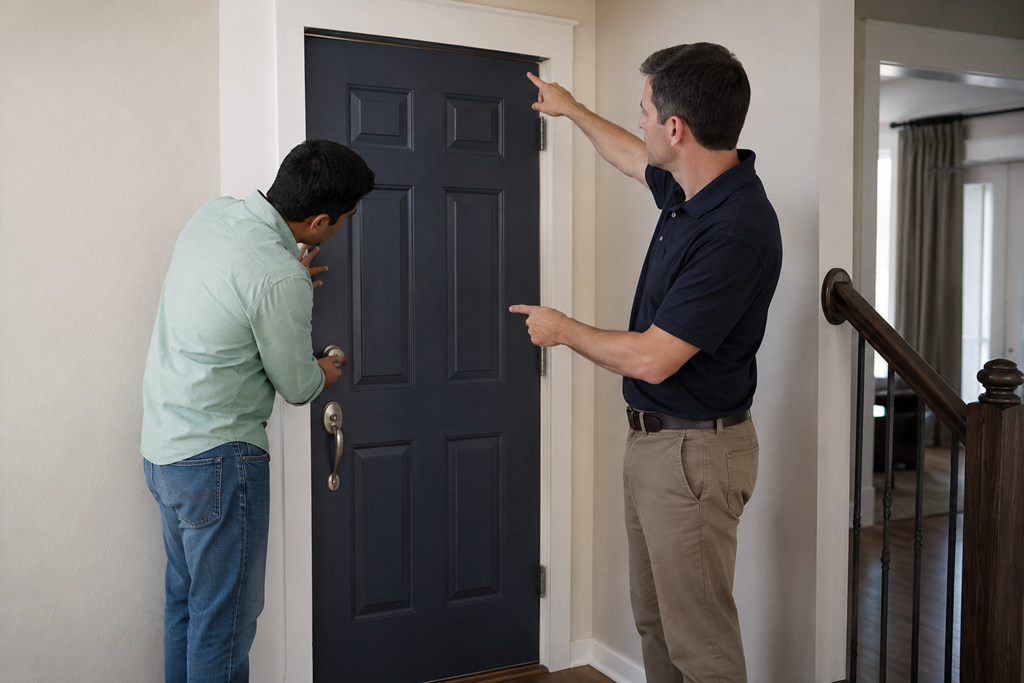
Before replacement, a professional may need to consider whether the frame is reasonably square, whether the threshold is stable, whether the hinges remain securely attached, and whether there are signs of moisture or deterioration near the lower corners.
This does not mean every imperfection signals a major problem. It means that the visible door should not be evaluated in isolation.
If surrounding damage is discovered only after removal begins, the project scope may change. Homeowners can ask how the provider handles concealed conditions and whether additional work would be discussed before proceeding.
Exposure Can Influence the Best Door for the Entry
The same door may perform differently depending on where it is installed. A Sacramento-area entry that receives strong afternoon sun may face different wear than a deeply shaded porch. Seasonal rain, heat, dryness, roof coverage, and the direction the door faces can all be useful considerations when discussing materials and finishes.
A dark exterior finish, decorative glass, wood surface, metal component, or composite construction may each bring different appearance and maintenance considerations. The useful question is not simply which material is considered best. It is which product is appropriate for the specific entry, exposure, maintenance expectations, and budget.
Homeowners may also want to consider whether decorative glass affects privacy, whether the chosen style works with an existing screen or storm door, and whether the manufacturer has installation or exposure requirements that apply to the entry.
Security, Operation, and Weather Protection Work Together
Security is sometimes treated as a hardware decision, but the lock is only one part of the entry system. The door, frame, hinges, strike area, hardware, and installation all need to work together.
A high-quality lock may still be frustrating if the door does not close evenly. New weatherstripping may not correct a gap caused by poor alignment. A solid door may not feel secure if the latch and deadbolt do not engage smoothly.
When evaluating a completed replacement, the practical expectation is straightforward: the door should open without unusual resistance, close consistently, latch securely, and sit evenly enough for its seals to function as intended.
Any concerns about security features should be discussed with the installer before the product and installation method are finalized.
Small Design Decisions Can Affect Daily Use
Front doors are often selected from photographs, samples, or showroom displays, but daily use depends on more than appearance.
The direction of the door swing can affect furniture, nearby walls, light switches, and the path people use when entering. A large handle set may interact differently with an existing screen door. Decorative glass can increase natural light while also changing privacy. A wider or heavier door style may affect hardware selection and how the door feels during use.
Threshold height and transitions between exterior and interior flooring may also matter for household members who use mobility aids or have difficulty stepping over raised surfaces. These concerns should be discussed before installation rather than after the new door has been ordered.
An Estimate Should Explain More Than the Door Price
Two estimates can appear to cover the same replacement while including different work.
One provider may quote only the door and basic installation. Another may include frame removal, new interior or exterior trim, hardware installation, disposal of the old door, finishing, minor paint preparation, or adjustments to the surrounding opening.
Before comparing totals, look for a clear description of what will remain and what will be replaced. It should also be clear who is responsible for finish work, hardware, access preparation, and any repair that becomes necessary around the opening.
A lower estimate is not necessarily incomplete, and a higher estimate is not automatically more thorough. The important issue is whether the scope is specific enough to understand what each provider intends to do.
Useful Questions Before Approving the Project
A short conversation can reveal whether the proposed replacement matches the actual condition of the entry. Consider asking:
- Are you recommending a new slab or a complete prehung system, and why?
- Which parts of the frame, threshold, trim, and weather seal are included?
- Does the current opening show any condition that could change the scope?
- Are the door, hardware, finishing, removal, and disposal included in the estimate?
- How will unexpected damage be communicated before additional work begins?
- What should I expect the door to look and operate like when the installation is complete?
The answers do not need to be highly technical. They should be understandable and specific to the property.
Buying the Door Before Evaluating the Opening Can Create Problems
It can be tempting to purchase a door based on style, advertised dimensions, or a discounted price before speaking with an installer. However, the listed size alone may not answer whether the door is appropriate for the existing opening or installation plan.
The hinge arrangement, frame dimensions, swing direction, threshold, hardware preparation, wall construction, trim, and exposure may all affect compatibility.
A door professional can explain what information should be confirmed before ordering. This may help homeowners avoid selecting a product that requires unexpected modifications or does not address the original concern.
Replacement Should Address the Reason the Project Began
A successful front door project is not defined only by how new the door looks. It should respond to the reason replacement was considered in the first place.
If the concern is appearance, the finished entry should complement the home. If the problem is operation, the door should open, close, and latch consistently. If weather protection is the issue, the scope should address the condition creating the gap or exposure. If security is the priority, the door and surrounding components should be evaluated as a complete system.
Before hiring a Sacramento-area door professional, make sure the estimate connects the proposed work to the problem you are trying to solve. That connection makes it easier to compare providers, understand the scope, and avoid paying for a replacement that leaves the original concern unexplained.