Replacing flooring in a high-traffic area is less about choosing the material that looks best on its own and more about choosing a floor that fits how the space is actually used. Entryways, hallways, kitchens, family rooms, and other busy paths tend to show wear sooner, so durability, maintenance, comfort, transitions, and the condition of the existing floor all deserve attention before you commit.
That distinction can be easy to miss when you are looking at flooring samples. A material may look appealing under showroom lighting or in a small sample, but the better question is what happens after months and years of people walking the same route, bringing in dirt from outside, moving chairs, carrying groceries, or simply living normally in the space.
For Sacramento-area homeowners planning a flooring project, thinking about those everyday patterns before comparing installation estimates can make conversations with local flooring professionals much more useful.
Start With How the Area Is Actually Used
Not every part of a home experiences the same level or type of traffic.
A hallway between bedrooms may see frequent foot traffic but relatively little moisture. An entryway may deal with shoes, outdoor debris, and repeated transitions from exterior to interior spaces. A kitchen may combine constant walking with chairs, spills, cleaning, and dropped items.
That means "high traffic" should not automatically be treated as one flooring problem.
Before focusing on a specific flooring type, think about what happens in the area during an ordinary week. Consider who uses it, what tends to pass through it, how often it needs cleaning, and whether the space connects to exterior doors, pets, dining areas, or other heavily used rooms.
This gives a flooring professional more useful context than simply saying you want something durable.
Visible Wear Is Only Part of the Decision
Scratches, fading, worn finishes, and discolored traffic paths are the obvious signs that flooring has been heavily used. But appearance is only one part of the decision.
A replacement floor also needs to make sense for the way you want to maintain the area.
Some homeowners are comfortable with flooring that requires more careful cleaning or occasional maintenance because they strongly prefer its appearance or feel. Others would rather prioritize a surface that fits a simpler routine.
Neither approach is automatically right or wrong.
The useful question is whether the flooring's normal care requirements match what you realistically want to do after installation.
A flooring choice that looks excellent but conflicts with the household's normal routine can become frustrating surprisingly quickly.
The Busiest Path May Matter More Than the Whole Room
One helpful way to look at a high-traffic room is to stop thinking of the room as one uniform space.
Instead, notice the path people repeatedly take through it.
A family room may have one route between the kitchen and hallway that receives far more use than the rest of the floor. An entry may have a concentrated zone directly inside the door. A kitchen may have repeated movement between the sink, refrigerator, island, and adjoining rooms.
These patterns can help explain why one part of an existing floor looks much more worn than another.
They can also make discussions about replacement more specific. Instead of asking only whether a flooring material is suitable for a room, you can ask how it tends to perform in the particular conditions found along the busiest parts of that room.
Think Beyond the New Flooring Material
When homeowners start planning replacement flooring, attention naturally goes to the new surface: color, pattern, plank width, tile size, texture, or finish.
The existing floor and surrounding areas matter too.
A professional may need to evaluate the condition beneath the current flooring, adjoining surfaces, thresholds, door clearances, transitions between rooms, trim, and other conditions that can affect the scope of the project.
This is one reason two flooring projects that look similar at first can involve different amounts of preparation.
It also means that comparing estimates solely by the flooring material can leave important differences unexplained.
When reviewing a proposal, it is worth understanding what preparation and transition work is included rather than assuming every installer is pricing exactly the same scope.
Replacing One Busy Area Can Affect Nearby Rooms
Another decision is whether the project should stop at the edge of the high-traffic area or continue into connected spaces.
There is no universal answer.
Sometimes there is a natural doorway or transition point where one flooring material can end cleanly. In other homes, replacing only one section may create an awkward break in an open floor plan or along a continuous hallway.
This is partly an appearance decision, but it can also affect project scope and cost.
Before committing, ask where the installer expects the new flooring to begin and end and how the transition to existing flooring will be handled.
Seeing those boundaries clearly before installation can prevent surprises once the old flooring is removed.
Comfort and Everyday Living Still Count
Durability can become such a strong focus in high-traffic spaces that homeowners sometimes overlook how the floor will feel in daily use.
A floor can be durable and still be a poor fit for a particular household if it feels too hard, sounds different than expected, becomes uncomfortable underfoot, or does not work well with the way the room is used.
Think about what matters beyond resistance to wear.
That could include how the flooring feels when standing for longer periods, how noticeable footsteps may be, whether children regularly play on the floor, whether pets use the space, or whether the area connects visually to other rooms.
The goal is not simply to find the toughest surface available. It is to find a reasonable balance between durability, appearance, comfort, maintenance, and the actual demands of the space.
Samples Are More Useful in the Room Than in Isolation
Small flooring samples can help narrow choices, but they rarely tell the entire story by themselves.
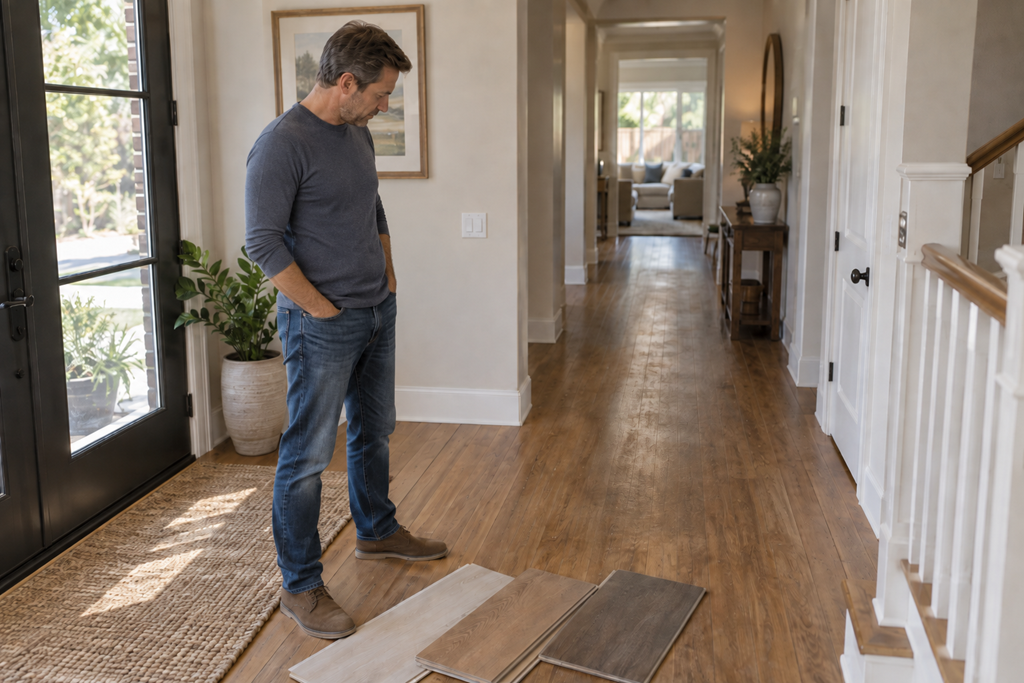
Whenever possible, look at a sample in the area where the flooring may actually be installed.
Natural and artificial lighting can change how colors and textures appear. A sample may also look different next to cabinets, walls, trim, furniture, or adjoining flooring than it did when viewed alone.
For a high-traffic area, placing the sample near the busiest walking path can also help you think about the decision more realistically.
Instead of asking only, "Do I like this floor?" you can begin asking, "Does this floor make sense here?"
That is a much more useful question before committing to a larger installation.
Questions Worth Asking Before Comparing Flooring Estimates
You do not need a long technical checklist. A few focused questions can make it easier to understand what different flooring professionals are proposing:
- What flooring characteristics would you consider most important for how this particular area is used?
- What preparation of the existing floor is included in the estimate?
- How will transitions to nearby flooring or adjoining rooms be handled?
- Are there maintenance considerations I should understand before choosing this material?
- Is the quoted scope limited to the visible flooring, or are trim, thresholds, removal, disposal, and related work included?
- Are there conditions that could change the scope after the existing flooring is removed?
The goal is not to test the installer. It is to make sure you understand what you are comparing.
Avoid Choosing on Appearance or Price Alone
Two common shortcuts are choosing the flooring that looks best in a sample or choosing the lowest estimate without understanding what is included.
Either approach can leave important questions unanswered.
A lower-priced proposal may reflect a different flooring product, different preparation work, fewer transitions, or a narrower installation scope. An attractive flooring sample may turn out to require more maintenance than you expected or may not be the best fit for the busiest portion of the home.
Price and appearance are both legitimate considerations. They simply work better when considered alongside the conditions of the space and the details of the installation.
A Better Flooring Decision Starts With the Busiest Part of the Home
Replacing flooring in a heavily used area does not require finding one supposedly perfect material. It requires understanding what the floor will actually be asked to handle.
Pay attention to the busiest walking paths, maintenance expectations, adjoining rooms, transitions, comfort, and the preparation included in each proposal. Then use those details when discussing options with Sacramento-area flooring professionals.
The more clearly you understand how the space is used and what an estimate includes, the easier it becomes to compare choices based on fit rather than appearance or price alone.