Pool water can look cloudy even if the surface is free of leaves and the pool still seems clean because visible cleanliness and water clarity are not the same thing. Cloudiness usually comes from tiny suspended particles, water balance problems, limited circulation or filtration, fine air bubbles, or several conditions working together. The pool may look cared for while something less obvious is keeping light from passing cleanly through the water.
This can be confusing for homeowners. The pool floor may have been cleaned, the skimmer may not contain much debris, and the water may not have an unusual color or odor. Yet the deep end looks slightly dull, underwater features are harder to see, or the entire pool develops a pale haze when sunlight hits it from the side.
Understanding that difference can help Sacramento-area homeowners have a more productive conversation with a pool-service professional instead of treating every cloudy pool as the same problem.
A Clean Surface and Clear Water Measure Different Things
Visible cleanliness mainly tells you what is happening on the surface and along the parts of the pool you can easily inspect. It does not reveal everything suspended within the water or show how effectively water is moving through the entire pool system.
Fine dust, pollen, organic residue, sunscreen, mineral particles, and material disturbed from pool surfaces can remain suspended even after larger debris has been removed. These particles may be too small to identify individually, but together they scatter light and make the water appear dull or milky.
Sacramento’s heat, dry conditions, wind, surrounding landscaping, and frequent outdoor pool use can all introduce fine material into a pool. A homeowner may remove every visible leaf and still be left with particles that require effective circulation, filtration, and appropriate water conditions before the water looks clear again.
A Small Water Sample May Look Clearer Than the Pool
One reason cloudiness is easy to misunderstand is that a small container of pool water can appear almost completely clear.
Light only has to travel through a few inches of water in a glass or sample container. In the pool, light may travel several feet before reaching the floor, steps, drain cover, or wall. The effects of thousands of tiny particles become much more noticeable across that greater distance.
This is why a homeowner may look at a clear sample and wonder whether anything is actually wrong. It is also why cloudiness may appear more obvious in the deep end, under a pool light, or when the sun shines across the water at a low angle.
The appearance of the whole pool usually provides more useful context than the appearance of one small sample by itself.
The Cause May Be in the Water, the Equipment, or Both
Cloudiness does not always have one simple cause. Several conditions can create a similar appearance.
Water balance problems may allow minerals or other material to form visible particles. Sanitizing conditions may not be supporting clear water as effectively as expected. Fine organic material may also begin affecting clarity before the pool develops a more obvious color change.
Circulation and filtration can create another layer of uncertainty. Equipment may be running without moving and filtering water as effectively as the homeowner assumes. A filter may need evaluation, flow may be limited, or some areas of the pool may receive less circulation than others.
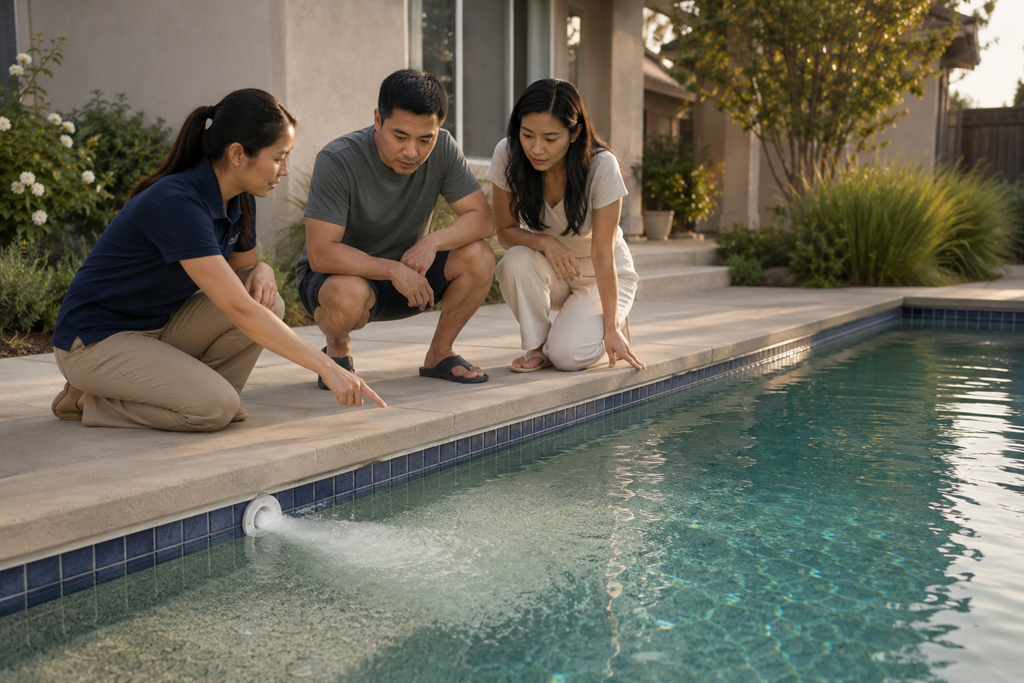
Fine air bubbles can also resemble cloudiness, particularly when the haze appears strongest near a return opening and becomes less noticeable as the water moves farther away.
Recent cleaning, brushing, heavy pool use, weather exposure, or the addition of a pool product can temporarily suspend material as well. These possibilities are why appearance alone rarely provides a complete diagnosis.
The Pattern of the Haze Can Provide Useful Clues
Before contacting a pool professional, it can help to notice where and when the cloudy appearance is most visible.
A uniform haze across the entire pool may suggest a different issue than cloudiness concentrated near one return. Water that becomes noticeably dull after swimming, brushing, windy conditions, or a recent service visit may also provide useful context.
Other observations may include:
- Whether the shallow steps remain clear while the deep end looks hazy
- Whether the cloudiness is constant or changes during the day
- Whether it appears strongest near return openings
- Whether the pool recently received chemicals, cleaning, or equipment service
- Whether circulation feels different from what is normally observed
- Whether underwater features have gradually become harder to see
These observations do not diagnose the cause, but they can give a qualified provider a clearer starting point.
Adding More Product Is Not Always the Clearest First Response
When water looks cloudy, it is understandable to assume that another chemical product will solve the problem. That response may occasionally address part of the issue, but adding products without understanding the cause can make the situation harder to evaluate.
Different products address different conditions. An unnecessary addition may alter the water balance, create additional suspended material, or temporarily change the appearance without correcting limited filtration or circulation.
Repeatedly adding products can also make it difficult to determine which condition existed first.
A more useful approach before a service appointment is to remember what has recently been added, when the cloudiness started, and whether anything changed with pool use, cleaning, weather exposure, or equipment operation. That information can be more valuable than trying several unrelated solutions before the provider arrives.
Clear Water Is More Than a Cosmetic Preference
Cloudiness can make a pool look less inviting, but appearance is not the only concern. Reduced visibility can make it harder to see steps, underwater surfaces, drain covers, objects, and swimmers.
The degree of cloudiness matters. A slight haze that is visible only under certain lighting is different from water that prevents a clear view of the pool floor.
A provider should be able to explain how significant the visibility problem appears and whether normal pool use should be reconsidered while the cause is being evaluated. The explanation should be based on the pool’s actual condition rather than a broad claim that applies to every cloudy pool.
A Useful Pool-Service Evaluation Should Connect the Cause to the Recommendation
A qualified pool-service professional should do more than describe the water as cloudy. The provider should explain what observations or testing point toward the likely cause.
The explanation may involve water conditions, suspended debris, circulation, filter performance, air entering the system, recent treatments, environmental exposure, or a combination of factors.
The important part is the connection between the evidence and the proposed service.
For example, a recommendation to service or replace equipment should be supported by signs that the equipment is not performing properly. Cloudy water alone does not automatically establish that an expensive component has failed.
Similarly, a recommendation to add a particular treatment should include a clear explanation of what that treatment is intended to address and what improvement should reasonably be expected.
Questions to Ask Before Approving Pool Service
A few direct questions can make the provider’s reasoning easier to understand:
- What evidence points to the most likely cause of the cloudiness?
- Does this appear to involve water conditions, filtration, circulation, air bubbles, or more than one factor?
- Is the equipment performing properly, or is it simply turning on?
- Could recent weather, pool use, cleaning, or added products be affecting the water?
- What change should become noticeable first if the recommendation is working?
- Which part of the proposed service is necessary now, and which parts are optional?
A provider does not need to promise an immediate result, but the explanation should be specific enough for the homeowner to understand what is being addressed.
Be Cautious When the Explanation Remains Vague
Cloudy water can require more than one visit or adjustment, especially when several conditions are involved. That does not automatically indicate poor service.
The greater concern is a provider who cannot explain the reasoning behind a recommendation.
Be cautious when cloudiness is used to justify an immediate equipment replacement without a performance-based explanation, when several products are recommended without identifying what each one addresses, or when the provider promises perfectly clear water within a guaranteed period regardless of the cause.
Good communication should help you understand what is known, what still needs to be evaluated, and how progress will be judged.
Clearer Water Begins With a Clearer Explanation
A pool can look clean on the surface while fine particles, water conditions, circulation, filtration, or air bubbles continue to affect its appearance. That does not mean every cloudy pool has a serious problem, but it does mean that visible cleanliness should not be treated as the only measure of water clarity.
Before approving service, look for an explanation that connects the pool’s specific pattern of cloudiness to the recommended response. That connection can help Sacramento-area homeowners avoid unnecessary guesswork, compare providers more effectively, and make a better-informed pool-service decision.