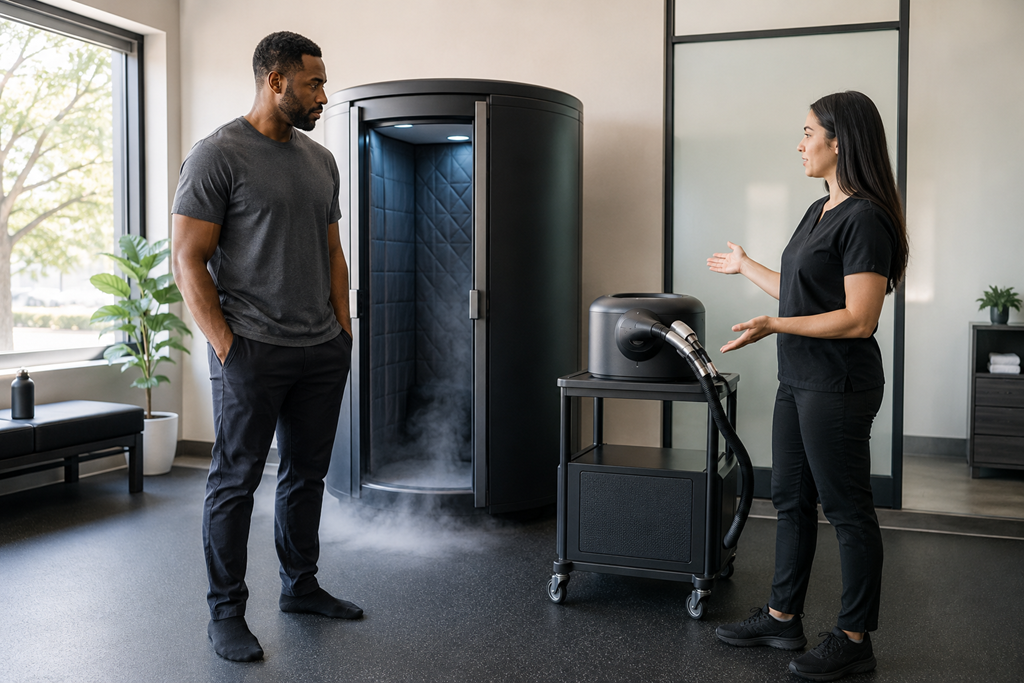
Trying cryotherapy for the first time should begin with understanding exactly what type of service is being offered, whether your health history makes extreme cold a concern, and what results are realistic.
A first visit is not a test of how much cold you can tolerate. A responsible cryotherapy provider should explain the equipment, screen for relevant health concerns, describe what you may feel, and make it clear that you can end the session at any time.
For Sacramento-area residents comparing cryotherapy services, the quality of this preparation may tell you as much about a provider as the appearance of the equipment itself.
Start By Clarifying What “Cryotherapy” Means
Cryotherapy is a broad term for the therapeutic use of cold. It may refer to something as simple as applying an ice pack, a localized treatment directed at one area, or a whole-body session inside specialized equipment. The risks and purposes are not identical across those different forms.
Medical cryotherapy is another category entirely. Healthcare professionals may use controlled freezing techniques to remove abnormal tissue or treat certain medical conditions. That is different from the whole-body and localized wellness services commonly offered by recovery centers, spas, and fitness-related businesses.
Before scheduling, ask the provider which service the appointment includes:
- Whole-body cryotherapy in an enclosed chamber
- A partial-body cryosauna in which the head remains outside
- Localized cold treatment directed at one body area
- Another cold-based recovery service
This distinction matters because the preparation, exposure, protective equipment, possible risks, and expected experience may vary.
A Proper Health Screening Should Come Before The Cold
One of the most important parts of a first cryotherapy appointment should happen before you enter any equipment.
Extreme cold affects the skin, circulation, breathing, blood vessels, and the body’s stress response. An international expert consensus on whole-body cryostimulation identifies a range of health situations that may make the service inappropriate or require individual medical evaluation.
Tell the provider about relevant medical conditions, recent health changes, medications, injuries, surgeries, skin problems, pregnancy, or unusual reactions to cold. Conditions involving circulation, blood pressure, the heart, cold sensitivity, reduced skin sensation, breathing, seizures, open wounds, or acute illness deserve particular attention.
This does not mean that every person with a health concern will receive the same recommendation. It means that a cryotherapy employee should not be expected to diagnose your condition or decide whether an unresolved medical issue is safe. Questions about personal risks and candidacy should be discussed with a qualified healthcare professional.
A provider who treats the intake form as an inconvenience, encourages you to leave out information, or dismisses a medical concern without explanation is giving you useful information about how the business approaches safety.
The Experience Should Be Explained Before It Begins
Whole-body cryotherapy generally involves brief exposure to extremely cold, dry air. Although the session may be short, the temperature difference can feel intense.
Depending on the equipment and service, the provider may supply dry protective items for the hands, feet, ears, or other areas. Clothing and skin may need to be dry. Jewelry or other objects may need to be removed. The specific instructions should come directly from the business operating the equipment.
Before entering, you should understand:
- What clothing and protective items are required
- How long the planned exposure will last
- Whether an attendant will remain present
- How communication works during the session
- How you can ask to stop
- What sensations should be reported immediately
- What happens if you feel dizzy, short of breath, painful numbness, panic, or unusual discomfort
You should not have to figure out these details after the chamber door closes.
A clear orientation is especially important for someone who is uncomfortable in enclosed spaces. Tell the provider beforehand if confinement, restricted movement, or not being able to see the exit could cause distress.
More Intense Does Not Automatically Mean More Effective
It is easy to assume that colder temperatures, longer exposure, or stronger discomfort must produce a better result. That is not a safe or useful way to judge a cryotherapy session.
Your ability to remain in an uncomfortable environment does not prove that the treatment is working. It also does not mean that another person should tolerate the same exposure.
Scientific reviews have found limited evidence for some popular uses of whole-body cryotherapy, including post-exercise muscle soreness, and researchers have noted that questions remain about effective protocols and safety. The FDA also states that the healing benefits of whole-body cryotherapy remain unconfirmed.
That does not mean every person will have the same experience. Some people describe feeling refreshed or temporarily less sore, while others may notice little difference. The important point is that personal testimonials and marketing claims should not be treated as guaranteed outcomes.
Cryotherapy should also not replace medical evaluation, physical therapy, rehabilitation, medication, or another treatment recommended for an injury or health condition.
Pay Attention To How The Provider Talks About Results
A thoughtful provider should be able to explain the service without promising that it will cure a disease, permanently eliminate pain, accelerate healing in every person, or produce a specific physical result.
Listen for the difference between these two approaches:
One provider describes what clients commonly seek from the service, explains that responses vary, and encourages medical guidance when appropriate.
Another provider presents cryotherapy as a solution for nearly every concern and treats hesitation as something that needs to be overcome.
The second approach may sound more exciting, but it gives you less useful information.
Before paying for a package or membership, consider trying one properly screened session and evaluating the experience without assuming that repeated visits are automatically necessary. Ask what the provider considers a reasonable outcome and how they respond when a client does not notice the advertised benefit.
Mild Discomfort And Warning Signs Are Not The Same Thing
Cold exposure may feel sharp, unfamiliar, or uncomfortable. However, you should not be encouraged to ignore pain, significant numbness, dizziness, breathing difficulty, confusion, severe shivering, skin changes, or a feeling that something is wrong.
Published reviews and adverse-event reports have described reactions including skin irritation, rash, itching, headache, dizziness, prolonged shivering, and other cold-related problems. More serious complications have also been reported, although the available research does not establish how frequently all adverse events occur.
A first-time client may worry about seeming difficult or ending too early. That concern should never be more important than communicating what is happening in your body.
Ask the provider what symptoms require the session to stop and what follow-up they recommend if an unexpected reaction continues afterward.
Useful Questions To Ask Before Booking
A short conversation can help you compare Sacramento-area cryotherapy providers without turning the decision into a complicated investigation.
Consider asking:
- Which type of cryotherapy equipment do you use?
- What health screening is completed before a first session?
- Who supervises the session, and what training has that person received?
- Will an attendant remain able to see and communicate with me?
- What protective clothing or equipment is provided?
- What would cause you to postpone or decline a session?
- What claims do you make about the results?
- What happens if I need to stop immediately?
- Are first-time clients expected to purchase a package?
The quality of the answers matters more than whether the business has the most dramatic equipment or the coldest advertised temperature.
Your First Visit Should Feel Informed, Not Pressured
Trying cryotherapy for the first time involves more than stepping into a cold chamber. You should know what service you are receiving, why you are considering it, what health details need to be discussed, and how the provider manages the session.
A well-run appointment should leave room for questions and allow you to decline or stop without pressure. It should also separate reasonable expectations from broad health promises.
Before choosing a Sacramento cryotherapy provider, look for careful screening, clear communication, active supervision, realistic claims, and respect for your personal limits. Those qualities can help you make a more informed decision about whether the experience is appropriate to discuss with a qualified professional.
This article is for general educational purposes and is not medical advice. Discuss personal health conditions, symptoms, risks, and cryotherapy candidacy with a qualified healthcare professional.