Drafty windows can affect more than how comfortable a room feels. Air leaking around a sash, frame, or nearby trim can create uneven temperatures, make heating and cooling equipment work harder to maintain the thermostat setting, and allow outdoor moisture, dust, noise, or odors to become more noticeable. A draft does not automatically mean every window needs replacement, but it is a useful sign that the window and the area around it deserve a closer look.
For many homeowners, the first clue is simple: one chair, desk, or side of the bed feels noticeably colder or warmer than the rest of the room. The window may be fully closed, yet a curtain moves slightly, the sill collects dust, or the room becomes uncomfortable whenever the weather changes.
Those details can point to a problem that affects the way the room—and sometimes the rest of the home—functions.
One Room Can Behave Differently From the Rest of the Home
A thermostat measures the temperature where it is installed. It does not necessarily reflect what is happening beside a drafty window in another room.
The heating or cooling system may reach the selected temperature while a bedroom, office, or dining area still feels uncomfortable. During hot Sacramento afternoons, outside air entering around a window can make a sun-exposed room harder to cool. On cooler mornings, the same opening can create a cold area even when the rest of the home feels comfortable.
This temperature difference may lead people to adjust the thermostat for the entire house to correct a problem concentrated in one room. The result can be an overly warm or cool area elsewhere without fully solving the original draft.
Heating and Cooling Equipment May Be Compensating
When conditioned air escapes and outdoor air enters, a heating or cooling system may need to run longer or cycle more often to maintain the desired indoor temperature.
A small draft does not automatically explain a high utility bill, and not every air leak creates a dramatic change in energy use. Home size, insulation, equipment condition, sun exposure, ductwork, and personal temperature preferences can all influence energy consumption.
However, persistent air leakage can make it more difficult to maintain even temperatures. When a particular room repeatedly feels different despite normal thermostat settings, the window may be one of several areas worth evaluating.
The important distinction is that the issue may involve more than the amount of energy being used. It may also affect how effectively that energy creates a comfortable, usable home.
Outdoor Air Can Bring More Than Temperature Changes
A draft is uncontrolled air movement between the indoors and outdoors. That airflow can carry other things with it.
Fine dust may repeatedly collect along the same section of a sill or trim. Outdoor odors may become more noticeable near the window. Street noise may seem louder than expected even when the sash is closed. During wet weather, small gaps around the window assembly may also deserve attention if staining, dampness, or softened trim appears nearby.
These signs do not prove that the window is the only source. Dust can enter through doors or ventilation, noise can travel through walls, and moisture can come from several directions. What matters is whether multiple symptoms repeatedly appear in the same location.
A draft accompanied by dust, noise, difficult operation, or moisture concerns provides more useful information than a single uncomfortable moment.
The Problem Can Change How a Room Is Used
Homeowners often adapt to a draft without realizing how much space they have stopped using.
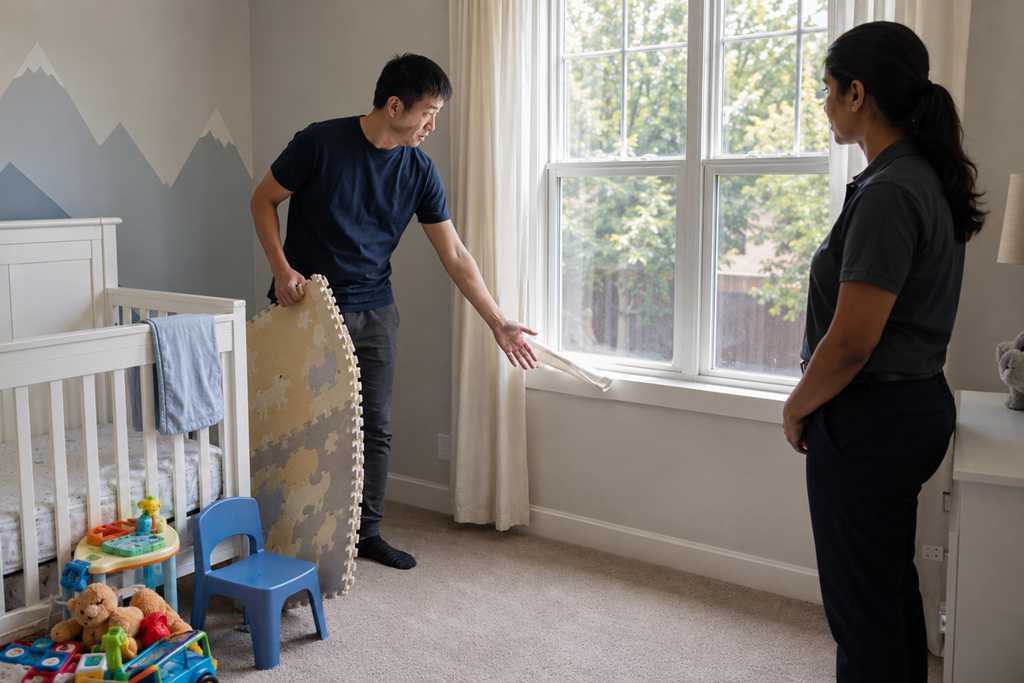
A desk may be moved away from a window. A favorite chair may sit empty during certain seasons. A child’s play area may be relocated to the other side of the room. A bedroom door may remain closed because that room never feels consistent with the rest of the house.
These adjustments can gradually become normal. The homeowner may think of the problem as a minor comfort issue even though it has changed the practical layout of the home.
When evaluating whether a repair or replacement is worth discussing, consider not only how the window feels but also whether it prevents the room from being used as intended.
A Draft Does Not Automatically Mean the Window Must Be Replaced
Air movement near a window can have several possible causes.
The sash may not be closing squarely. A lock may pull one side tight while leaving a narrow gap elsewhere. Weatherstripping may be worn, compressed, or missing. The window frame may have shifted, or there may be gaps between the frame, trim, and surrounding wall.
In some situations, an adjustment or limited repair may address the problem. In others, a warped sash, deteriorated frame, recurring moisture intrusion, failed components, or poor installation may make replacement worth discussing.
The presence of a draft alone does not reveal which response is appropriate. The cause, condition of the window, number of affected windows, and quality of the existing installation all matter.
This is why a useful evaluation should identify where the air is entering before moving directly to a replacement recommendation.
Moving Air Can Be Felt Far From Its Actual Source
One reason draft complaints can be confusing is that the place where air is felt is not always the place where it enters.
Air can move through gaps behind trim, surrounding wall cavities, nearby outlets, baseboards, or other penetrations. A homeowner may feel cool air near the lower corner of a window even though the opening is located farther along the frame or behind the casing.
Replacing the visible window without understanding the surrounding opening may leave the underlying issue unresolved.
A qualified window professional should be able to explain whether the concern appears to involve the sash, glass unit, frame, installation opening, surrounding materials, or another part of the room. The explanation should connect the recommended work to the symptoms the homeowner has actually observed.
Repeated Patterns Are More Useful Than a One-Time Draft
A brief draft during unusually strong wind does not necessarily indicate a major window problem. A repeated pattern provides more meaningful information.
Before requesting an evaluation, notice whether the issue appears when the window is locked, during windy conditions, while the heating or cooling system is operating, or only during a particular part of the day. It can also help to note whether the problem affects one window, several windows on the same side of the home, or windows throughout the property.
Photographs of dust accumulation, moisture marks, uneven gaps, or a sash that does not sit squarely can help explain a problem that may not be obvious during the appointment.
This information gives a local professional a better starting point and can make it easier to compare recommendations from different providers.
Questions That Can Make an Evaluation More Useful
When speaking with a Sacramento-area window professional, consider asking:
- Where does the air appear to be entering: the sash, frame, trim, or surrounding wall?
- Is the window closing and locking as designed?
- Could an adjustment or repair reasonably address the cause?
- What condition or evidence makes replacement the better recommendation?
- Does the proposed work address the surrounding opening as well as the visible window?
- How should the completed work improve the specific symptoms being discussed?
Clear answers should help distinguish a targeted recommendation from a general suggestion to replace every window.
If a provider cannot explain the likely source of the draft or how the proposed work addresses it, the homeowner may need more information before committing.
Solve the Cause, Not Just the Uncomfortable Feeling
Drafty windows can influence temperature consistency, heating and cooling performance, outdoor noise, dust, moisture exposure, and the way a room is used. That does not mean every draft requires a new window, but it does mean the concern may deserve more attention than simply moving a chair or adjusting the thermostat.
The most useful next step is to identify the source of the airflow and understand whether it involves a repairable component, the window assembly, the original installation, or the surrounding structure.
For Sacramento-area homeowners comparing window services, a recommendation is easier to evaluate when the provider can connect the proposed solution to the specific pattern occurring inside the home.