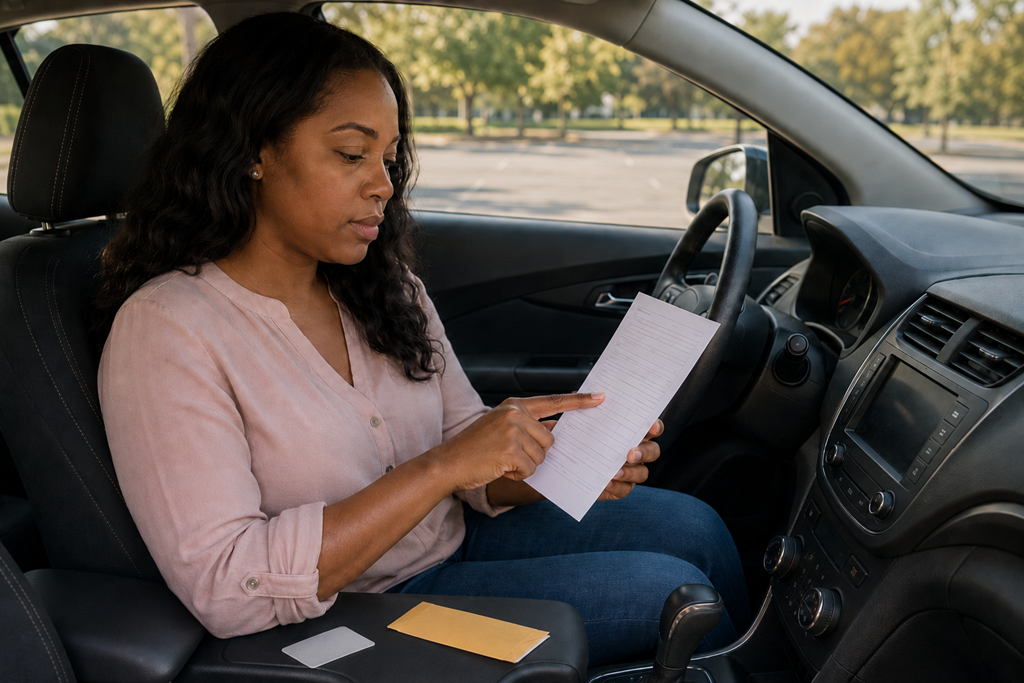
When you receive a traffic ticket, look beyond the possible fine. The citation contains details that identify what you are accused of, which court is handling the matter, when you need to respond, and whether the officer marked the violation in a particular way.
The most useful first step is to read the entire ticket slowly—front and back—before deciding what it means or what you should do about it.
That can be difficult immediately after a traffic stop. You may still be thinking about what the officer said, whether you were late, how the stop could affect your driving record, or what the ticket might cost. However, the information printed or written on the citation is more important than trying to reconstruct the situation from memory alone.
Start With the Information That Identifies the Citation
Locate the citation number or case-identifying number. This is often the information used when checking whether the citation has entered the court system or when speaking with court staff or a legal professional.
Next, review the personal and vehicle information recorded on the ticket. Look at the name, driver’s license information, license plate, vehicle description, and address.
A clerical discrepancy does not automatically make a ticket invalid or determine how the matter will be resolved. It is still worth noticing, however, because a qualified traffic ticket defense attorney may want to review any information that appears inconsistent.
Do not write over, erase, or alter the original citation. Keeping a clear photograph or scan can also help preserve the document if the paper becomes damaged or misplaced.
Identify the Exact Violation Being Alleged
The most important part of the ticket is the section describing the alleged violation.
Look for a vehicle code section, ordinance number, short description, or other notation explaining what the officer believes occurred. A citation may contain more than one alleged violation, so review each line rather than assuming the ticket concerns only the reason discussed during the stop.
California court materials identify details such as the citation number, alleged violation, offense level, correctability, issuing agency, court information, and response date as important parts of a traffic citation.
The wording may be abbreviated or difficult to understand. Avoid guessing based only on a few words. The code section and the officer’s markings may provide a more precise description than the informal explanation you remember hearing.
Look for the Response Date, Not Just the Date of the Stop
A traffic ticket can display several dates. These may include the date of the alleged violation, the date the citation was issued, and a date by which you are expected to respond or appear.
Those dates serve different purposes.
The date requiring your attention is usually printed near the bottom of the citation or in an area describing when and where the matter must be addressed. Sacramento Superior Court describes several traffic-ticket options as actions that must be requested on or before the due date shown on the ticket.
Do not assume the response date is necessarily the date of a courtroom trial. Depending on the citation and the court’s procedures, it may instead be the deadline for paying, requesting an available option, arranging an appearance, or otherwise responding.
When the date or instruction is unclear, verify it with the court named on the citation or discuss it with a qualified legal professional.
Confirm Which Court Is Handling the Ticket
A Sacramento resident may receive a citation while driving somewhere outside Sacramento County. The court handling the matter is generally connected to where the citation was issued, not necessarily where the driver lives.
Look for the court name, location, contact information, or county listed on the ticket. Do not automatically send documents or payments to the courthouse nearest your home.
Sacramento Superior Court provides traffic case lookup using information such as a citation number, driver’s license number, or case number. The exact services and procedures available should always be confirmed through the court handling the particular citation.
This is also a reason to be cautious with unexpected payment messages. Verify instructions through the court’s official resources rather than relying on an unsolicited text, email, phone call, or unfamiliar payment link.
Notice Any Markings About Correctability or Required Appearance
Some citations include boxes, abbreviations, or handwritten markings indicating whether an alleged violation may be correctable. This is sometimes associated with equipment, registration, licensing, or documentation issues, although eligibility depends on the particular violation and how it was cited.
You may also see language suggesting that an appearance is required.
Do not assume every ticket can be handled in the same way. A citation involving an alleged moving violation may present different questions from one involving vehicle equipment, documentation, an accident, multiple allegations, a commercial license, or a more serious charge.
The ticket may not provide a complete explanation of what each marking means. It provides a starting point for determining what needs to be clarified.
Read the Officer’s Notes and Location Details Carefully
Review the recorded location, direction of travel, roadway, intersection, approximate speed, traffic conditions, vehicle information, and any other details written on the citation.
Ask yourself whether the information matches what you remember.
A difference between your memory and the ticket does not by itself establish what happened. Still, noting the difference while the event is fresh can help you explain the situation more accurately later.
The location can be especially important when the ticket involves lane markings, posted signs, traffic signals, construction areas, visibility, or an officer’s observation point.
You do not need to reach a legal conclusion while reviewing these details. The immediate goal is simply to understand what the ticket says.
Do Not Ignore the Back of the Citation
The reverse side may contain general instructions, explanations of response options, warnings, or information about contacting the court.
Because citations use small print and standardized language, many people look only at the handwritten portion on the front. That can cause them to miss information that helps explain the next stage of the process.
The signature area can also be misunderstood. Signing a citation is connected to acknowledging the document and promising to respond as directed; it is not the same decision as choosing how you will ultimately address the allegation. California Courts describes the signature on a citation as a promise to appear or respond.
Preserve What You Remember While It Is Still Fresh
The citation records the officer’s version of the basic details, but it may not capture everything you noticed.
Consider making a private record of the circumstances soon after the stop. This could include the road conditions, surrounding traffic, signs you observed, where the officer was positioned, what was said, whether passengers were present, and anything unusual about the location.
Keep any relevant photographs, dash-camera recordings, registration documents, repair records, or other materials together with a copy of the citation.
This does not mean every detail will be legally important. It simply reduces the chance that useful information will be forgotten before you decide whether professional guidance is appropriate.
Avoid Deciding Based Only on the Fine
The amount associated with a ticket may be important, but it is not the only detail that may matter.
Depending on the circumstances, questions may also involve the driver’s record, traffic school eligibility, insurance concerns, employment that requires driving, a commercial license, correctable violations, multiple charges, or a required appearance.
Paying a ticket, contesting it, requesting traffic school, seeking a correction, or appearing in court can carry different implications. The right choice depends on the citation and the driver’s circumstances.
This is why it helps to understand the document before choosing an option simply because it appears to be the fastest or easiest.
Questions to Clarify Before Choosing a Response
When speaking with the court or consulting a traffic ticket defense professional, useful questions may include:
- What exact violation or violations are listed?
- Which date controls when I need to respond?
- Does the ticket indicate a required appearance?
- Is any part of the citation marked as correctable?
- What options are available for this particular charge?
- Could the outcome affect my license, driving record, insurance, or employment?
- What documents or information should I preserve?
A legal professional should be able to explain the citation without guaranteeing a dismissal, reduced fine, or other result. Be cautious when someone promises a specific outcome before carefully reviewing the document and circumstances.
A Careful Review Can Make the Next Decision Clearer
Receiving a traffic ticket can make people feel pressured to choose a response before they fully understand what was written.
Slowing down long enough to identify the alleged violation, response date, court, officer’s markings, and any questionable details can make the situation easier to discuss and evaluate.
For Sacramento-area drivers, the goal is not to interpret every legal issue alone. It is to arrive at the next conversation with the correct document, better questions, and a clearer understanding of what still needs to be verified.
This article provides general educational information and is not legal advice. Traffic laws, court procedures, and available options depend on the specific citation and circumstances. Speak with a qualified legal professional for advice about your situation.