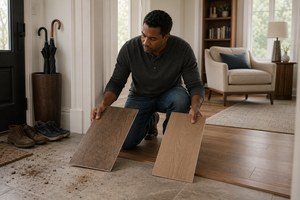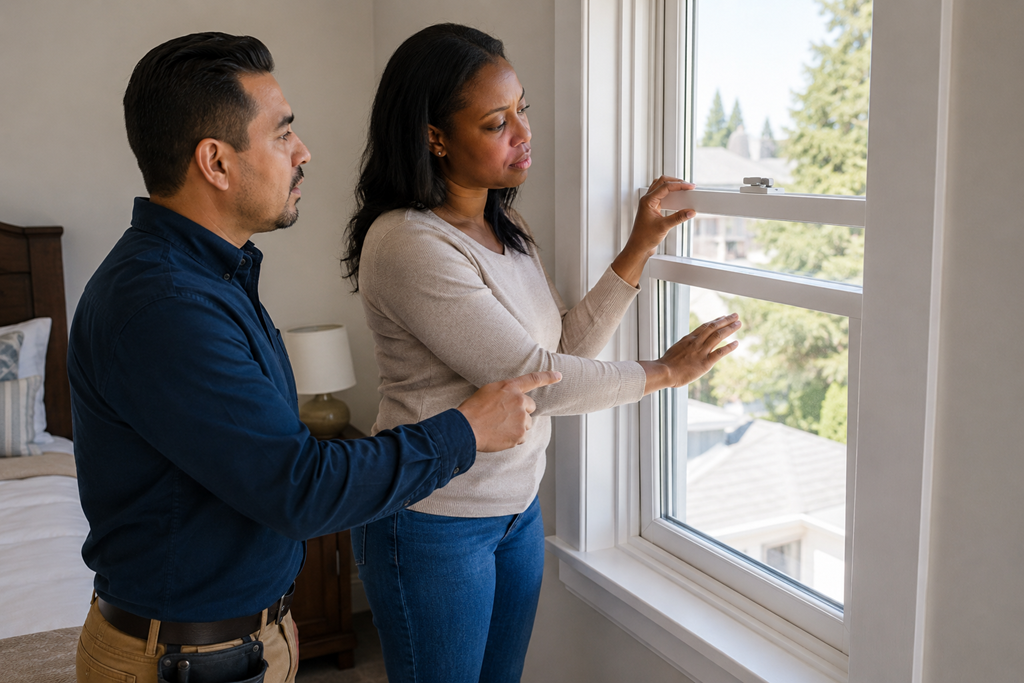
Your windows may be ready for replacement when problems such as drafts, sticking sashes, failed seals, visible frame damage, or outside noise keep returning and cannot be explained by a simple maintenance issue. One symptom does not always mean the whole window has failed, but a pattern of problems often signals that a professional evaluation is worth scheduling.
In everyday life, the signs are often easy to dismiss. A room feels unusually warm on sunny afternoons. A window needs an extra push before it locks. A hazy patch returns even after the glass has been cleaned. None of these experiences automatically proves that replacement is necessary, but they can help you identify which windows deserve a closer look.
Replacement Becomes More Likely When Problems Form a Pattern
A single draft, loose lock, or patch of condensation may have a limited cause. Weatherstripping can wear out, hardware can loosen, and moisture can collect on otherwise functional glass under certain indoor conditions.
The replacement question becomes more relevant when the same problem keeps returning, several symptoms appear in the same window, or multiple windows begin showing similar deterioration.
For example, a window that is difficult to open may only need a hardware adjustment. A window that is difficult to open, no longer locks properly, has a visibly distorted frame, and allows air through when closed may have a broader problem.
Looking at the pattern helps prevent two common mistakes: replacing a functional window because of one minor issue or repeatedly repairing a window whose main components are deteriorating.
A Window That No Longer Operates Properly Deserves Attention
Windows should generally open, close, and lock without excessive force. The moving panel, sometimes called the sash, should sit reasonably square within the frame.
Possible warning signs include:
- A window that sticks in the same position repeatedly
- A sash that appears crooked or rubs against the frame
- A window that will not stay open
- A lock that no longer lines up correctly
- A window that closes but leaves a visible gap
Paint buildup, dirt, worn hardware, or a small alignment problem can sometimes cause these symptoms. In other cases, the frame or sash may have warped, shifted, corroded, or deteriorated.
A qualified window professional should be able to explain whether the operating problem is limited to replaceable hardware or connected to the condition of the window itself.
Drafts Matter Most When the Window Is Fully Closed
Feeling air near a window does not always mean the entire unit needs replacement. Air can enter through worn weatherstripping, failed caulk around the perimeter, gaps in nearby trim, or an installation problem.
Pay attention to what happens when the window is completely closed and locked. A moving curtain, a noticeable temperature difference near the frame, or a recurring stream of air around the sash can indicate that the window is no longer sealing as intended.
Sacramento-area homes can experience strong sun exposure and substantial differences between indoor and outdoor temperatures. Those conditions can make air leakage and comfort problems more noticeable, especially in rooms facing the afternoon sun.
The useful question is not simply, “Is there a draft?” It is, “Where is the air entering, and can that specific point be repaired?”
Moisture Between the Panes Is Different From Surface Condensation
Moisture on the room-facing surface of the glass can sometimes be wiped away. It may be influenced by indoor humidity, ventilation, and the temperature of the glass.
Haze, droplets, or a cloudy appearance trapped between two panes is different. When moisture is sealed inside the glass assembly and cannot be reached from either side, it can indicate that the seal around the insulated glass has failed.
A failed glass seal does not automatically mean every part of the window must be replaced. Depending on the window design and condition, replacing the glass unit or sash may be possible.
However, full replacement may be worth discussing when the seal problem is combined with frame damage, poor operation, repeated failures, or other performance concerns.
Visible Frame Damage Can Change the Decision
Surface wear and structural deterioration are not the same thing. Faded paint or a worn finish may be cosmetic. Soft wood, spreading cracks, swelling, distortion, corrosion, or material separating at the corners may point to a more serious condition.
Water staining around a window also deserves investigation. The visible stain may be connected to the window, exterior flashing, surrounding siding, trim, roofing, or another source. Replacing the window without identifying where the moisture came from may leave the underlying problem unresolved.
When discussing visible damage with a provider, ask which part is affected and whether the surrounding wall or exterior materials should also be evaluated.
Higher Energy Bills Alone Do Not Prove the Windows Are Failing
Homeowners sometimes assume that rising heating or cooling costs mean their windows must be replaced. Windows can affect indoor comfort, but energy use is also influenced by insulation, air ducts, equipment condition, thermostat settings, shading, air leakage elsewhere in the home, and daily habits.
Similarly, a room that feels hot may be receiving intense direct sunlight even when the window is functioning normally.
Energy costs and room comfort are useful supporting clues, but they should not be the only reason for approving a replacement project. A provider should be able to connect a recommendation to observable conditions rather than relying on a broad claim that new windows will solve every comfort problem.
Outside Noise and Fading Are Supporting Signs
More street noise than expected, fading near sunny windows, or uncomfortable glass temperatures can make replacement worth exploring, particularly when these issues affect how a room is used.
These signs are not conclusive by themselves. Noise can enter through walls, doors, vents, and other openings. Fading depends on sun exposure and the materials inside the room. Heat near a window may reflect direct solar gain rather than a failed component.
The condition of the existing window should still be evaluated before assuming replacement is the only solution.
One Problem Window Does Not Mean Every Window Must Be Replaced
Windows on the same home can age differently. One side may receive stronger sunlight or more rain. A previous owner may have replaced only part of the home. Some windows may be used every day, while others are rarely opened.
That means a whole-house recommendation should not be accepted solely because one window has failed.
Ask whether each window was evaluated individually and whether the project can be divided into priorities. Some homeowners choose to replace several windows together for consistency, convenience, or appearance, but that is different from being told that every window is equally damaged.
A room-by-room or elevation-by-elevation assessment can help distinguish immediate concerns from optional upgrades.
Repair May Still Make Sense When the Problem Is Limited
Repair may be reasonable when the window frame remains sound and the problem involves a replaceable lock, balance mechanism, weatherstrip, screen, isolated glass unit, or small section of exterior sealant.
Replacement may become more practical when:
- The frame or sash is substantially deteriorated
- The window repeatedly fails after prior repairs
- Several major components are no longer working properly
- Replacement parts are unavailable or unsuitable
- The existing design cannot meet an important functional need
- The cost and limitations of repair no longer make sense for the homeowner
The comparison should include what a repair will correct, what it will leave unchanged, and how long the proposed solution is reasonably expected to remain useful.
Questions to Ask During a Window Evaluation
A productive evaluation should leave you understanding the cause of the problem, not merely the recommended product.
Consider asking:
- What specific condition is causing this symptom?
- Can the affected part be repaired without replacing the full window?
- Are you recommending an insert replacement or a full-frame replacement, and why?
- Which windows need attention first, and which can reasonably wait?
- Does the estimate include the interior and exterior finishing needed after installation?
Clear answers make it easier to compare Sacramento-area window providers whose proposals may use different products, installation methods, or scopes of work.
Be Cautious When the Explanation Is Vague
A recommendation deserves closer review when a provider immediately proposes replacing every window without inspecting individual units or explaining their condition.
Other communication concerns include describing windows only as “old,” promising that replacement will solve unrelated household problems, avoiding repair questions, or presenting an estimate that does not identify which openings and installation components are included.
Age can be relevant, but condition and performance matter more. An older window that operates properly and shows no significant deterioration may present a different decision from a newer window with a failed installation or damaged frame.
The Most Useful Sign Is a Problem That Can Be Explained
You do not need to diagnose the window yourself before scheduling an evaluation. Your role is to notice what is happening, where it occurs, how often it returns, and whether it affects operation, comfort, security, or the surrounding materials.
Replacement may be worth discussing when several persistent symptoms point to deterioration that cannot be corrected with a limited repair. A careful provider should be able to show you the condition, explain the available options, and clarify why the proposed scope fits the problem.
That explanation gives you a stronger basis for comparing estimates and deciding whether to repair one window, replace a group of windows, complete the project in phases, or continue monitoring the condition.