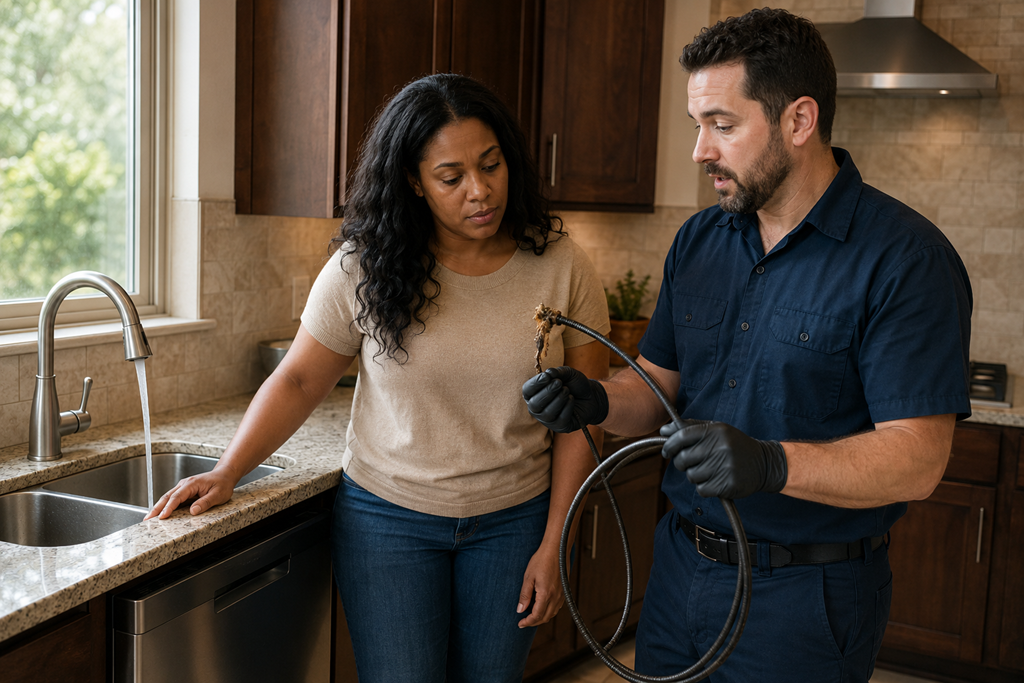
A drain can appear clear because water has started moving again, even though part of the blockage is still inside the pipe. A small opening may temporarily let water pass while grease, soap residue, hair, food debris, or another obstruction remains attached to the pipe walls.
That is why a sink, shower, or tub may work normally for a few days and then begin draining slowly again. The first improvement was real, but it may not have addressed the full cause of the clog.
A Clear Drain Is Not Always a Clean Drain
When a blockage is disturbed, water may find a narrow path through it. From the surface, the problem appears resolved because the standing water disappears and the fixture begins draining.
However, the remaining material can continue collecting debris. The opening gradually becomes smaller until the familiar symptoms return.
This distinction is easy to miss. Most homeowners understandably judge the condition of a drain by whether water goes down. A plumber may need to consider a different question: how much of the obstruction was actually removed?
The Remaining Problem May Be Deeper Than the Fixture
Some recurring clogs form close to the drain opening. Others develop farther along the branch line or within a larger section of the plumbing system.
Possible causes may include:
- Buildup coating the inside of the pipe
- Hair, soap, grease, or food particles collecting around a partial obstruction
- An object that shifted without being completely removed
- A damaged, misaligned, or deteriorated section of pipe
- Tree roots entering an underground drainage line
- A restriction located farther downstream than the original service reached
These possibilities do not mean every recurring clog involves a major plumbing problem. They do explain why repeating the same surface-level response may not produce a lasting result.
The Pattern Can Help Clarify What Is Happening
Where and how often the clog returns can provide useful context before a plumber arrives.
A problem affecting only one bathroom sink may be limited to that fixture or its nearby drain line. Several slow fixtures, recurring backups in lower drains, or problems that appear when another fixture is used may suggest that the restriction is farther along the system.
Other details can also help a plumber understand the pattern:
- How quickly the clog returned
- Whether the drain became slow gradually or stopped suddenly
- Whether more than one fixture is affected
- Whether unusual gurgling or odors occur
- Whether previous service restored flow temporarily
- Whether the same area of the property has had repeated drainage problems
These observations are not a substitute for an evaluation. They simply give the provider a clearer starting point.
Why the Same Quick Fix May Become Less Effective
A method that restored flow once may appear to be the obvious solution when the drain clogs again. However, repeated temporary improvement can be a sign that the underlying restriction has not been fully addressed.
For example, a tool may create an opening through soft material without removing the buildup around it. A chemical product may move part of a clog while leaving the surrounding residue behind. A blockage may also be located beyond the section that received attention.
The important question is not only whether the drain can be reopened. It is whether the service being discussed matches the location and likely cause of the recurring problem.
Sacramento-area homeowners and renters do not need to determine the cause themselves before contacting a plumber. They can still ask what the proposed service is intended to accomplish and what may happen if the clog returns.
Clearing, Cleaning, and Diagnosing Are Different Goals
Plumbing terms can sound interchangeable even when they describe different levels of service.
Clearing a drain generally focuses on restoring water flow. Cleaning may involve removing more of the material attached to the inside of the line. Diagnosing a recurring issue may require determining where the restriction is located and whether the pipe itself is contributing to the problem.
Not every clog requires extensive investigation. A qualified plumber should be able to explain why a particular approach is appropriate for the symptoms being reported.
Be cautious when a provider recommends a larger service without explaining the reason. At the same time, be cautious about assuming that the least involved option will necessarily solve a problem that has already returned several times.
Questions to Ask Before Scheduling Another Drain Service
When comparing Sacramento-area plumbing providers, a few direct questions can make the proposed service easier to understand:
- Does the service focus on reopening the drain or removing the remaining buildup?
- What might cause the clog to return after the drain begins flowing?
- How will you determine whether the restriction is near the fixture or deeper in the line?
- Are there signs that would make a camera inspection or another diagnostic step worth discussing?
- What information should I provide about previous clogs or earlier service?
- What is included in the estimate if the problem turns out to be different from the initial expectation?
A clear provider should be able to describe the purpose and limits of the proposed work without guaranteeing that every recurring problem has the same cause.
Repeated Clogs May Be Worth Evaluating More Closely
An occasional slow drain does not always indicate a larger plumbing concern. A clog that repeatedly returns, affects multiple fixtures, causes wastewater to back up, or creates the possibility of water damage deserves a more careful discussion with a qualified plumber.
The goal is not to assume the worst. It is to avoid treating a recurring pattern as though it were a completely new and unrelated clog each time.
Providing the plumber with previous service details, affected fixture locations, and the timing of the symptoms may help the appointment focus on the underlying pattern rather than only the immediate backup.
Restored Flow Is Only One Part of the Answer
A drain that starts working again may be temporarily open without being fully clear. Residual buildup, a deeper obstruction, or a problem with the pipe can allow the same symptoms to return.
Before scheduling another service, ask what the plumber plans to evaluate, what the proposed method is expected to accomplish, and what could make the clog come back. Understanding that difference can help Sacramento residents compare plumbing services more thoughtfully and choose an approach that fits the recurring problem.