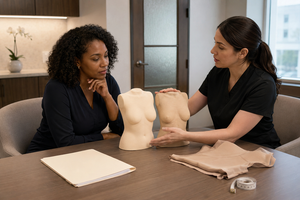
Before considering breast implant surgery, it helps to understand that the decision is not only about choosing a size or a look. It is a medical, personal, and long-term decision that involves your goals, anatomy, health history, recovery expectations, implant options, possible complications, and how clearly a qualified provider explains the tradeoffs.
For Sacramento-area residents comparing cosmetic surgery providers, the most helpful first step is not deciding exactly what you want the final result to be. It is learning what questions matter before a consultation, what expectations need to be realistic, and what information should feel clear before moving forward.
Breast implants are not considered lifetime devices, and the FDA notes that people with implants are more likely to need removal or replacement the longer they have them. The FDA also lists possible local complications such as capsular contracture, rupture or deflation, wrinkling, asymmetry, scarring, pain, and infection.
The Decision Is Bigger Than Appearance
Many people first think about breast implant surgery in visual terms: size, shape, fullness, symmetry, clothing fit, or how they want to feel in their body. Those are real parts of the conversation, but they are not the whole decision.
A consultation should also help you understand whether breast implant surgery is appropriate for your body, what implant options may or may not fit your goals, how recovery could affect your daily life, and what future care may involve. The American Society of Plastic Surgeons notes that a breast augmentation consultation commonly includes discussion of goals, medical conditions, current medications, family history, measurements, options, likely outcomes, and potential risks.
That matters because a rushed decision can focus too heavily on the result photo and not enough on the process behind it. Before scheduling surgery, the clearer question is not “What size should I get?” but “Do I understand what this procedure may involve for me?”
What This Often Feels Like In Real Life
Considering breast implant surgery can feel exciting, private, confusing, and practical all at once.
A person may be looking at before-and-after photos, comparing Sacramento-area providers, reading reviews, thinking about cost, wondering about time off work, and trying to decide which questions are reasonable to ask. They may also feel unsure about how to describe their goals without sounding vain, indecisive, or too picky.
That uncertainty is normal. Cosmetic surgery decisions often involve both physical details and personal feelings. A helpful provider should be able to discuss both without pressuring you, dismissing your concerns, or reducing the decision to a quick recommendation.
Realistic Expectations Matter Before The Consultation
Breast implant surgery can change breast size and shape, but it does not create the same result for every person. Body frame, existing breast tissue, skin quality, chest width, symmetry, implant type, implant placement, and healing can all affect what may be realistic.
This is why a good consultation should not feel like ordering from a menu. Before-and-after photos can help you communicate preferences, but they should not be treated as a guarantee. A result that looks balanced on one person may not be appropriate or achievable for another.
It is also worth asking how your desired result may look over time. Weight changes, pregnancy, aging, breastfeeding, implant position, and future revision decisions can all become part of the longer conversation. ASPS includes future appearance, breastfeeding, dissatisfaction options, and implant removal outcomes among suggested consultation questions.
Implant Choice Is Only One Part Of The Conversation
People often assume the main decision is saline versus silicone, or choosing the right size. Those details matter, but they sit inside a larger discussion.
A provider may also discuss implant shape, profile, surface, placement, incision location, your anatomy, your lifestyle, and how each option affects appearance, recovery, monitoring, and future care. The FDA advises patients to discuss goals, expectations, benefits, risks, and implant shapes, styles, and textures with their surgeon.
The key is not to memorize every technical term before your appointment. The key is to notice whether the provider explains options in a way you can understand, connects recommendations to your body and goals, and gives you room to ask follow-up questions.
Risks Should Be Explained Plainly
A careful consultation should include the possible benefits of breast implant surgery, but it should also include the risks and limits.
Possible risks may include anesthesia risks, bleeding, changes in nipple or breast sensation, fluid accumulation, capsular contracture, implant leakage or rupture, infection, persistent pain, scarring, implant malposition, wrinkling, and the possibility of revision surgery. ASPS states that these and other risks should be discussed before consent and that patients should address questions directly with their plastic surgeon.
There are also less common but important safety topics to ask about, including breast implant-associated anaplastic large cell lymphoma, other rare cancers in the capsule around the implant, and systemic symptoms some patients associate with implants. These topics should be discussed with a qualified medical provider in the context of your personal health history and implant options.
This does not mean every person will experience serious complications. It means the decision should be made with a full view of the possible outcomes, not only the desired one.
Long-Term Planning Is Part Of The Decision
One of the most important things to understand before breast implant surgery is that the decision may not end after the initial recovery period.
Implants may require monitoring, future imaging, revision, removal, or replacement. The FDA notes that silicone gel-filled implants may require regular MRI or ultrasound exams to screen for rupture and other complications, and that abnormal changes should be discussed promptly with a surgeon or health care provider.
This long-term piece is easy to overlook because the early decision often centers on the visible result. But future care, possible additional surgery, and out-of-pocket costs can affect whether the choice feels manageable over time.
For Sacramento residents comparing local providers, this is a practical question as much as a medical one: does the consultation help you understand not only the procedure, but also what support and follow-up may look like later?
Questions Worth Asking Before Moving Forward
A consultation should give you a clearer picture of the decision, not leave you feeling rushed or unsure.
Helpful questions may include:
- Am I a good candidate for breast implant surgery based on my health history, anatomy, and goals?
- What implant options are you recommending for me, and why?
- What risks and complications should I understand before deciding?
- How are complications handled if they happen?
- What kind of recovery support may I need at home?
- How might implants affect future breast screening, breastfeeding, or changes over time?
- What follow-up care or long-term monitoring may be needed?
- What happens if I want the implants removed or replaced later?
- Where will the surgery be performed, and is the facility appropriately accredited or licensed?
- What results are realistic for my body, not just for someone in a photo?
ASPS includes questions about board certification, plastic surgery training, hospital privileges, facility accreditation, candidacy, procedure details, risks, recovery, future implant-related operations, breastfeeding, long-term appearance, dissatisfaction options, and removal outcomes as part of its breast augmentation consultation guidance.
Signs A Consultation May Need More Careful Review
A provider does not need to scare you for the consultation to be thorough. But the conversation should be specific, balanced, and easy to understand.
It may be worth slowing down if the discussion focuses only on appearance, skips over risks, gives vague answers about recovery, brushes off your health history, avoids talking about future surgery, or makes the decision feel urgent. It can also be a concern if the recommendation feels identical for every patient, instead of being connected to your body, goals, and medical context.
A strong consultation should help you feel more informed even if you decide not to move forward. That is especially important with elective procedures, where the decision should be based on understanding rather than pressure.
The Most Useful Mindset Before Deciding
Breast implant surgery is not something to approach as a quick makeover or a simple purchase. It is a medical decision with personal, visual, physical, financial, and long-term considerations.
Before comparing Sacramento-area providers, it helps to know what you want, what you are unsure about, what risks you need explained, and what kind of follow-up support matters to you. You do not need to have every answer before the consultation. But you should leave the consultation with better questions answered, realistic expectations, and a clearer sense of whether the provider’s recommendation fits your specific situation.
The best decision is not the fastest one. It is the one made after you understand the procedure, the limits, the risks, the recovery, and the long-term responsibilities well enough to decide with care.