Some rooms feel hotter or colder than others because the home is not holding and moving heat evenly. In Sacramento-area homes, the difference may come from attic insulation gaps, air leaks around doors or ceiling penetrations, sun-exposed windows, duct problems, room location, or how much conditioned air reaches that space. The important point is that one uncomfortable room does not always mean the whole heating or cooling system is failing.
This is the kind of problem many homeowners notice during everyday routines. One bedroom may feel stuffy while the hallway feels fine. A front room may heat up quickly in the afternoon. A room over the garage may feel harder to keep comfortable than the rest of the house. The pattern can feel random at first, but it usually points to how heat, air movement, and insulation are interacting in that part of the home.
The Problem Is Often About Balance, Not Just Temperature
When one room feels different from the others, it is easy to focus only on the thermostat. But the thermostat only measures the temperature near its own location. It does not always reflect what is happening in a far bedroom, a bonus room, a converted space, or a room with more sun exposure.
A room can feel hotter or colder because it loses conditioned air faster, gains outdoor heat more quickly, or receives less airflow than nearby rooms. Insulation plays a major role because it helps slow the movement of heat through ceilings, walls, floors, and attic areas. If one part of the home is less protected than another, that room may feel out of step with the rest of the house.
That does not mean insulation is always the only issue. It does mean uneven room comfort is worth looking at as a whole-home pattern rather than as a single-room mystery.
Common Reasons One Room Feels Different
One of the most common reasons is location. Rooms with more direct sun exposure can warm up faster, especially when windows, exterior walls, or attic spaces allow heat to build. Rooms on the edge of the house may also react more strongly to outdoor conditions than interior rooms.
Air leaks can also make a noticeable difference. Small gaps around attic access panels, recessed lighting, wall penetrations, doors, or poorly sealed areas may allow unwanted air movement. The result may be a drafty feeling in colder conditions or a room that never seems to stay cool for long.
Insulation differences can be another factor. If insulation is missing, compressed, uneven, disturbed, or weaker in one area, the room below or beside that area may feel less stable. This can happen in older homes, remodeled spaces, rooms near garages, additions, or areas where previous work affected the attic or wall cavities.
Ductwork and airflow may also be involved. A room can have decent insulation but still feel uncomfortable if it is not receiving enough conditioned air, if air is escaping before it reaches the room, or if the return-air path is limited. That is why a qualified professional may look beyond insulation alone when evaluating the cause.
Why Guessing Can Lead To The Wrong Fix
Uneven room temperature can lead homeowners to try quick fixes that do not address the actual cause. They may close vents in other rooms, buy portable equipment, adjust the thermostat repeatedly, or assume the HVAC system needs replacement. Sometimes those choices create new comfort problems or raise costs without solving the original issue.
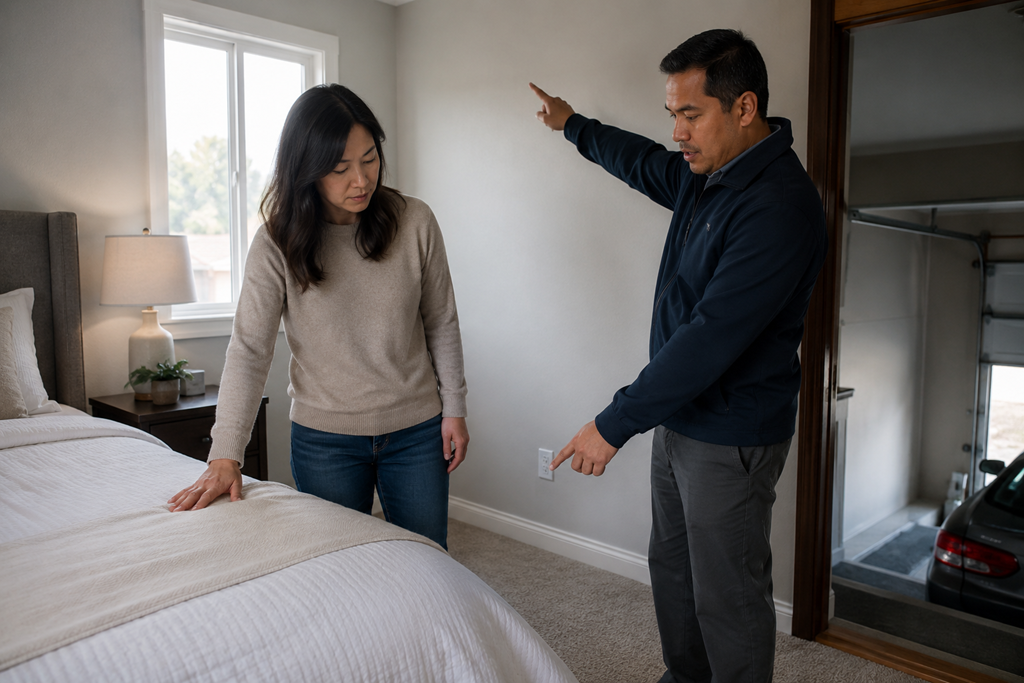
The better starting point is to understand the pattern. When does the room feel uncomfortable? Is it worse during the afternoon, early morning, windy conditions, or after the system shuts off? Does the room share a wall with the garage, sit below the attic, or face strong sun? These observations can help a local pro narrow the conversation before recommending insulation work, air sealing, duct evaluation, or another solution.
The goal is not to diagnose the home from a single symptom. It is to avoid treating every uncomfortable room as the same kind of problem.
What Insulation Can And Cannot Do
Insulation helps reduce heat movement, but it does not create conditioned air. If a room has weak airflow, poor duct performance, or a layout issue, insulation may help but may not solve everything by itself.
On the other hand, even a well-functioning heating or cooling system can struggle if a room is poorly insulated or exposed to excessive heat gain. In that case, the system may be working harder while the room still feels different from the rest of the house.
This is why insulation conversations are often tied to comfort, not just energy use. A homeowner may not be trying to make the entire house perfect. They may simply want to understand why one room feels harder to live in and whether insulation, air sealing, or another improvement is worth discussing.
Patterns Worth Noticing Before Calling A Local Pro
Before scheduling an insulation or home comfort evaluation, it helps to pay attention to the room’s behavior. A few simple observations can make the conversation more useful.
Helpful details may include whether the room feels uncomfortable during certain times of day, whether it is near the attic or garage, whether the ceiling or floor feels noticeably different, whether doors change the comfort level when open or closed, and whether the problem appeared after remodeling, roof work, HVAC changes, or other home updates.
These details do not replace a professional evaluation, but they can help prevent a vague appointment where the issue is described only as “this room feels wrong.” The more specific the pattern, the easier it is to ask focused questions.
Questions To Ask During An Insulation Evaluation
A homeowner does not need technical knowledge to have a useful conversation. The best questions are simple and tied to the actual room problem.
You might ask whether the uncomfortable room appears to have different insulation coverage than nearby rooms. You can ask whether air leaks, attic access, duct conditions, or sun exposure may be contributing. You can also ask whether the recommended work addresses the room itself or only improves general home performance.
It is also reasonable to ask what the provider checked before making a recommendation. A clear explanation should connect the suggested service to the comfort issue you are actually noticing.
A Clearer Way To Think About Uneven Rooms
A hotter or colder room is usually a signal that something about that part of the home is behaving differently. The cause may involve insulation, air sealing, airflow, sun exposure, room placement, or a combination of several factors.
For Sacramento-area homeowners, the practical takeaway is to look for patterns before jumping to a fix. When you can describe when the room feels uncomfortable, where it is located, and what makes it better or worse, you are better prepared to compare advice, ask useful questions, and decide whether an insulation evaluation is the right next step.