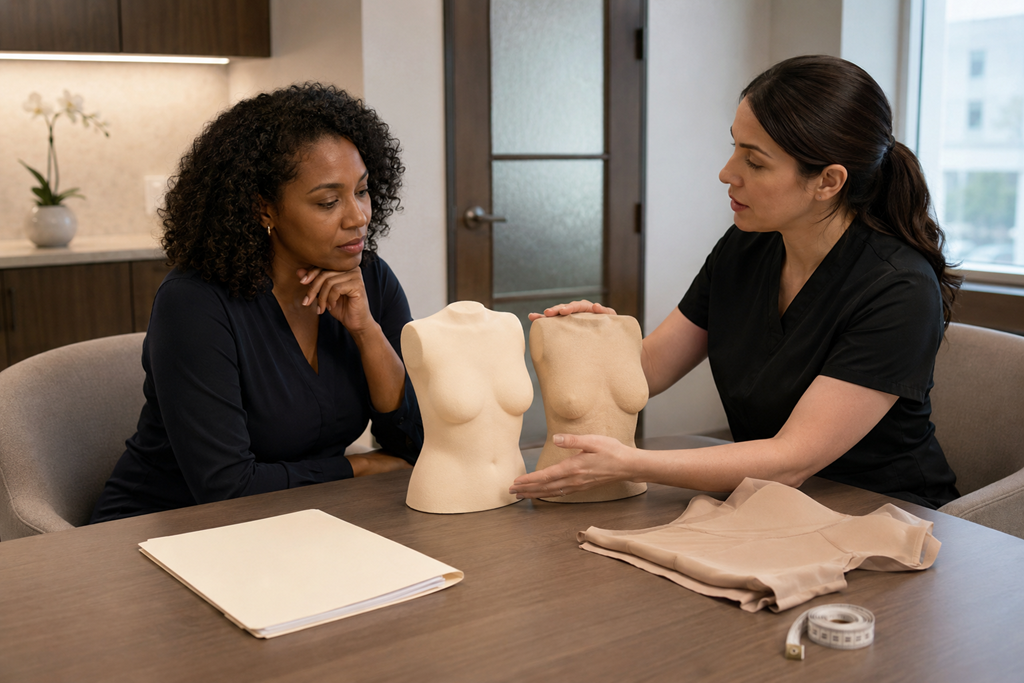
Before considering liposuction, it helps to understand that the procedure is designed to reshape specific areas by removing localized fat, not to serve as a general weight-loss solution. The more useful question is not simply whether liposuction can remove fat, but whether your goals, health, skin quality, recovery needs, and expectations fit what the procedure can realistically do.
That distinction can be easy to miss. Someone may eat well, exercise regularly, and still feel bothered by a particular area that does not seem to change. Liposuction may be discussed in that situation, but it is still surgery—not a simple shortcut, routine beauty treatment, or guarantee of a particular body shape.
Liposuction Changes Contours Rather Than Overall Health
Liposuction removes fat from selected areas to change body contours. It is not considered a treatment for obesity or a substitute for nutrition, physical activity, or medical weight management. It also does not automatically tighten loose skin, eliminate cellulite, or remove stretch marks.
This matters because two people seeking treatment in the same area may receive very different recommendations. One may have localized fat with firm skin, while another may be more concerned about loose skin, muscle separation, surface irregularities, or a broader weight-related issue. Liposuction alone may not address all of those concerns.
A useful consultation should therefore begin with the result you are hoping to see—not merely the name of the procedure you think you need.
Candidacy Involves More Than the Area You Want Changed
A qualified provider should consider your general health, medical conditions, medications, supplements, previous procedures, smoking or vaping history, healing ability, and personal goals. Skin tone and elasticity may also influence how smoothly the treated area settles after fat is removed.
This is why candidacy cannot be determined from an advertisement, online photograph, price quote, or brief description of the body area. A provider needs enough information to decide whether the procedure is reasonably suited to your situation and whether another approach should be discussed.
Being open about your health history is not a minor administrative step. It helps the provider evaluate risk and explain how your circumstances may affect preparation, recovery, and possible results.
Realistic Expectations Matter as Much as the Procedure
Liposuction may create a noticeable contour change, but it does not create perfect symmetry or guarantee that your body will match another person’s photographs. Natural anatomy, fat distribution, skin elasticity, previous weight changes, scarring, and healing all influence the result.
Before-and-after photographs can help illustrate a provider’s work, but they should support a conversation rather than function as a promise. Ask to see examples that are reasonably relevant to your body area and concerns, then ask the provider to explain what appears realistic for you. The American Society of Plastic Surgeons specifically recommends discussing reasonable outcomes and what options exist if a patient is dissatisfied.
A thoughtful provider should be willing to explain limitations without making you feel dismissed. Clear limits are part of useful medical communication.
Recovery Should Be Part of the Decision From the Beginning
The decision is not only about how the treated area may eventually look. It is also about how recovery may affect work, caregiving, household responsibilities, exercise, transportation, sleep, and the need for help at home.
Swelling, bruising, soreness, and temporary changes in sensation can occur after liposuction. Activity restrictions and compression garments may also be part of recovery, depending on the procedure and the provider’s instructions. The final contour may not be immediately visible while swelling is resolving.
For Sacramento-area patients, practical questions might include whether someone can drive them, whether they can temporarily modify physical work, who can help with children or household duties, and how follow-up appointments will fit into their schedule.
A procedure may sound manageable until these everyday details are considered. Discussing them early can prevent recovery from becoming an afterthought.
Risks Should Be Explained in Plain Language
Like other surgeries, liposuction has potential risks. These may include reactions to anesthesia, bleeding, infection, fluid accumulation, numbness or other sensation changes, uneven contours, poor healing, and more serious complications. The likelihood and relevance of particular risks depend on the patient, treatment area, amount of fat being removed, technique, and other medical factors.
A consultation should not leave you with only a consent form and a broad statement that every procedure has risks. The provider should explain which concerns are most relevant to the proposed treatment, how complications are handled, and whom you would contact if something seemed wrong during recovery.
Pressure to commit before receiving clear answers is a reason to pause.
The Provider and Surgical Setting Deserve Careful Review
The person performing the procedure, the facility where it will occur, and the system for handling follow-up care are all part of the decision.
Ask about the surgeon’s education, plastic surgery training, certification, experience with the proposed area, hospital privileges, and the accreditation or licensing of the surgical facility. The American Board of Plastic Surgery offers a public tool for verifying whether a surgeon is certified by that board.
Certification is not the only question worth asking, but it is one piece of information that can be independently checked rather than accepted from promotional wording alone.
You should also understand who will administer anesthesia, who will be available after the procedure, how follow-up visits are handled, and what happens when the surgeon is unavailable.
A Price Quote Should Explain What Is Included
A low advertised amount may not represent the complete financial commitment. Ask whether the quote includes the surgeon, anesthesia, facility use, garments, laboratory work, medications, follow-up appointments, and other expected charges.
The purpose is not simply to find the highest or lowest price. It is to understand whether you are comparing the same scope of care between Sacramento-area providers.
An estimate that is easy to understand is more useful than a tempting number surrounded by unanswered questions. Financing options should also be reviewed carefully so that the monthly payment does not distract from the total cost or the medical decision itself.
Questions Worth Bringing to a Consultation
You do not need to arrive with an extensive medical questionnaire. A few direct questions can reveal whether the provider communicates clearly:
- What specific concern would liposuction address in my situation?
- What will it probably not change?
- How do my skin quality and health history affect candidacy?
- What result appears realistic for my body?
- What recovery limitations should I plan around?
- What risks are most relevant to the proposed procedure?
- Where will the surgery take place, and how is the facility credentialed?
- Who should I contact if I have concerns during recovery?
- What is included in the complete estimate?
- What alternatives should I understand before deciding?
These questions align with the consultation topics recommended by the American Society of Plastic Surgeons, including candidacy, technique, recovery, risks, complication management, facility credentials, and realistic outcomes.
Deciding Not to Proceed Can Also Be an Informed Outcome
A consultation does not obligate you to schedule surgery. You may decide that the likely change is too limited, the recovery does not fit your current responsibilities, the risks feel unacceptable, or the provider’s communication does not give you enough confidence.
You may also decide to seek another opinion or wait until your health, weight, schedule, or expectations are more stable.
The most useful understanding before considering liposuction is that the decision involves more than removing fat. It involves determining whether the procedure fits your anatomy, health, expectations, recovery capacity, and comfort with the provider. A qualified medical professional can evaluate those factors and explain how they apply to your individual situation.
This article is educational and is not medical advice. Questions about candidacy, risks, treatment choices, or recovery should be discussed with a qualified medical professional.