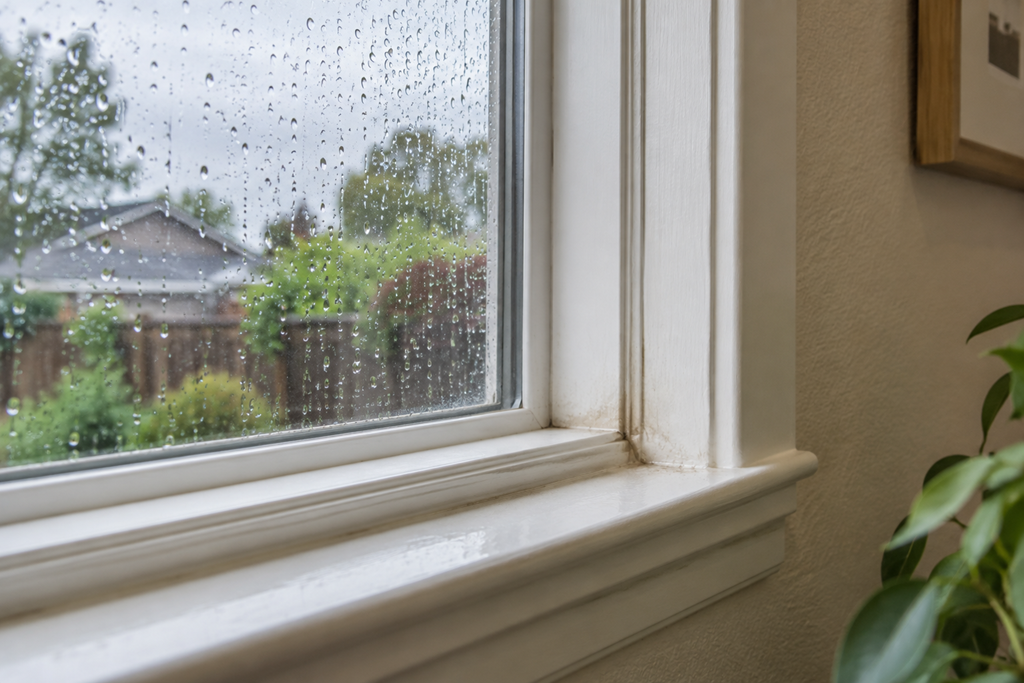
After rain, the most useful things to watch for around your windows are new moisture, staining, damp trim, peeling paint, softened-looking materials, or water marks that appear only after wet weather. These signs do not automatically mean the window needs to be replaced, but they can help you describe the pattern clearly before asking a local window professional to evaluate what may be happening.
For Sacramento-area homeowners, the first rain after a long dry stretch can make certain window concerns easier to notice. A window that seemed completely ordinary during dry weather may suddenly have a damp corner, a darker section of trim, or a faint mark on the wall below it.
The important part is not jumping to a conclusion from one sign. It is noticing what changed, where it appeared, and whether it seems connected to the rain.
Pay Attention To What Is Different After Wet Weather
Rain can make an existing issue more visible because moisture follows paths that may not be noticeable during dry conditions.
You might notice a small wet area along an interior sill, discoloration near one corner of the window, paint that looks different after a storm, or dampness on nearby trim or drywall. Sometimes the evidence is obvious. Other times it is subtle enough that you only notice because you happen to look at the area while the weather is still wet.
The location matters.
Moisture directly on the glass is different from moisture appearing where the window meets the wall. A mark beneath the sill is different from a stain well above the window. A damp section that appears immediately after rain provides different information than an old mark that looks the same year-round.
You do not have to diagnose the cause yourself. Simply recognizing the pattern can make a later professional conversation much more useful.
Water On The Glass Does Not Tell The Whole Story
Seeing water near a window can make it tempting to assume the window itself is leaking.
That is not always a safe conclusion.
Water droplets on the exterior glass after rain are expected. Moisture on the room-facing side of the glass can sometimes be related to indoor condensation rather than rain entering from outside. Water appearing around trim, drywall, or the sill after rainfall may deserve closer evaluation, but its presence alone does not identify the exact source.
That distinction matters when you are deciding what kind of service to discuss.
A professional evaluation may need to consider the window along with the surrounding trim, exterior materials, seals, and other nearby parts of the building envelope. The visible spot where water appears indoors is not necessarily the exact place where moisture first entered.
Small Changes Around The Trim Can Be Worth Noticing
Window trim often provides useful visual clues because changes may show up there before a homeowner sees a large or obvious problem.
After rain, notice whether previously normal-looking trim has developed darker areas, swelling, surface changes, peeling paint, or staining. The goal is not to probe, remove, or open anything. It is simply to notice whether the appearance changes when the weather changes.
Repeated patterns are especially useful information.
If the same corner looks damp after several rain events but appears dry during other conditions, that pattern gives a window professional more context than a general statement that the window "sometimes looks wet."
Photos taken while the condition is visible can also help you remember exactly what you saw by the time you schedule an estimate or inspection.
The Wall Below And Beside The Window Matters Too
The window opening is only part of the area worth observing.
A faint water mark below a sill, discoloration beside the casing, bubbling or peeling paint nearby, or a section of wall that looks different after rain may help show how broad the concern is.
This is one reason it can be useful to step back rather than concentrating only on the glass or frame.
If you later compare local window companies or other appropriate home-service professionals, being able to explain whether the concern is limited to the window or also appears on nearby finishes can make the initial conversation more specific.
It can also help prevent the discussion from starting with an assumption that the only possible answer is replacing the entire window.
An Older Mark And A New Wet Spot Are Not The Same Thing
One of the easiest things to misunderstand is the age of what you are seeing.
An old stain may remain visible long after the condition that caused it has changed. On the other hand, a newly damp area that appears during or shortly after rain can provide useful information about when the condition occurs.
Try to separate what was already there from what is actually changing.
That does not require technical knowledge. It may simply mean remembering that a faint stain has been present for months, while a darker edge appeared after the latest rain.
That kind of distinction can help a professional avoid treating every visible mark as if it happened at the same time.
A Rain-Related Concern Does Not Automatically Mean Window Replacement
Homeowners sometimes move quickly from "I saw moisture" to "I need new windows."
There are several reasons that conclusion can be premature.
The window itself may be part of the concern, but surrounding materials or installation details can also affect how water behaves around an opening. Different causes can call for very different conversations about repair, maintenance, or replacement.
That is why the useful question is usually not just:
"Do I need a new window?"
A better starting point is understanding what appears to be happening around the opening and what a qualified professional believes is contributing to it.
A provider who evaluates the broader area and clearly explains what they see can give you more useful information than someone who immediately treats the presence of moisture as proof that complete replacement is necessary.
Useful Questions When You Request An Evaluation
When speaking with a local professional, a few focused questions can help keep the conversation centered on the actual concern:
- What do you think is causing the moisture or staining around this window?
- Does the issue appear limited to the window itself or involve the surrounding area?
- What observations support your recommendation?
- Is repair worth discussing, or is replacement the more appropriate option?
- If replacement is recommended, what specific condition makes replacement preferable?
You are not trying to become a window expert. You are trying to understand the reasoning behind the recommendation before committing to a project.
Let The Pattern Guide The Conversation
Rain can provide a useful opportunity to notice conditions around a window that are difficult to see during Sacramento's longer dry periods. The key is observing what changes without assuming that every drop, stain, or damp area has the same cause.
Notice where the moisture appears, whether nearby trim or walls change, and whether the same pattern returns during wet weather. Then use those observations to have a more specific conversation with a qualified local professional.
That gives you a better basis for discussing whether the situation calls for further evaluation, a repair, or possible window replacement instead of making the decision from one visible clue alone.