Most repeat-blooming rose bushes are and before its new shoots have stretched into tender leafy growth. Around Sacramento, a few swollen buds or small red leaves do not automatically mean the pruning window has closed, but visible new growth is a reason to avoid aggressive cutting until you understand the rose type and what the plant is already producing.
The Best Pruning Window Is Based on the Plant, Not Just the Calendar
Rose-pruning advice often sounds as though there is one perfect weekend when every bush should be cut back. In practice, the plant’s condition matters more than a fixed date.
For most modern, repeat-blooming roses, the preferred window is when the bush is relatively quiet but preparing to grow again. The canes may still be mostly bare, and the buds may be swollen or just beginning to show color. This makes the plant’s structure easier to see without removing a large amount of established spring growth.
Roses in mild California climates may not become completely dormant. Some leaves may remain through winter, and small buds may begin developing during a warm period. That does not necessarily mean the opportunity for routine pruning has passed. UC Master Gardener guidance generally recommends pruning most roses during the quieter winter period before vigorous spring growth emerges. Leaves Do Not Always Mean You Are Too Late
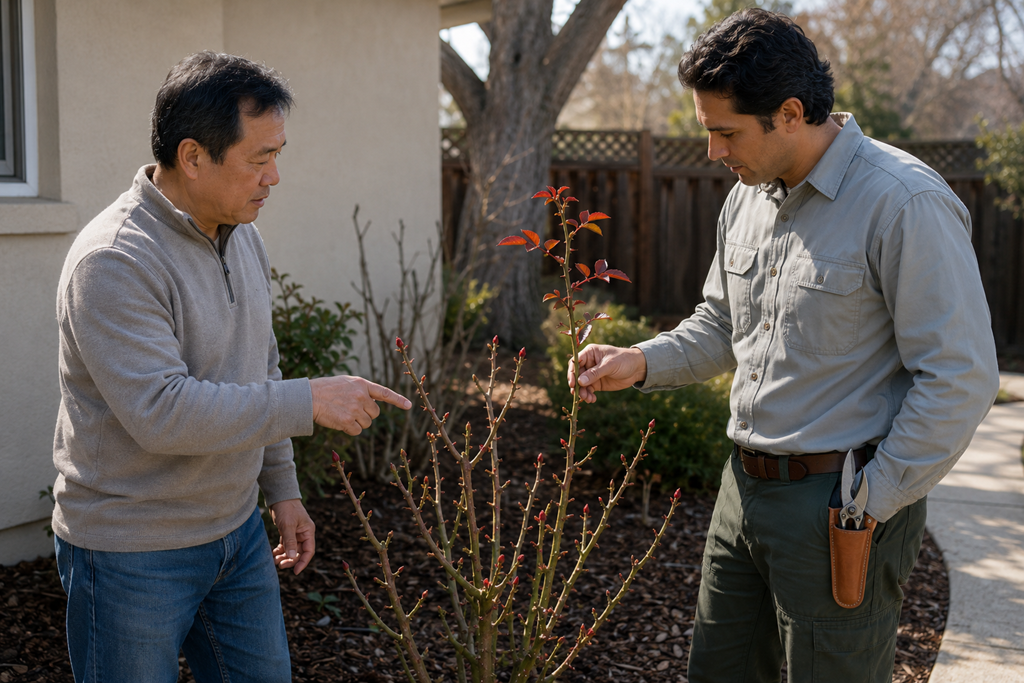
Seeing fresh red leaves on a rose bush can make a homeowner feel as though pruning will immediately damage the plant. The more useful question is how far that new growth has progressed.
Small buds and short emerging shoots are different from long, leafy stems that are already developing flower buds. A modest amount of early growth may still fall within a reasonable pruning window for many repeat-blooming roses.
The situation changes when the plant has produced substantial healthy foliage. Heavy pruning at that point removes growth the rose has already spent energy producing. It may also remove developing flowers and delay the plant’s next bloom cycle.
This does not mean a late-pruned rose will automatically die. It means the pruning decision becomes more selective. Removing a dead cane is different from cutting the entire bush back simply because that is what would normally have been done earlier.
Rose Type Can Change the Correct Answer
One of the most common pruning misunderstandings is treating every rose bush the same.
Many hybrid teas, floribundas, grandifloras, and modern shrub roses flower repeatedly on new growth. These are generally the roses people have in mind when discussing late-winter pruning.
Once-blooming heritage roses, ramblers, and some climbing roses may produce flowers on canes that grew during the previous season. Pruning those roses heavily before they bloom can remove much of the wood that would have carried that season’s flowers.
A useful clue is the rose’s blooming pattern. A rose that flowers repeatedly through the growing season may follow a different pruning schedule from one that produces a single major spring display. UC Master Gardeners advise waiting until after flowering to prune once-blooming varieties that bloom on older wood. ety is unknown, identifying the rose before authorizing major pruning can protect both the plant’s structure and its next round of flowers.
Annual Pruning Is Different From Seasonal Cleanup
Homeowners sometimes delay removing an obvious problem because they believe all pruning must happen at the same time.
Routine structural pruning is the larger seasonal task used to manage shape, remove unproductive growth, and improve the arrangement of the canes. Seasonal cleanup is more limited.
A dead, broken, badly damaged, or clearly diseased cane may need attention when it is noticed. Spent flowers may also be removed from repeat-blooming roses during the flowering season. These smaller tasks are not the same as reducing the height and width of the entire bush.
Keeping those purposes separate can prevent two opposite mistakes: ignoring damaged material because the annual pruning window has passed, or cutting back healthy active growth when only a small cleanup was needed. UC guidance similarly distinguishes winter structural pruning from deadheading during the blooming season. Damage to New Growth More Likely
Pruning becomes more likely to interfere with fresh growth when the scope of work does not match the plant’s current stage.
Problems are more likely when someone:
- removes long, healthy shoots after the rose has fully leafed out
- cuts an unidentified climbing or once-blooming rose as though it were a hybrid tea
- reduces the entire plant when only dead or crossing canes need attention
- chooses a pruning height based only on appearance rather than the rose’s type and condition
- asks for the bush to be “cut way back” without discussing what growth should remain
The concern is not simply whether a pruning cut is made. It is whether healthy growth, flowering wood, or an important structural cane is being removed without a clear reason.
New Roses Usually Need a Lighter Approach
A newly planted rose does not usually need the same degree of pruning as a mature, established bush.
Young roses are still developing roots and permanent canes. Removing dead or damaged material may be appropriate, but aggressively reshaping a first-year plant can take away growth it needs for establishment.
This is another reason a general instruction such as “prune all the roses” can create confusion. The age, type, health, and growth stage of each plant may call for a different level of work.
A landscaping professional evaluating several roses should be able to explain why one bush needs structural pruning while another only needs minor cleanup.
When Professional Evaluation May Be Worth Discussing
Many homeowners can recognize obvious dead wood or remove spent flowers. The decision becomes less straightforward when the rose is large, unfamiliar, heavily tangled, or growing against a structure.
Professional evaluation may be useful when:
- the variety or blooming pattern is unknown
- a climbing rose covers an arbor, fence, entryway, or wall
- the bush has thick old canes mixed with vigorous new growth
- previous pruning has produced weak flowering or an unbalanced shape
- several roses of different types have been planted together
- darkened, cracked, or dying canes make it difficult to distinguish routine pruning from a plant-health concern
- the work requires reaching through dense thorns or using equipment near a walkway or building
The goal of hiring a landscaping professional should not be to have every rose reduced to the same size. It should be to receive a pruning approach that accounts for what each plant is and how it grows.
Questions to Ask Before the Roses Are Cut
A brief conversation before pruning can reveal whether the proposed work matches the plant.
Useful questions include:
- How did you determine what type of rose this is?
- Is this annual structural pruning or selective cleanup?
- Which healthy canes will be retained?
- Has the rose developed too much new growth for heavy pruning?
- Could pruning now remove this season’s flowering wood?
- Will different roses in this bed be handled differently?
Clear answers should describe what the provider sees on the plant. Be cautious when the explanation relies only on the month, the desired height, or a promise that every bush will “grow back better.”
The Right Timing Protects More Than the New Leaves
The safest general approach is to prune most repeat-blooming roses during their quieter late-winter stage, before new shoots become long and leafy. A few emerging buds do not necessarily mean the opportunity has been missed, but extensive active growth calls for a more restrained decision.
Rose type remains the important exception. Once-blooming, rambling, and certain climbing roses may need to flower before their main pruning takes place.
For Sacramento-area homeowners, the practical question is not simply whether it is pruning season. It is whether the rose is still resting, what kind of rose it is, and how much growth the proposed work would remove. Understanding those three points can make it easier to evaluate a landscaping recommendation before the first cane is cut.