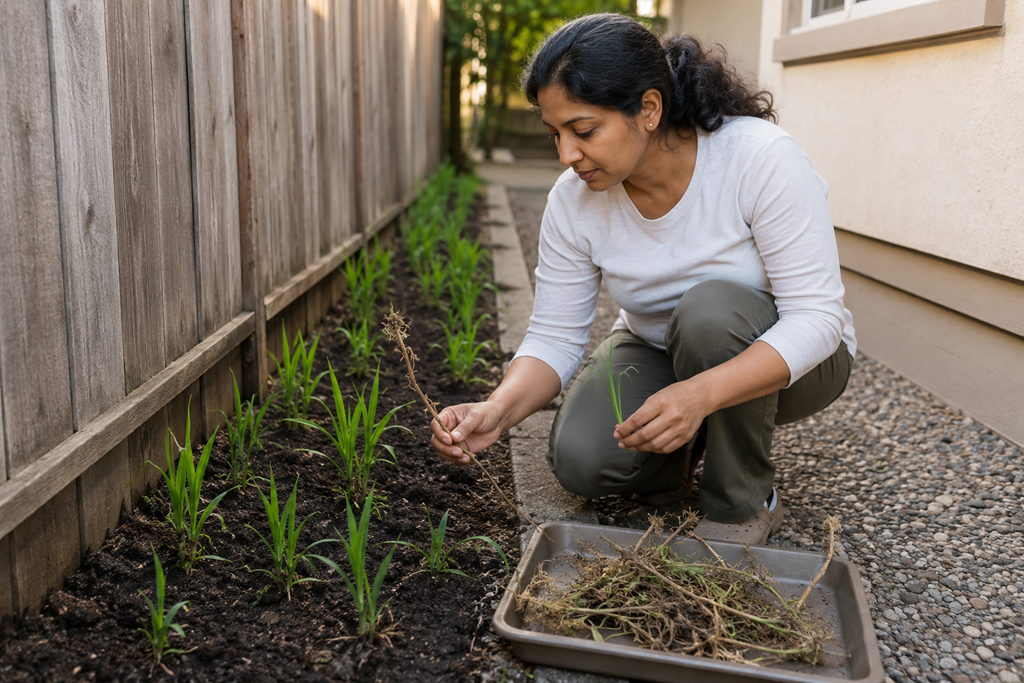
Weeds often return after pulling because the visible leaves are only one part of the problem. Roots, underground stems, broken plant pieces, or seeds already waiting in the soil can produce another round of growth. A freshly cleared bed may look finished, yet the site conditions that supported the weeds can still be in place beneath the surface.
This can be frustrating when you have spent an afternoon clearing a flower bed, gravel strip, walkway edge, or side yard only to see green shoots appear again. The return does not necessarily mean that nothing was accomplished. It may mean that the plants were removed above ground while the larger growth cycle continued below or around them.
Pulling the Top May Leave the Growing Part Behind
Some weeds are relatively easy to remove when the entire young plant comes out. Others are built to survive disturbance.
A plant may have a deep taproot, a thick root crown, underground stems, or spreading runners that remain in the soil after the visible portion is pulled. If the stem breaks near the surface, the remaining plant can sometimes produce new growth from the same location.
That is why a weed can seem to return unusually fast. What looks like a new plant may actually be regrowth from an established underground structure that never fully left.
The pattern can offer a useful clue. A strong shoot repeatedly appearing from the exact same spot may suggest surviving roots or a crown. Numerous small weeds scattered across newly disturbed soil are more likely to be new seedlings.
The Next Weeds May Be an Entirely New Generation
Not every returning weed is the same plant growing back.
Soil can contain many dormant weed seeds. They may remain unnoticed until moisture, light, warmth, or soil disturbance creates favorable conditions for germination. Pulling mature plants can expose soil that had previously been shaded, bringing additional seeds closer to the surface.
The result can be misleading. You clear the visible weeds, wait a short time, and then see another group appear. It feels as though the original weeds returned, even though you may be looking at new seedlings from seeds that were already present.
Seeds can also arrive from nearby areas through wind, animals, landscape materials, water movement, or mature plants that were allowed to form seed heads. Removing the current plants does not create a permanent barrier against future seeds.
Water and Open Soil Can Keep the Cycle Going
Weeds grow where conditions support them. Pulling removes plants, but it does not automatically change those conditions.
Bare soil, thin mulch, gaps between landscape materials, leaking irrigation, overspray, and consistently damp areas can continue to provide places for weeds to establish. On Sacramento-area properties, the pattern may change between rainy periods and the drier months when irrigation becomes the main source of moisture.
You may notice weeds concentrated along drip lines, beneath downspouts, at lawn edges, around sprinkler overspray, or in shaded areas that hold moisture longer. That concentration can be more informative than the total number of weeds.
A landscaping professional who looks only at the visible plants may miss the reason certain areas repeatedly support new growth.
Fast Regrowth Can Help Identify the Real Problem
The speed, location, and appearance of returning weeds can help distinguish between several different situations.
Thick shoots returning from the same exact points may indicate that established roots remain. A carpet of tiny seedlings may point to seeds germinating in exposed soil. Weeds following a narrow, curved line may be responding to irrigation. Growth limited to joints, cracks, or landscape edges may reflect openings where soil and moisture collect.
This does not mean a homeowner needs to identify every species before contacting a landscaping provider. It means that “the weeds came back” is only the beginning of the explanation.
A useful evaluation should consider:
- whether the growth is returning from old roots or new seeds
- where moisture is reaching the area
- whether the soil is regularly disturbed or left exposed
- whether nearby weeds are producing seeds
- what follow-up will be needed after the visible growth is removed
These details can affect the recommended approach, the amount of follow-up involved, and what a reasonable result should look like.
Why Repeated Pulling Can Feel Unsuccessful
Pulling can remove visible weeds and prevent some plants from becoming larger. The frustration usually comes from expecting a single clearing session to solve every part of the problem.
Several patterns can make the return feel especially persistent:
The plants are breaking instead of coming out completely
Dry or compacted soil can cause stems to snap while roots remain below. The bed looks clean temporarily, but surviving growth points can produce another shoot.
Mature weeds have already released seeds
Removing the plant after seeds have formed may improve the appearance of the area without eliminating the next round already waiting in or around the soil.
Clearing leaves the ground exposed
Open soil may give dormant seeds more access to light, moisture, and space. The cleared area can become a good germination site for the next group of weeds.
Different weeds are being treated as one problem
A yard may contain annual weeds that spread mainly by seed, perennial weeds that regrow from roots, and unwanted grass spreading through underground stems. One repeated method may not address every type equally well.
The moisture pattern has not changed
When weeds consistently follow irrigation or drainage patterns, removing the plants without reviewing the water source may leave the most favorable growing conditions untouched.
What to Ask Before Hiring a Landscaping Provider
When recurring weeds become more than you want to manage, a landscaping estimate should explain more than how the visible plants will be removed.
Consider asking:
- Do these appear to be new seedlings, established weeds regrowing from roots, or a combination?
- What conditions are helping them return in these specific areas?
- Does the proposed service address only current growth or include follow-up?
- How will desirable plants and nearby landscape areas be protected?
- What level of future maintenance should I realistically expect?
- Are irrigation, mulch coverage, soil exposure, or landscape edges contributing to the pattern?
Be cautious about promises that one visit will make an outdoor area permanently weed-free. Even a well-maintained landscape can receive new seeds and develop occasional growth. A more useful provider conversation focuses on reducing recurring pressure, addressing contributing conditions, and setting realistic expectations for ongoing maintenance.
A Better Goal Than Expecting Weeds Never to Return
A realistic goal is not necessarily a yard in which another weed can never appear. It is a landscape where recurring growth is understood, manageable, and less likely to take over before it is noticed.
That may involve removing established plants, limiting seed production, improving coverage over exposed soil, reviewing irrigation patterns, and planning appropriate follow-up. The right combination depends on the type of weed, the location, the surrounding plants, and how the area is used.
For Sacramento-area homeowners comparing landscaping services, the most helpful estimate is usually the one that explains the pattern rather than simply quoting a price to clear what is currently visible.
Understanding the Pattern Leads to Better Expectations
Weeds often return because pulling addressed the part above ground while roots, seeds, moisture, or open growing space remained. Sometimes the same plant regrows. In other cases, a new generation takes advantage of the newly cleared area.
Recognizing that difference can help you describe the problem more accurately, compare landscaping recommendations, and understand why follow-up may be part of responsible weed management. Before hiring a local professional, look for someone who can explain what is returning, why it is happening, and what the proposed service is realistically intended to accomplish.