Different flooring surfaces need different types of temporary protection because they do not all respond the same way to pressure, moisture, grit, adhesive, impact, or trapped debris. A covering that works well on one surface can be unnecessary, ineffective, or even create a new problem on another, so the first step is understanding what kind of floor is actually being protected and what it will be exposed to during the project.
This becomes especially noticeable when a home project affects more than one room. A contractor may work primarily in a kitchen, bathroom, or hallway, but workers, equipment, debris, and materials can travel across several flooring surfaces between the entrance and the active work zone. What protects one section of that path may not make sense for another.
For Sacramento-area homeowners preparing for remodeling, repair, installation, or other professional work, the useful question is not simply, “Should I cover the floor?” It is, “What could happen to this particular floor during this particular project?”
The same project can affect two floors very differently
Imagine a project route that begins on carpet near the front door, crosses a hardwood hallway, and ends on tile in a kitchen. All three surfaces may experience the same foot traffic, but they do not necessarily face the same risks.
A small amount of grit that becomes trapped against a finished wood surface can behave differently from the same debris sitting on carpet. Moisture that is relatively easy to notice on tile may be harder to detect when it reaches a more absorbent material. A dropped object may leave little evidence on one floor but chip, dent, scratch, or stain another.
That is why treating every floor as though it were interchangeable can create a false sense of protection. The visible covering is only part of the equation. What matters is the relationship between the floor, the temporary protection, and the activity happening above it.
Hard flooring is not the same as damage-proof flooring
Tile, hardwood, laminate, vinyl, stone, and other hard surfaces may all feel durable under normal household use, but durability does not mean they react identically to project conditions.
Some concerns involve the surface finish rather than the flooring material itself. Others involve seams, grout lines, edges, coatings, or areas that are already worn. A floor that handles ordinary shoes and furniture without difficulty may respond differently when exposed to repeated contractor traffic, fine debris, equipment movement, or materials being carried through the room.
Even among floors that look similar, the condition of the surface can matter. Recently finished flooring, older flooring, repaired sections, and heavily worn areas may not behave the same way.
The practical takeaway is simple: appearance alone is not enough to determine how a floor should be protected.
Carpet and resilient surfaces create different concerns
Softer flooring introduces another set of considerations.
Carpet can hold dust, grit, and small debris within its fibers. It can also make spills or tracked-in moisture less immediately visible. Resilient flooring may tolerate everyday foot traffic well but can still be affected by concentrated pressure, dragging, trapped debris, or incompatible materials placed directly against the surface.
This does not mean one type of flooring is more difficult to protect than another. It means the problem changes.
For one surface, the main concern may be abrasion. For another, it may be impact, moisture, compression, residue, or contamination. Identifying the likely exposure makes the protection decision more meaningful than simply covering every floor in the same manner.
Finish and condition can matter as much as the material
Two homeowners can both say they have wood floors while actually dealing with surfaces that differ in finish, age, previous repairs, wear, and manufacturer requirements.
The same is true of tile, stone, laminate, vinyl, and other flooring categories.
That distinction is easy to miss because people naturally identify a floor by what it appears to be: hardwood, carpet, tile, vinyl. Contractors and installers may need to consider more specific characteristics before anything is temporarily attached to, placed over, or left in prolonged contact with the surface.
If you are uncertain about a flooring material or finish, it can be useful to identify what you know before the project starts and ask the appropriate installer, manufacturer, or service provider about any restrictions that apply to it.
This is particularly important when temporary protection will remain in place for more than a brief period.
The activity above the floor changes the protection problem
Flooring type is only half of the decision. The project itself matters too.
A room that workers pass through occasionally presents a different situation from a narrow hallway that becomes the primary route between an entrance and an active work zone. A floor beneath a material-staging area faces different exposure from one several rooms away from the project.
Other practical differences include whether the work is likely to create fine dust, whether equipment will move through the space, whether materials will be carried overhead, and whether wet or messy work could affect nearby areas.
Thinking in terms of exposure can prevent two common extremes: protecting too little because the floor normally seems durable, or treating the entire house as though every surface faces the same level of risk.
Room transitions are easy to overlook
The boundary between flooring materials deserves particular attention.
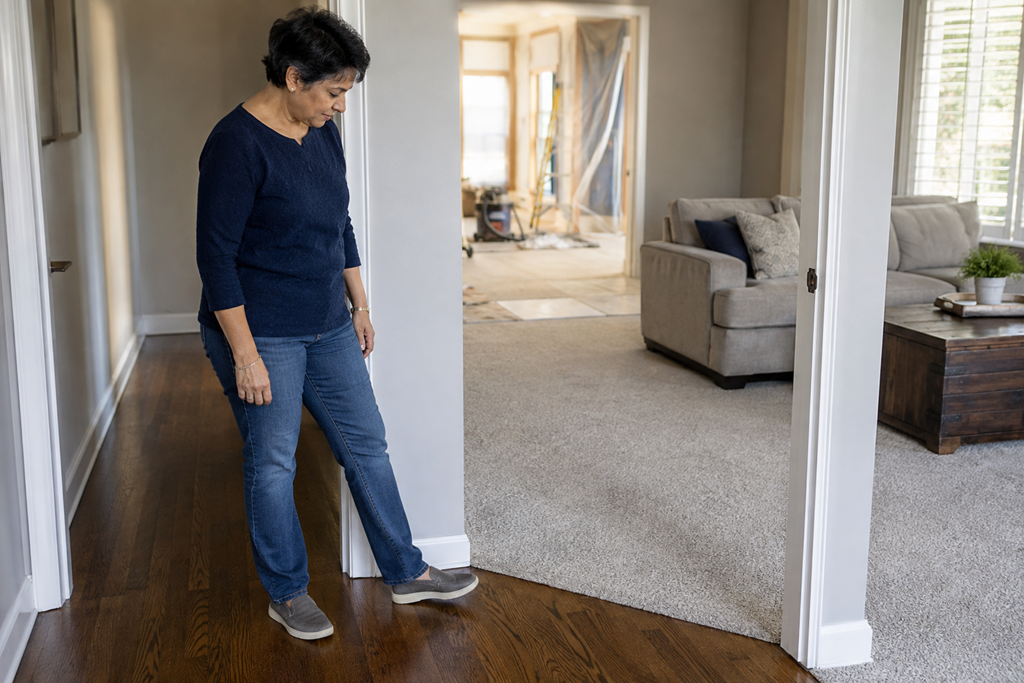
A doorway might connect carpet to tile, hardwood to stone, or one finished surface to another. Those transitions are often located directly along walking routes, which means dirt and debris can move from one surface to the next.
They can also create a practical planning problem because a protection approach suitable for one side of the doorway may not automatically be suitable for the other.
Instead of thinking of the project path as one continuous floor, it can be more useful to notice where the surface changes. Those transition points help reveal where protection needs may also change.
Clarify the work path before deciding what needs protection
You do not need to predict every detail of a project yourself. A short conversation with the provider can often clarify which areas will actually be exposed.
Before work begins, useful questions may include:
- Which entrance and pathway will the crew normally use?
- Which rooms will be active work areas, staging areas, or travel routes?
- Will equipment or heavy materials pass over any finished flooring?
- Is dust, moisture, or other project debris likely to reach adjoining spaces?
- What floor protection does the provider normally supply?
- Are there any flooring surfaces they want the homeowner to identify in advance?
- Should manufacturer or installer guidance be checked before anything contacts a particular finish?
These questions help separate the floor that simply happens to be nearby from the floor that will actually experience meaningful project traffic or exposure.
They can also prevent duplicate preparation. If the contractor already has a plan for certain work areas, you may not need to independently prepare those same spaces in a different way.
One protection approach should not automatically follow you through the whole house
It is tempting to choose one solution and extend it from the entrance all the way to the work zone. Visually, that can seem organized and thorough.
But the more useful goal is not uniformity. It is appropriate protection for each situation.
A finished wood hallway, a carpeted room, and a tiled work area may all need attention for different reasons. Their protection does not have to look identical to serve the same larger purpose: keeping ordinary project traffic and debris from unnecessarily affecting parts of the home that are not being renovated or repaired.
That shift in thinking can make project preparation more focused. Instead of asking how to cover everything, you can identify the surfaces involved, understand what each area is likely to experience, and discuss any uncertainties with the professional doing the work.
Protect the floor you actually have from the project actually happening
Different flooring surfaces need different protection because the material, finish, condition, location, and type of project exposure all influence what can affect them. Recognizing those differences before work begins makes it easier to discuss responsibilities with a contractor and avoid assuming that one approach belongs everywhere.
For Sacramento homeowners, that can mean a more deliberate preparation process: identify the flooring along the work path, notice where surfaces change, understand how each area will be used, and follow applicable installer, manufacturer, or service-provider guidance before placing temporary materials against a finished floor.
Related resource: For examples of protection formats designed for different floor situations, see How to Choose Floor-Protection Products For Different Surfaces.