A drafty exterior door can affect more than the few seconds you notice cool or warm air near the entry. It can make the surrounding room feel uneven, encourage people to avoid using part of the space, and cause the home’s heating or cooling system to work harder to maintain a comfortable temperature. The draft does not automatically mean the entire door needs replacement, but it is a useful sign that the door, frame, seals, threshold, or installation should be evaluated.
What a Drafty Door Usually Feels Like
A door draft is unwanted outdoor air moving through or around a closed door. You may notice it near the bottom edge, along one side of the frame, around the lock area, or where the door meets the threshold.
The experience is not always dramatic. It may feel like a faint stream of air against your ankle, a cooler patch near an entryway chair, or a room that never feels quite as comfortable as the rest of the home.
Other signs can include a lightweight curtain moving near the door, outside light visible around part of the perimeter, increased outdoor noise, or a noticeable temperature change when standing close to the entry.
These clues are worth paying attention to, but none of them reveals the cause by itself.
The Comfort Problem Can Extend Beyond the Entryway
A draft affects the air around the door first, but the impact may spread into the adjoining room.
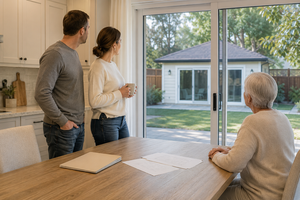
A breakfast area near a drafty patio door may feel uncomfortable during cooler mornings. A family room beside a poorly sealed front entry may feel warmer during hot Sacramento afternoons. Furniture, play areas, pet beds, or workspaces may gradually be moved away from the door because people naturally avoid the uncomfortable part of the room.
This is an important distinction: the problem is not simply that air is entering near the door. The draft can change how comfortably and fully the room is used.
People sometimes adapt without realizing it. They add a blanket to a nearby chair, keep an interior door closed, place a towel near the threshold, or avoid sitting in one part of the room. Those habits can make the draft seem minor even though it continues to affect daily comfort.
A Draft Is a Symptom, Not a Diagnosis
Several different door conditions can create similar air movement.
The weatherstripping may be worn, compressed, loose, or missing in one area. The door sweep may no longer meet the threshold evenly. Hinges can loosen and allow the door slab to sit slightly out of alignment. The threshold may need attention, or the door may not be closing firmly against the seals.
In other cases, the door itself may be warped, the frame may be damaged, or the original installation may leave uneven gaps around the opening.
Because these conditions can feel nearly identical from inside the home, it is difficult to determine the right response from the draft alone. A qualified door professional should be able to identify where the air is entering and explain whether the concern is limited to a replaceable component or involves the larger door system.
Sacramento Weather Can Make Small Gaps More Noticeable
Sacramento-area homes experience periods of strong heat, dry conditions, cool mornings, wind, and seasonal rain. These changes can make air leaks more noticeable at different times.
A gap that feels insignificant during mild weather may become easier to detect when outdoor and indoor temperatures are farther apart. Direct afternoon sun can also warm an exterior door and the surrounding entry, while cooler outdoor air may reveal gaps during another part of the day.
This is why a draft may seem inconsistent. It can depend on wind direction, temperature differences, sun exposure, and how firmly the door closes at that moment.
An intermittent draft should not automatically be dismissed. The changing conditions may simply be making an existing gap easier or harder to notice.
A Draft Does Not Automatically Mean Full Door Replacement
Some draft problems can be corrected without replacing the entire door.
Worn weatherstripping, a damaged sweep, a minor hinge issue, or a threshold that no longer seals evenly may be relatively localized concerns. When the door slab and frame remain square, solid, secure, and operational, a targeted repair may be worth discussing.
Replacement may become more reasonable when the concern involves a warped or deteriorated door, recurring alignment problems, frame damage, ineffective sealing despite prior repairs, difficult operation, or several problems occurring together.
The important question is not simply, “Is the door drafty?” It is, “What is causing the draft, and how much of the door system is affected?”
A provider who recommends replacement should be able to explain why repairing the seals, hardware, threshold, or alignment would not provide a dependable solution. A provider who recommends repair should also explain what will be corrected and whether any broader condition may remain.
Temporary Fixes Can Hide the Pattern
Homeowners sometimes respond to a draft by adding adhesive sealing material, placing fabric along the threshold, or blocking off the surrounding area.
These measures may reduce noticeable airflow for a while, but they can also make it harder to see whether the door is closing unevenly or whether the problem is returning in the same location.
Layering new material over old seals can sometimes interfere with how the door closes. A temporary barrier may also hide light, moisture, or alignment clues that would help a professional evaluate the opening.
Before an appointment, it can be useful to remember where the draft is strongest, when it is most noticeable, and whether the door has become harder to close, latch, or lock. That pattern often provides more useful information than a temporary fix alone.
The Estimate Should Identify the Actual Source
When comparing local door professionals, look for an explanation that connects the recommended work to the specific cause of the draft.
A clear evaluation should distinguish among the door slab, frame, weatherstripping, sweep, threshold, hinges, lock alignment, and surrounding installation. The provider does not necessarily need to recommend work on every component, but the recommendation should make sense in relation to what was observed.
If replacement is proposed, ask whether the estimate covers only the door slab or a complete prehung door and frame system. Those are different scopes of work and may address different problems.
The estimate should also make clear whether related finishing work, trim, threshold adjustments, disposal, or other entryway details are included. Clear scope descriptions make it easier to compare recommendations without assuming that every quote covers the same work.
Useful Questions to Ask During a Door Evaluation
A few focused questions can help keep the conversation centered on the draft:
- Where is the air entering, and what is causing the opening?
- Is the problem limited to the seals, sweep, threshold, or hardware?
- Is the door or frame warped, damaged, or out of alignment?
- Would a repair address the underlying cause or only reduce the symptom?
- If replacement is recommended, why would a targeted repair be insufficient?
- Does the proposed work include the slab, frame, threshold, trim, and finishing?
The answers should help you understand the reasoning behind the recommendation rather than leaving you with only a repair or replacement price.
Look at the Pattern, Not Just the Breeze
A drafty door can affect room temperature, furniture placement, everyday routines, and how comfortable an area of the home feels. It deserves attention, but it should be treated as evidence of a problem rather than proof that the entire door has failed.
Before choosing repair or replacement, ask a qualified professional to identify the exact path of the air leak and explain which parts of the opening are involved. That gives Sacramento-area homeowners a stronger basis for comparing estimates and choosing work that addresses the real source of the comfort problem.