Drainage should be discussed before artificial turf is installed because the finished surface still has to deal with water moving through and across the property. A yard that looks dry most of the year can still collect water during Sacramento’s rainy periods, especially in low spots or where runoff from roofs, patios, or neighboring areas reaches the installation zone. Talking about drainage early helps the homeowner understand whether the planned turf area needs extra evaluation before the project moves forward.
Artificial turf can change how a yard looks and how the space is used, but it does not automatically solve every water-management issue underneath or around it. That is why drainage belongs in the planning conversation rather than being treated as a detail to think about after the turf is already installed.
A Dry-Looking Yard Can Still Have a Drainage Question
One reason drainage is easy to overlook is that homeowners often plan artificial turf during dry weather.
The lawn may appear firm and problem-free when an estimate is being prepared. There may be no standing water, soggy ground, or obvious runoff to draw attention to the issue.
That does not necessarily tell the whole story.
Water reaching the future turf area may come from several directions, including rainfall, roof drainage, hardscape, irrigation elsewhere on the property, or surrounding sections of the yard. The important question is not simply whether the ground looks dry during the estimate. It is how water normally behaves when it does reach that part of the property.
For Sacramento-area homeowners, where long dry stretches can be followed by seasonal rain, that distinction can be especially useful when discussing a project.
Turf And Drainage Are Separate Parts Of The Same Decision
It is easy to assume that because artificial turf is designed for outdoor use, drainage is automatically handled by the turf itself.
The situation is more nuanced.
The turf surface is only one part of the finished installation. Conditions beneath it and around it can also affect how water moves through the area.
This means two yards that appear similar from above may require different conversations before installation. One may already move water away effectively, while another may have low areas, concentrated runoff, or other conditions worth evaluating.
The goal for a homeowner is not to determine the technical solution personally. It is to make sure the subject is being considered before the visible turf goes down.
Existing Water Patterns Matter More Than The Turf Alone
A useful way to think about drainage is to look beyond the exact rectangle where artificial turf will be installed.
Consider what surrounds that space.
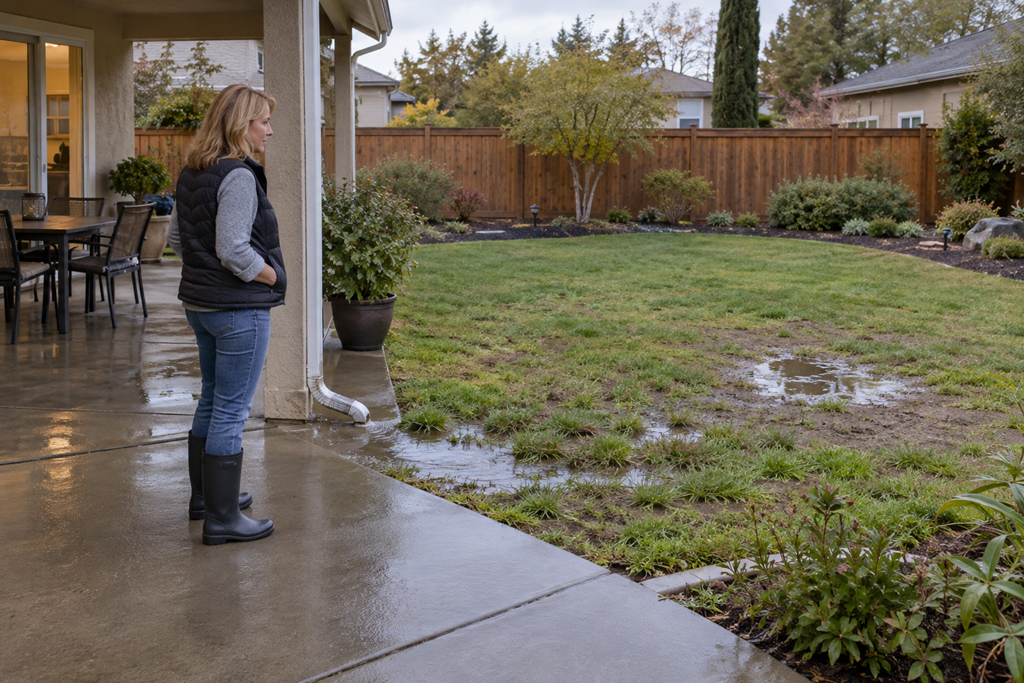
A patio may send water toward the yard. A downspout may release water nearby. One section of the property may sit slightly lower than another. Water may regularly move across a side yard before reaching the planned turf area.
Those relationships can matter even when the turf itself is new.
This is why a conversation about drainage should include the broader setting rather than focusing only on turf color, pile height, appearance, or how the finished surface will feel underfoot.
A visually attractive installation still needs to make sense within the way the property handles water.
Covering A Problem Does Not Necessarily Resolve It
One misunderstanding homeowners can have is that replacing natural grass with artificial turf will automatically eliminate an area that occasionally becomes wet or muddy.
Sometimes the surface material is only part of the reason the area behaves the way it does.
If water naturally collects in a particular part of the yard, changing what is visible at the surface may not address the underlying reason water reaches or remains in that location.
That does not mean a turf project is inappropriate. It simply means the existing condition deserves discussion before installation begins.
A provider who understands the planned area should be able to explain whether anything about the property's existing drainage pattern needs further evaluation as part of the project.
Drainage Can Affect The Scope Of The Conversation
Homeowners often begin comparing artificial turf providers by focusing on visible features such as turf appearance, softness, edging, seams, or the size of the installation area.
Drainage can introduce another important part of the comparison: what each provider is actually accounting for beneath and around the finished surface.
If one estimate appears to address drainage conditions and another barely mentions them, the two proposals may not be describing exactly the same project.
That does not automatically make one proposal better than another. Different properties may require different approaches, and providers may describe their scope differently.
It does give the homeowner a reason to ask for clarification before comparing totals.
What To Ask Before Approving The Project
You do not need to diagnose drainage conditions yourself. A few straightforward questions can help reveal how thoroughly the issue has been considered:
- How does water currently move through this part of the yard?
- Do you see any low areas or runoff patterns that should be evaluated before installation?
- How will the planned turf area interact with nearby patios, walkways, downspouts, or landscaping?
- Is drainage included in the proposed scope, or would any additional work be discussed separately?
- If water collects here after heavy rain, would that change your recommendation?
The answers should help you understand the thinking behind the proposed installation rather than leave you trying to interpret technical details on your own.
Be Cautious When Drainage Is Dismissed Without Discussion
Not every property has a complicated drainage issue, and homeowners should not assume that extra drainage work is automatically necessary.
At the same time, a provider should be willing to discuss the subject when it is relevant.
If you mention previous pooling, runoff, soggy areas, or water coming from another part of the property and the concern is dismissed without explanation, it may be worth asking additional questions.
Similarly, vague language such as “it will drain fine” may not give you enough information to understand why the provider believes the planned installation fits the property.
Clear communication is more useful than either assuming there is a problem or assuming there is not.
The Best Time To Raise The Question Is Before The Turf Goes Down
Drainage does not need to become an intimidating part of planning an artificial turf project.
The main idea is simple: understand how water behaves in the area before covering that area with a new finished surface.
For Sacramento-area homeowners comparing artificial turf installation options, bringing up drainage during the estimate or planning stage can make the project scope easier to understand. It can also help distinguish between assumptions and conditions that have actually been considered.
Artificial turf decisions often begin with how the finished yard will look. Taking a few minutes to discuss what happens underneath and around that surface can lead to a more informed conversation before you hire a local pro.