Solar monitoring gives homeowners a window into how their solar system is performing, but it does not always tell the whole story by itself. A monitoring app may show production, energy use, alerts, or daily trends, yet those numbers still need context. Understanding what the system tracks—and what it does not—can help you avoid unnecessary worry and ask better questions when something looks different.
For many homeowners, the first confusing moment comes when the monitoring screen shows a lower number, missing data, or an unexpected alert. It is easy to assume that the solar panels have stopped working or that the system is underperforming. Sometimes that is possible, but a monitoring change can also reflect weather, shade, household energy use, internet connectivity, or the way the equipment reports information.
The most useful way to think about solar monitoring is as an early visibility tool. It can help you notice patterns and identify questions, but it is not always a complete diagnosis.
Your Monitoring System May Track Only Part of the Picture
Not every solar monitoring setup displays the same information.
Some systems show how much electricity the panels are producing. Others may also show how much energy the home is using, how much power is being sent to or received from the utility grid, or how a battery is charging and discharging.
This distinction matters because a homeowner may look at a production-only system and assume it represents the home’s entire energy situation. It does not.
For example, a production screen may show that the panels generated energy during the day, but it may not show how much of that energy was immediately used by appliances, stored in a battery, or sent elsewhere. Without consumption-monitoring equipment, the app may not be able to explain why a utility bill or household usage pattern looks different.
Before relying heavily on a dashboard, find out exactly what it measures.
A Lower Number Does Not Automatically Mean Something Is Broken
Solar production naturally changes throughout the day and across different conditions.
Cloud cover, seasonal sunlight, roof orientation, temporary shade, dust, high temperatures, and nearby trees can all influence what appears in a monitoring portal. A system may produce differently on two days even when nothing is wrong with the equipment.
This can be especially noticeable for Sacramento-area homeowners who experience long sunny periods, intense summer heat, dry conditions, and seasonal changes in tree cover or sun angle. More sunlight generally supports production, but hotter equipment does not necessarily produce at its maximum rated level every moment.
One unusual day is therefore less informative than a repeated pattern.
A sharp decrease that continues under similar conditions may deserve more attention than a single lower reading during clouds, heavy shade, or changing weather.
Missing Monitoring Data May Be a Communication Problem
A solar system and its monitoring connection are related, but they are not the same thing.
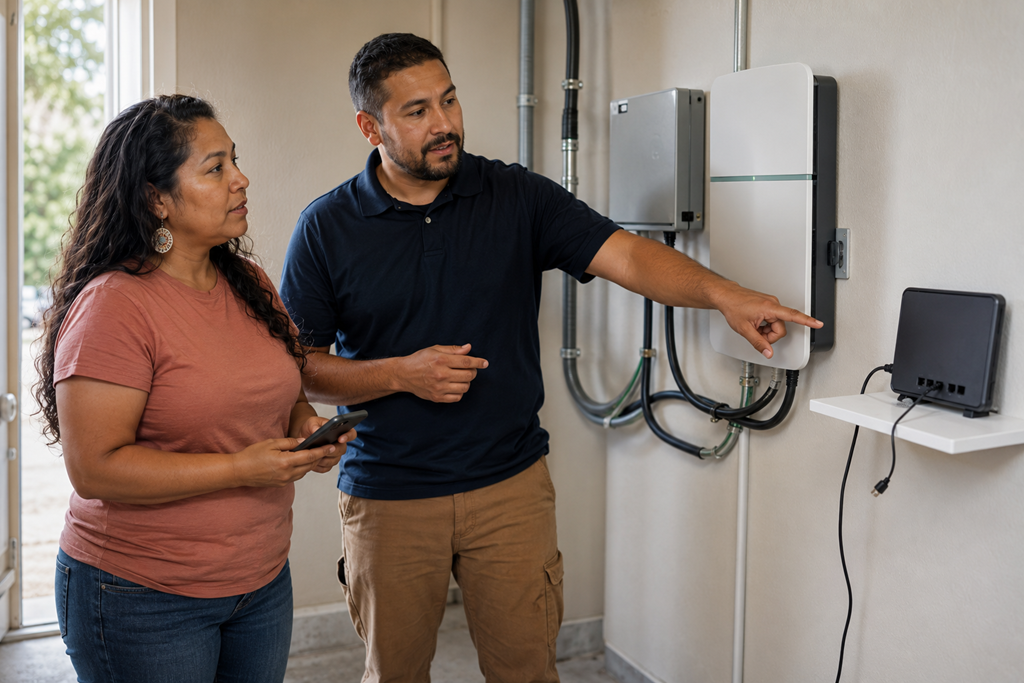
Monitoring information may pass through a gateway, inverter, home internet connection, cellular connection, or another communication device. When that connection is interrupted, the app may stop displaying current information even though the solar equipment is still operating.
The missing information may later appear after the connection is restored, depending on the system.
This is why an empty screen, delayed update, or offline notice should not automatically be treated as proof of equipment failure. It is still worth investigating, but the first question is often whether the system stopped producing or merely stopped reporting.
A qualified solar service provider can help distinguish between a monitoring interruption and an equipment concern. Homeowners should avoid opening electrical equipment, climbing onto the roof, or attempting repairs based only on an app notification.
Solar Monitoring and Utility Billing May Not Match Exactly
Homeowners are sometimes surprised when the numbers in a solar app do not match the numbers on a utility statement.
These sources may measure energy at different points, use different time periods, or update on different schedules. A solar portal may focus on panel production, while the utility meter records electricity moving between the property and the grid.
Household energy that is produced and used immediately may also be represented differently from electricity imported from or exported to the grid.
A difference between the two sources does not automatically mean one is wrong. It may mean they are answering different questions.
When comparing the information, ask the solar provider what each number represents rather than expecting every total to be identical.
Patterns Usually Matter More Than Daily Fluctuations
Monitoring becomes more useful when homeowners look for consistent changes instead of reacting to every rise or fall.
A normal monitoring history often contains variation. Production may build through the morning, peak during stronger sunlight, and decline later in the day. Shade, weather, equipment design, and panel placement can affect the shape of that pattern.
Concerns may be more appropriate when the portal shows:
- Repeatedly missing data that does not return
- No reported production during expected daylight hours
- A sudden reduction that continues across comparable days
- Recurring equipment alerts
- One section of the system consistently performing differently
- Battery behavior that no longer follows its usual pattern
These signs do not identify the cause by themselves. They simply provide useful information to share with a qualified provider.
Screenshots, approximate dates, weather conditions, and a description of what changed can make a service conversation more productive. There is no need to interpret every technical code before asking for help.
Alerts Are Starting Points, Not Complete Explanations
Monitoring alerts can be useful because they draw attention to something the system detected. However, the alert wording may not explain whether the issue is temporary, related to communications, or connected to equipment performance.
Homeowners can become more worried when an app displays technical language without explaining its importance.
Instead of guessing, note what the alert says, whether it returns after clearing, and whether production data is still appearing. A provider familiar with the installed equipment can explain what the alert means for that particular system.
The goal is not to ignore alerts. It is to avoid treating every alert as a confirmed major failure before the situation has been reviewed.
Monitoring Access Should Be Discussed Before Hiring
Solar monitoring is often treated as a small feature during an installation conversation, but it can affect how easily a homeowner understands the system later.
Before hiring a Sacramento-area solar installer or service provider, it is reasonable to ask:
- What information will the monitoring portal display?
- Will it show household consumption or only solar production?
- Who creates and controls the homeowner’s account?
- Who receives equipment alerts?
- What should the homeowner do when data stops updating?
- Is help with monitoring included after the installation?
- How is access transferred if the property changes ownership?
Clear answers can prevent confusion after the system is operating.
A provider should be able to explain the monitoring setup in plain language. Be cautious when monitoring capabilities are described vaguely, when access responsibilities are unclear, or when no one explains who to contact about persistent alerts.
Your Expectations Should Match the Installed Equipment
Not every solar system includes advanced monitoring.
A basic setup may provide overall production data without detailed information for individual panels. Another system may offer more specific equipment-level reporting. Battery systems may add another set of measurements and controls.
Homeowners sometimes expect a portal to identify the exact cause of every change, even when the installed monitoring equipment was not designed to provide that level of detail.
Before deciding that the monitoring system is inadequate, confirm what was included in the original installation and what the equipment is capable of reporting. If more detailed information is important, a qualified provider can explain whether additional monitoring options are compatible with the property’s system.
A Professional Review May Be Worth Discussing
A service conversation may be appropriate when a concerning pattern continues, alerts repeatedly return, monitoring access cannot be restored, or the system appears to have stopped reporting or producing under normal daylight conditions.
It may also be helpful when the homeowner cannot determine whether the issue involves the solar equipment, the monitoring connection, a battery, or household consumption.
When contacting a provider, describe the visible pattern rather than trying to diagnose it. Statements such as “the data has been missing for several days” or “production appears much lower than it was under similar conditions” are more useful than assuming a particular component has failed.
A qualified solar professional can review the monitoring history, equipment status, installation details, and property conditions before recommending service.
Use Monitoring to Ask Better Questions
Solar monitoring is most helpful when it gives homeowners enough information to recognize patterns and communicate clearly.
It should help you notice when something has changed, understand what your system normally does, and know when further evaluation may be reasonable. It should not make you feel responsible for diagnosing electrical equipment from a phone screen.
By learning what the portal measures, allowing for normal variation, and distinguishing missing data from confirmed equipment trouble, Sacramento-area homeowners can make better-informed decisions before scheduling service or comparing solar providers.