Dry rot should not be treated like a cosmetic issue because peeling paint, soft trim, cracking joints, or a small discolored patch may be the visible edge of a moisture-and-decay problem inside the wood. Covering the surface can make the area look better for a while, but it does not explain why the wood changed, how far the damage extends, or whether water is still reaching the same spot.
This can be easy to misunderstand. A homeowner may notice one rough corner around a window, a section of trim that will not hold paint, or a door frame that looks slightly worn. Because the affected area appears small, repainting or filling it can seem like a reasonable response.
The difficulty is that the surface appearance does not always reveal the condition underneath.
A Better-Looking Surface Does Not Mean the Wood Is Sound
Paint, caulk, filler, and exterior coatings can improve the appearance of damaged wood. They can also cover some of the signs that help explain what is happening.
These materials may be appropriate during the finishing stage of a properly planned repair. They are not substitutes for determining whether the underlying wood is still solid and whether the moisture source has been addressed.
A patched area may look normal while the wood behind it remains weakened. The same peeling, cracking, or softness may eventually return because the condition that caused the damage was never resolved.
This is why recurring paint failure deserves more attention than an ordinary cosmetic blemish.
The Visible Damage May Be Only Part of the Affected Area
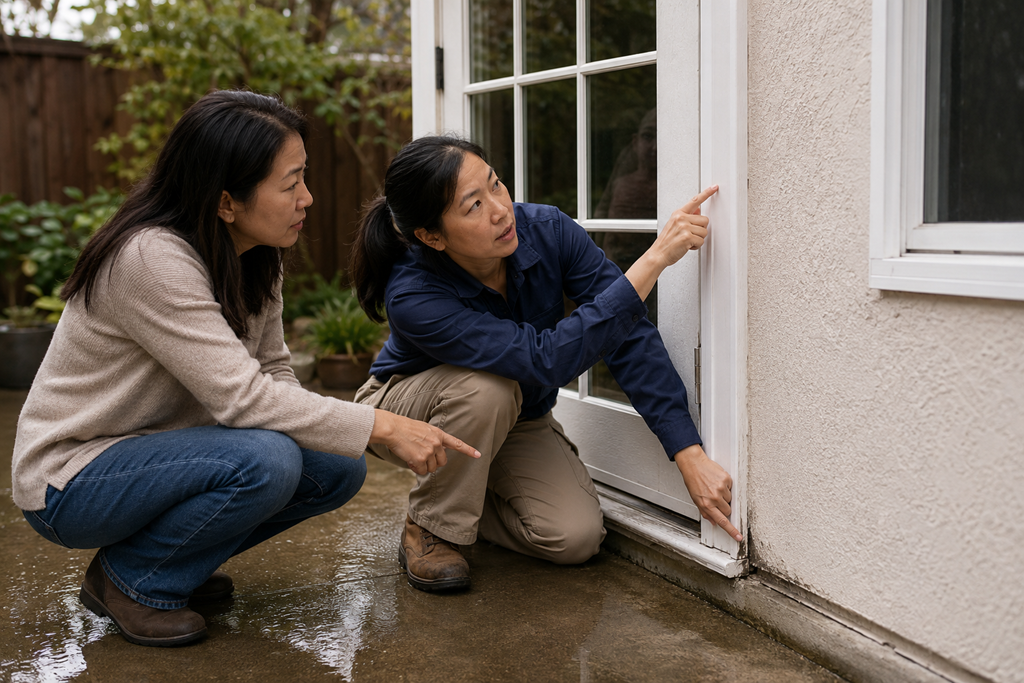
Wood deterioration does not always stop at the edge of the stain, crack, or soft spot that can be seen from the outside.
Moisture can travel through joints, behind trim, beneath a sill, around fasteners, or along connected pieces of wood. The most noticeable surface damage may appear several inches away from the point where water is entering.
Common areas where homeowners may first notice a problem include:
- Lower window and door corners
- Exterior trim joints
- Fascia and roof-edge components
- Deck and porch connections
- Wood positioned close to soil or irrigation
- Areas beneath gutters, flashing, or downspouts
The presence of damage in one of these locations does not automatically reveal its full extent. A qualified evaluation may be needed to distinguish a limited surface problem from deterioration that extends into adjoining material.
The Word “Dry” Can Create the Wrong Impression
Despite its common name, dry rot is associated with wood decay that develops when moisture supports fungal activity. The wood may feel dry when it is finally noticed, but the deterioration can reflect previous or repeated exposure to water.
That distinction matters for Sacramento-area homeowners. Long stretches of warm, dry weather do not necessarily rule out moisture-related wood damage.
Seasonal rain, roof runoff, plumbing leaks, irrigation overspray, poorly sealed joints, and water collecting near exterior components can all expose wood to moisture. The surface may dry between exposures while the underlying condition continues to worsen.
Seeing dry wood on the day of an inspection does not necessarily explain what happened during earlier wet periods.
Repainting Can Hide the Pattern Without Solving It
When paint repeatedly peels from the same corner or seam, the recurring location is often more informative than the appearance of the paint itself.
The pattern may suggest that water is entering through a nearby joint, collecting behind the finish, or reaching the wood from another part of the structure. Simply scraping and repainting the visible area can temporarily erase that clue.
A previous cosmetic repair does not automatically mean someone acted improperly. The original damage may have appeared minor, or the moisture source may not have been obvious at the time.
However, when a repair keeps failing in the same place, it is reasonable to ask whether the condition beneath the finish has been evaluated.
A Complete Repair Discussion Should Address Cause and Extent
A useful dry rot repair conversation should go beyond the question, “Can this spot be patched?”
The homeowner should also understand what may have caused the damage, how the repair area will be determined, and whether nearby materials appear sound.
Before approving an estimate, consider asking:
- What suggests that this is more than ordinary paint failure?
- Where may moisture be entering or collecting?
- How will the actual extent of the affected wood be determined?
- Does the proposed scope address the source of the moisture?
- Which components are expected to be repaired or replaced?
- What finishing work is included after the damaged material is addressed?
The provider may not be able to confirm every hidden condition before the area is opened. That uncertainty can be normal. What matters is whether the estimate explains how unexpected damage will be communicated and handled.
“Patch and Paint” Is Not Always Wrong, but It Needs Context
A small repair can be appropriate when the deterioration is genuinely limited, the surrounding wood is sound, and the moisture source has been corrected.
The concern is not the size of the repair. It is whether the proposed work matches the actual condition.
An estimate that uses broad language such as “patch damaged trim” or “repair and repaint” may need further explanation. The homeowner should be able to tell whether the work includes evaluating the wood, removing deteriorated material, correcting the contributing water problem, and restoring the finished surface.
Two estimates can describe similar-looking results while covering very different scopes of work.
One may focus mostly on appearance. Another may include investigation, removal of unsound material, moisture-source correction, replacement, sealing, and finishing. Comparing only the final painted appearance can hide those differences.
The Moisture Source Is Part of the Repair Decision
Replacing damaged wood without considering how it became wet can leave the new material exposed to the same conditions.
Possible sources may include a failed joint, damaged flashing, gutter overflow, irrigation spray, plumbing leakage, poor drainage, or water collecting against the structure. Identifying the source may involve more than one trade when the problem connects to roofing, plumbing, drainage, stucco, windows, or another building component.
A dry rot repair provider should be willing to explain which contributing conditions are included in the proposed work and which may require separate evaluation.
Homeowners do not need to diagnose the exact source themselves. They do need enough information to understand whether the repair plan treats the damaged wood as the entire problem or as evidence of a broader moisture issue.
Cosmetic Work Usually Belongs Near the End
Painting and finishing are important parts of restoring repaired wood. They help protect the material and return the area to a consistent appearance.
They are most useful after the underlying questions have been addressed:
- Is the wood sound?
- Has the affected material been identified?
- Has the likely moisture path been considered?
- Will the repaired area be protected from repeated exposure?
Thinking of paint as the final layer rather than the entire solution helps homeowners evaluate dry rot estimates more effectively.
Look Beyond the Surface Before Approving the Work
A small area of peeling paint or softened trim does not always mean a large repair is needed. It also should not be dismissed solely because it looks minor.
The important issue is whether the visible flaw is limited to the finish or reflects deterioration within the wood.
Before hiring a local professional, ask for an explanation of the suspected moisture source, the expected repair area, and how hidden damage will be handled if it is discovered. That information makes it easier to compare estimates based on the work being proposed rather than on how smooth or freshly painted the finished surface may look.