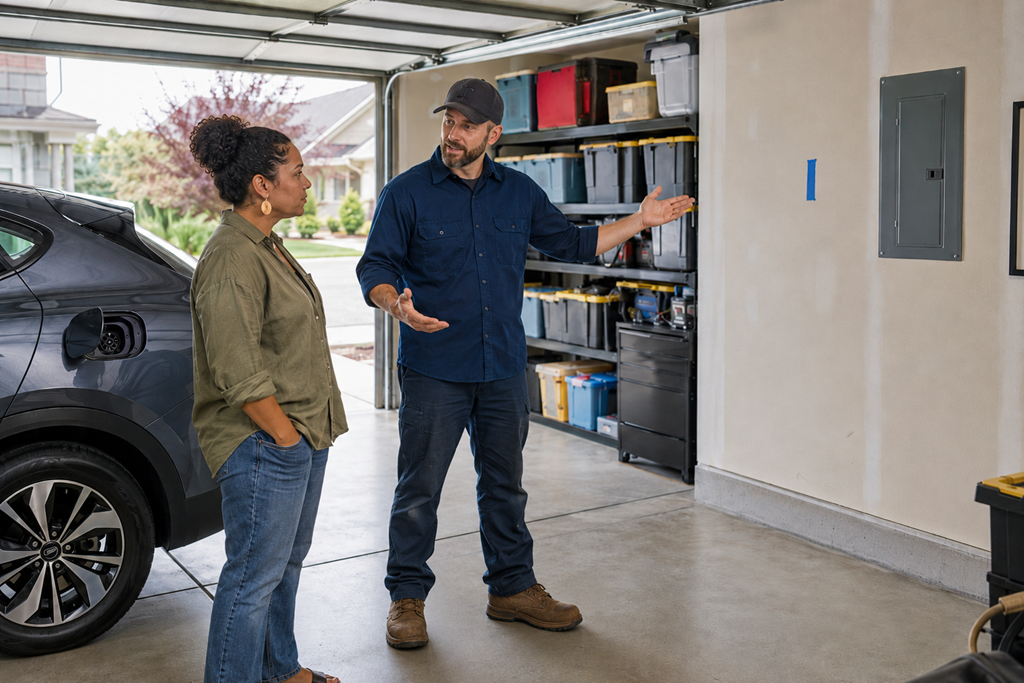
Planning home EV charging is less about buying a charger and more about making sure the charging setup fits your vehicle, parking location, electrical system, daily driving, and property. Before comparing installers, Sacramento-area homeowners should understand that the right plan depends on how and where the vehicle will charge, not simply on choosing the fastest equipment available.
It is easy to assume that home charging begins with selecting a wall-mounted unit online. In practice, the equipment is only one part of the project. The location of the electrical panel, the distance to the parking space, the vehicle’s charging capabilities, and the way the household uses the property can all affect what makes sense.
Understanding these factors before requesting estimates can make provider conversations more productive and reduce the chance of comparing proposals that are based on different assumptions.
The Charger Is Only One Part of the Setup
A home EV charging system usually involves both charging equipment and the electrical work needed to support it.
The charger may be installed inside a garage, on an exterior wall, near a driveway, or in another location that allows the vehicle to be reached safely. The electrical portion may involve evaluating the home’s available capacity, identifying an appropriate circuit, determining a wiring route, and considering how the installation will be protected from weather and everyday activity.
That is why two homeowners purchasing similar charging equipment may receive very different installation proposals. One home may have a convenient panel and parking arrangement, while another may require a longer wiring route, exterior work, or additional electrical planning.
The charger’s advertised features do not reveal those property-specific differences.
Start With the Way the Vehicle Will Actually Be Used
The fastest available home charging option is not automatically the most practical choice.
A better starting point is the amount of driving the household normally does and how long the vehicle is typically parked at home. A driver who travels a modest distance and plugs in regularly may have different needs from someone who drives extensively, arrives home with a nearly depleted battery, or has limited overnight charging time.
A standard household outlet may provide enough charging for certain routines. Other drivers may benefit from a dedicated Level 2 charging setup that can restore more range during the vehicle’s normal parking period.
The vehicle itself also matters. Electric vehicles differ in how much charging power they can accept. Installing equipment that delivers more power than the vehicle can use may not provide the expected advantage.
Before discussing equipment, it helps to be able to explain:
- How far the vehicle is usually driven
- How often it will be charged at home
- How long it normally remains parked
- Whether another electric vehicle may be added later
- Whether charging will also be needed for visitors or household members
These details help a qualified provider recommend a setup based on real use rather than equipment specifications alone.
The Parking Space Can Shape the Entire Project
The location where the vehicle will regularly park is one of the most important planning details.
A charger should be positioned so that its cable can comfortably reach the vehicle without being stretched across a walkway, pinched by a garage door, exposed to unnecessary damage, or placed where it becomes a daily obstacle.
Homeowners sometimes plan around where the vehicle is parked today without considering whether that arrangement is consistent. A garage may also be used for storage, a driveway may accommodate more than one vehicle, or the EV’s charging port may be on the side farthest from the proposed charger location.
The distance between the electrical panel and the parking space can also affect the project. A charger mounted near the vehicle may still require wiring to travel through finished walls, an attic, a crawlspace, a side yard, or a detached structure.
Before requesting an estimate, park the vehicle in its usual position and note where the charging port sits. This gives the provider a more realistic view of the cable reach and installation route that may be needed.
Electrical Capacity Should Be Evaluated, Not Assumed
Some homeowners worry that installing an EV charger will automatically require replacing the electrical panel. Others assume that any home can support the charging equipment they want without changes.
Neither assumption should be made before the property is evaluated.
A qualified electrical professional can review the existing panel, the home’s electrical demand, the proposed charging level, and the equipment already serving the property. The goal is to determine how the new charging load can be handled safely and appropriately.
Some properties may have sufficient capacity for the proposed setup. Others may require a different charging configuration, electrical modifications, load-management equipment, or a broader service discussion.
An evaluation does not necessarily mean that a major upgrade will be needed. It means the recommendation should be based on the home’s actual conditions rather than a photograph, a charger advertisement, or a general estimate.
Sacramento Conditions Can Influence Placement
Sacramento-area properties may expose charging equipment to strong sun, extended heat, dust, dry landscaping conditions, and seasonal rain.
That does not mean outdoor charging equipment is unsuitable. It means the proposed location and equipment should be evaluated for the conditions in which they will operate.
A provider should be able to explain whether the selected equipment is appropriate for indoor or outdoor installation, how wiring and connections will be protected, and whether the location is vulnerable to vehicle impact, irrigation, water runoff, or direct exposure.
Shade, wall orientation, drainage, garage ventilation, and the normal movement of vehicles and people around the property may all be relevant.
The most convenient-looking wall is not always the most practical long-term location.
Buying Equipment Before the Evaluation Can Limit Your Options
Purchasing a charger before speaking with an installer can seem like a way to move the project forward. However, it can also create unnecessary complications.
The unit may not be well suited to the vehicle, the available electrical capacity, the intended mounting location, or the preferred installation method. Some equipment may also have cable lengths, connection requirements, networking features, or placement limitations that do not fit the property.
There may be situations in which homeowners prefer to supply their own equipment. The important point is to confirm compatibility before making the purchase.
Ask whether the provider installs homeowner-supplied chargers, whether the equipment is appropriate for the proposed location, and how supplying the unit may affect labor coverage or warranty responsibilities.
Keeping the box unopened until those questions are answered may preserve more flexibility.
A Useful Estimate Should Explain More Than the Total Price
Home EV charging estimates can be difficult to compare when they do not describe the same work.
One proposal may include the charger, installation, wiring, mounting hardware, approvals, and final testing. Another may cover only the basic electrical labor, with additional costs possible for longer wiring routes, wall repairs, trenching, equipment, or property-specific complications.
A useful estimate should make it reasonably clear what is included, what is excluded, and what conditions could change the scope.
Before accepting a proposal, look for an explanation of:
- Whether the charging equipment is included or supplied separately
- Where the charger will be installed
- How the wiring is expected to reach that location
- Whether finished surfaces may need to be opened or repaired
- Whether exterior, underground, or detached-building work is involved
- Who is responsible for applicable approvals and inspections
- What testing or setup is performed after installation
- What workmanship or equipment coverage applies
The goal is not to obtain every possible technical detail. It is to understand what each provider is actually proposing so the estimates can be compared fairly.
Questions Worth Asking a Home EV Charging Provider
A short conversation can reveal whether a provider is evaluating the property carefully or offering a one-size-fits-all recommendation.
Useful questions include:
- What charging setup appears appropriate for my vehicle and driving routine?
- Have you evaluated both the electrical panel and the regular parking location?
- What could cause the project price or scope to change?
- Is the proposed equipment suitable for this indoor or outdoor location?
- Will the charging cable reach the vehicle without crossing a walkway?
- Are the equipment, approvals, testing, and surface repairs included?
- Could this setup accommodate another electric vehicle in the future?
- Who should I contact if the charger or installation develops a problem?
The provider should be able to answer in understandable language. Technical knowledge is important, but so is the ability to explain why a recommendation fits the home.
Common Assumptions That Can Lead to a Poor Fit
Several misunderstandings frequently make home charging decisions harder than they need to be.
Assuming maximum charging speed is always best
More charging power can require greater electrical capacity and may increase project complexity. The appropriate level depends on the vehicle, driving routine, and available charging time.
Choosing the wall before considering the cable
A visually convenient mounting spot may place the cable on the wrong side of the vehicle or across an active walking area.
Assuming every home needs a panel replacement
A panel or service change may be appropriate in some situations, but it should follow a property-specific evaluation rather than be treated as an automatic requirement.
Comparing totals without comparing scope
A lower estimate may exclude equipment, repairs, approvals, or work another provider has included. The total alone does not show whether the proposals are equivalent.
Planning only for the current vehicle
The household may later purchase a second EV, change parking arrangements, or select a vehicle with different charging capabilities. Future possibilities do not have to control the project, but they are worth discussing before the installation location is finalized.
Renters and Shared Properties May Need Additional Approval
Renters, condominium residents, and homeowners in shared developments may need permission before equipment is mounted or electrical work begins.
The approval process can depend on who owns the parking space, wall, electrical equipment, or common area involved. A charger located beside an assigned space may still require wiring through property that is not controlled solely by the resident.
Before purchasing equipment or scheduling installation, clarify who can authorize the work and what information they may request from the provider.
This can prevent a technically workable plan from being delayed because property responsibilities were not addressed early.
A Good Plan Connects the Vehicle, Home, and Daily Routine
Planning home EV charging is not about finding the most impressive charger. It is about creating a setup that works with the vehicle, the property, the household’s driving pattern, and the way the parking area is used.
Before comparing Sacramento-area providers, identify where the vehicle will park, how much charging is realistically needed, and whether future vehicles should be considered. Then ask each provider to explain how the proposed equipment, electrical work, and installation location fit those conditions.
A thoughtful evaluation gives you something more useful than a charger recommendation: it gives you a clearer understanding of the complete project you are being asked to approve.