Exterior trim, decks, and exterior doors are worth checking for dry rot because these areas combine exposed wood, joints, edges, fasteners, and repeated contact with weather. Damage can begin in a small, easy-to-miss spot, so noticing changes early can help a Sacramento-area homeowner understand what may need professional evaluation before the affected area becomes a larger repair decision.
The challenge is that wood deterioration does not always announce itself with one dramatic sign. A house can look well maintained overall while a lower door jamb, piece of exterior trim, deck connection, or another exposed section of wood begins showing changes that deserve a closer look.
That is why it can be useful to think about exterior wood as a group of connected areas rather than waiting for one obvious problem to appear.
The Name “Dry Rot” Can Be Misleading
In everyday homeowner conversations, “dry rot” is often used to describe deteriorated wood caused by decay.
Despite the name, wood decay is associated with moisture. The surface may look dry when you notice the problem, especially after Sacramento's warmer, drier weather returns, but that does not necessarily tell you what conditions existed earlier.
Seasonal rain, repeated wetting, water entering a joint, or moisture lingering in a protected area can all make certain exterior wood locations worth evaluating.
This is one reason a homeowner may be surprised by deterioration. The surrounding area can appear perfectly dry by the time visible changes become noticeable.
Exterior Trim Has Plenty Of Small Transition Points
Exterior trim surrounds windows, doors, roof edges, corners, and other transitions around a home.
Those transitions matter because they often include seams, joints, cut ends, changes in materials, and areas where water can repeatedly reach painted or finished wood.
The useful question is not whether every piece of exterior trim is likely to have a problem. It is whether something has changed.
Peeling or repeatedly failing paint, unusual discoloration, cracking, distortion, or visibly deteriorated wood can be reasons to ask whether the issue is limited to the surface or whether the wood itself should be evaluated.
A small-looking trim problem can sometimes be just that: small. But appearance alone may not establish the full scope.
Decks Have More Than Just The Walking Surface
When homeowners think about a deck, the first thing they may notice is the surface under their feet.
But a deck is made up of more than its visible top boards.
Edges, railing connections, stairs, posts, areas near the house, and other wood-to-wood or wood-to-structure transitions may experience different levels of exposure. One part of a deck may receive direct sun and dry quickly while another stays shaded or protected longer.
That difference is useful to remember when evaluating the condition of an older deck.
A deck that looks generally good from across the yard can still have individual areas worth discussing with a qualified professional. Conversely, ordinary weathering does not automatically mean extensive decay.
The goal is to understand the difference rather than assuming either extreme.
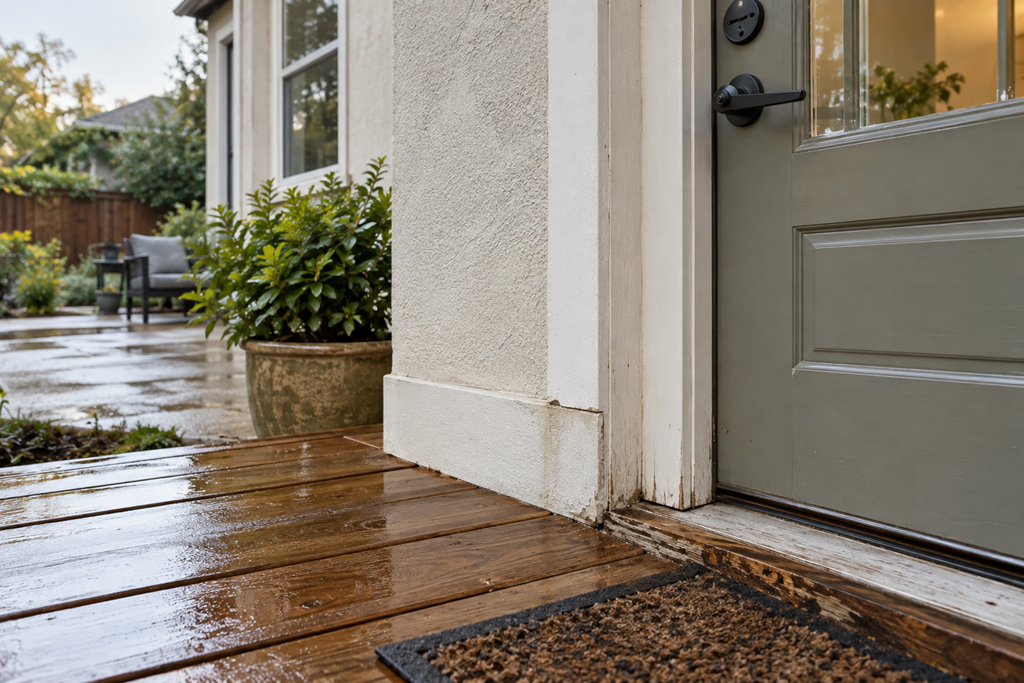
Doors Can Hide Problems Near Their Lowest Edges
Exterior doors create another common transition between the weather outside and the protected interior of the home.
The door itself may look fine while changes appear around the jamb, threshold area, nearby trim, or lower portions of the opening.
These areas can be easy to overlook because homeowners naturally pay more attention to whether the door opens, closes, and locks properly.
Visible changes around the opening may deserve attention even when the door still functions normally.
That does not automatically mean the entire door assembly needs replacement. It means the affected area may need to be understood before deciding what type of repair, if any, makes sense.
A Small Visible Change Does Not Always Reveal The Full Scope
One of the harder parts of a dry rot repair decision is separating what can be seen from what actually needs repair.
Paint can hide some surface changes. A previously patched area can make the history difficult to interpret. A small deteriorated section may be isolated, or it may be connected to another condition that should be considered.
This is where assumptions can make a project unnecessarily confusing.
Seeing one deteriorated board does not automatically mean a large reconstruction is required. On the other hand, replacing only the most obvious piece without understanding why it deteriorated may leave important questions unanswered.
A professional evaluation can help clarify the boundaries of the affected area and what is driving the recommended repair.
Fresh Paint Is Not The Same As Confirming The Wood Is Sound
Exterior paint and coatings are important parts of normal home maintenance, but appearance alone cannot answer every condition question.
A freshly painted surface can look excellent. An older painted surface can look rough. Neither appearance by itself tells a homeowner everything about the wood underneath.
That is especially useful to remember when buying a home, planning exterior maintenance, reviewing an estimate, or deciding whether an isolated area needs more attention.
Instead of judging solely by how new or worn the finish looks, focus on whether there are specific visible changes that need explanation.
Similar-Looking Damage Can Lead To Different Repair Conversations
Two Sacramento-area homes can have deterioration in similar locations without needing identical work.
The condition of the surrounding wood, how accessible the area is, what other materials connect to it, whether the moisture source is understood, and how far the deterioration extends can all affect the conversation.
This is why photos or brief descriptions alone may not be enough to determine the appropriate scope.
A useful estimate should help you understand what the provider believes is affected, what is not included, and why the proposed work matches the condition they observed.
Questions Can Help Clarify What A Repair Estimate Actually Covers
If a professional identifies possible dry rot around trim, a deck, or an exterior door, a few straightforward questions can make the next decision easier:
- Which specific wood areas appear to be affected?
- Is the visible deterioration believed to be isolated or connected to another area?
- What does the proposed repair include and exclude?
- Is there an underlying moisture condition that should be addressed as part of the discussion?
- If additional deterioration becomes visible during the work, how would that affect the scope?
The purpose of these questions is not to diagnose the problem yourself. It is to make sure you understand what the professional is recommending before approving the work.
The Goal Is To Understand The Condition Before It Becomes A Bigger Decision
Checking exterior trim, decks, and doors for dry rot does not mean treating every crack, stain, or aging surface as a major problem.
It means paying attention to exterior wood areas where moisture exposure and material transitions can make deterioration less obvious than homeowners expect.
If something looks different, keeps changing, or raises questions, a qualified local professional can help determine whether it is ordinary weathering, a limited repair issue, or something that deserves a broader evaluation.
For Sacramento-area homeowners, understanding that distinction before comparing estimates or authorizing repairs can make the decision much easier to navigate.