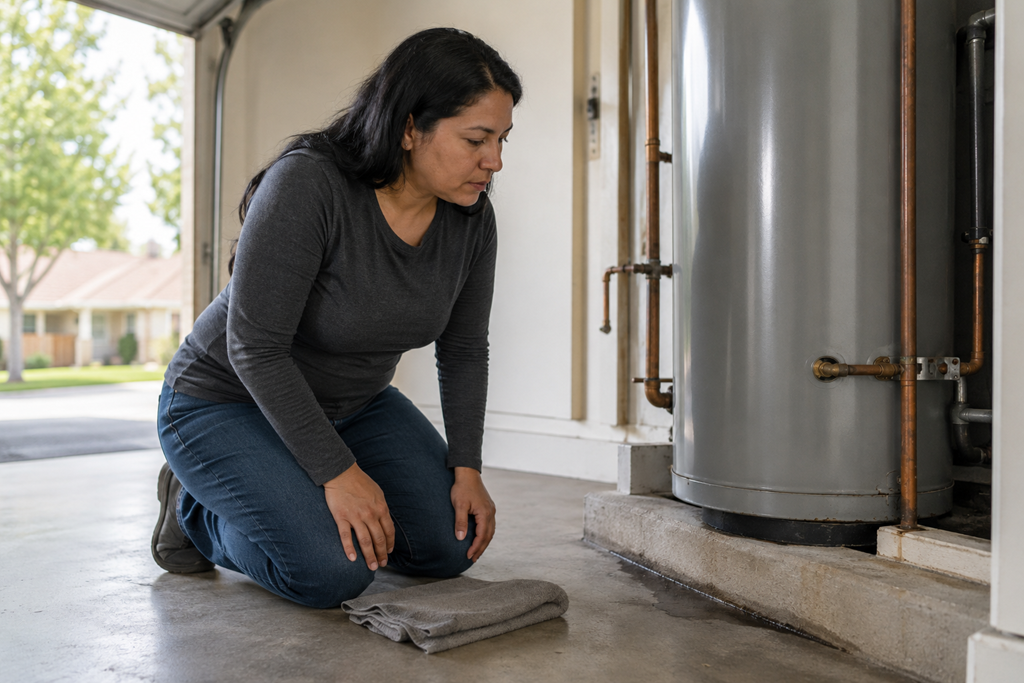
Water heater warning signs often appear as small changes rather than a sudden loss of hot water. You may notice that showers do not stay warm as long, the water temperature changes unexpectedly, the unit makes unfamiliar sounds, or moisture keeps appearing near the tank.
One unusual moment does not always mean the water heater is failing. A repeated change, worsening performance, or several symptoms appearing together may be a better reason to schedule a professional evaluation.
For Sacramento-area homeowners, recognizing these signs early can make it easier to describe the problem, compare service recommendations, and avoid making a rushed repair-or-replacement decision.
Hot Water Problems May Develop Gradually
A water heater does not have to stop working completely before something may need attention. Performance changes can begin with minor inconveniences, including:
- Hot water running out sooner than it normally does
- Water taking longer to become warm
- Temperature changing during an otherwise normal shower
- Water becoming unusually hot or never becoming fully warm
- Hot water performance varying from one day to another
These changes can have several possible causes. The problem may involve the water heater, a control component, sediment buildup, a plumbing connection, or even a particular fixture.
The important point is not to diagnose the cause yourself. Instead, notice whether the change is isolated or becoming a pattern. That information can help a plumbing professional evaluate the situation more efficiently.
New Sounds Are Worth Paying Attention To
Water heaters are not always completely silent, but a new or increasingly noticeable sound may deserve attention.
Homeowners sometimes describe popping, rumbling, crackling, banging, or hissing sounds coming from the tank or nearby piping. These noises may occur only while the unit is heating water, or they may continue after hot water has been used.
A sound by itself does not confirm that the tank needs to be replaced. Different noises can have different explanations, and some may come from nearby plumbing rather than the heater itself.
When speaking with a local plumber, it can help to describe:
- What the sound resembles
- When it occurs
- How long it lasts
- Whether hot water was being used at the time
- Whether the sound has become more frequent or louder
A clear description is usually more useful than simply saying the water heater is making a strange noise.
Recurring Moisture Can Be More Meaningful Than a Single Spill
Water near the base of a water heater is one of the more recognizable warning signs, but not every damp area means the tank itself is leaking.
Moisture may come from condensation, a nearby pipe, a loose connection, water from a vehicle in the garage, or something stored beside the unit. A one-time spill can also create the appearance of a plumbing problem.
Recurring moisture is different.
A damp patch that returns after being wiped dry, rust-colored staining, mineral tracks, corrosion, or water collecting in a drain pan may indicate that the source should be professionally identified.
Avoid assuming that the visible wet spot shows exactly where the problem began. Water can travel along pipes, fittings, walls, or the outside of the tank before reaching the floor.
Photographs of the area can be helpful when arranging an appointment, especially when the moisture appears intermittently.
Rust, Corrosion, and Surface Changes Provide Useful Clues
A water heater may show physical changes before its performance changes dramatically.
Possible signs include:
- Rust-colored streaks on the tank
- Corrosion around visible connections
- Flaking or bubbling on the exterior surface
- Mineral buildup near fittings
- Darkened flooring or wall material near the unit
- A drain pan that repeatedly contains water
Some surface discoloration may be minor or unrelated to the tank’s internal condition. However, visible deterioration combined with moisture, unusual sounds, or declining hot water performance may give a plumber a clearer picture of what is happening.
Do not scrape, loosen, or adjust corroded components to investigate them. Damaged plumbing connections can become less stable when disturbed.
Discolored or Unusual-Smelling Hot Water May Help Identify the Source
Changes in water color or odor can be confusing because the water heater is not always responsible.
One useful observation is whether the issue occurs only when using hot water or appears with both hot and cold water.
For example, if tinted water appears only from hot taps, the water heater or hot-water piping may be part of the evaluation. When the same change appears from both sides, the source may be elsewhere in the plumbing or water supply.
Similarly, an unusual odor may have more than one possible explanation. Rather than trying to treat the water or alter the heater, tell the plumber:
- Whether the issue affects hot water, cold water, or both
- Which fixtures are affected
- Whether it appears after the water has been unused
- Whether the color or odor is constant or occasional
These details can help prevent the service conversation from focusing too narrowly on the tank before other possibilities are considered.
Reduced Flow Does Not Always Mean the Water Heater Is Failing
A weak hot-water stream can seem like an obvious water heater problem, but flow and pressure changes may also involve a faucet, showerhead, valve, pipe, or another part of the plumbing system.
Compare what you are experiencing without attempting to disassemble anything. Is the weak flow limited to one fixture? Does it affect every hot-water outlet? Is the cold-water flow normal in the same location?
These observations can help a professional determine whether the issue is connected to the heater or another part of the home.
This distinction matters when reviewing an estimate. A recommendation should explain what appears to be causing the problem, not simply propose replacing the most visible piece of equipment.
Several Small Signs Together Can Tell a Bigger Story
One of the easiest misunderstandings is believing that every warning sign must be dramatic.
In reality, a homeowner may experience several minor changes at once:
- The shower becomes lukewarm sooner
- The tank begins making a new rumbling sound
- A small damp patch appears near the base
- Rust staining becomes more visible
- Hot water performance becomes less consistent
Each sign might seem easy to dismiss on its own. Together, they may justify a closer look.
Keeping track of the pattern can also reduce uncertainty during a service appointment. You do not need a detailed technical log. A few photographs and a basic description of when the changes began may be enough to support a more focused conversation.
A Warning Sign Does Not Automatically Mean Replacement
Homeowners sometimes delay calling because they assume any water heater problem will lead directly to a replacement recommendation.
That is not always the case.
Some issues may involve a repairable component, a connection, a setting, a nearby plumbing problem, or routine service. Other conditions may make replacement a more practical discussion.
A qualified professional should be able to explain:
- What appears to be causing the symptom
- Whether the problem is isolated or affects the tank more broadly
- Which repair options are available
- What limitations or uncertainties remain
- Why replacement is or is not being recommended
The goal is not to insist on repair or replacement before the inspection. It is to understand the reasoning behind the recommendation.
Questions to Ask During a Water Heater Evaluation
A few focused questions can make the service decision easier to understand:
- What is the most likely source of the warning sign?
- Is the problem limited to one component or connection?
- Are there signs of tank deterioration?
- Would a repair address the underlying issue or only the immediate symptom?
- What should I expect if I decide to wait?
- Does the estimate clearly separate repair and replacement options?
- What warranties apply to the recommended work or equipment?
Clear answers should help you understand the condition of the system without relying on pressure or vague claims.
Some Conditions Call for Extra Caution
An active leak, visible smoke, a scorching electrical smell, water near electrical components, or a suspected gas odor should not be treated like an ordinary performance issue.
Avoid touching or attempting to adjust the equipment. Move away from the affected area and contact an appropriate qualified professional, utility provider, or emergency service based on the situation.
For less immediate concerns, such as gradual temperature changes, occasional sounds, surface corrosion, or recurring dampness, scheduling a plumbing evaluation can help determine what is actually happening before the condition becomes more disruptive.
Warning Signs Are Reasons to Investigate, Not Panic
Water heater warning signs are most useful when they help you notice a pattern and ask better questions.
Changes in temperature, capacity, sound, water appearance, flow, or moisture do not all point to the same problem. They also do not automatically mean that the entire unit needs to be replaced.
By observing where the change occurs, how often it happens, and whether other symptoms are present, Sacramento-area homeowners can give local plumbing professionals more useful information and evaluate repair recommendations with a clearer understanding of the issue.