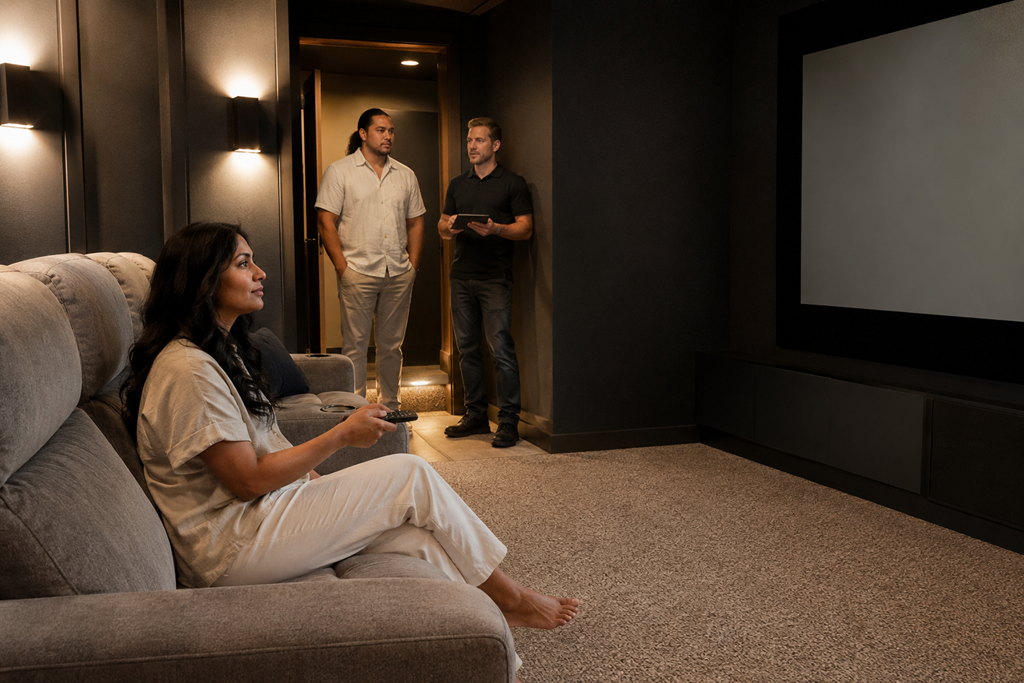
Lighting matters in a home theater space because it affects how clearly you see the screen, how comfortable the room feels, and how easily people move through the space before, during, and after watching. A room can have an impressive screen and strong sound, but if light lands in the wrong place, the experience can feel distracting, harsh, or less usable than expected.
For many Sacramento-area homeowners, lighting is easy to think about after the bigger pieces: screen size, speakers, seating, and equipment. But in real life, the room is not just a place where a movie plays. People walk in with snacks, adjust seats, pause to answer the door, help kids find something, or use the space for sports, gaming, music, or casual family viewing. Lighting affects all of those moments.
The Screen Is Only Part Of The Experience
A home theater space does not need to be pitch black to work well, but the light should support the way the room is used. Too much light near the screen can wash out the image. Light from a window, lamp, hallway, or reflective surface can pull attention away from what people are trying to watch.
This is why lighting deserves attention before installation decisions feel final. The question is not simply, “Can the room get dark?” A better question is, “Can the room control light in a way that makes watching comfortable and movement easy?”
That difference matters because a room can look impressive in a photo but still feel frustrating when someone actually sits down to use it.
Glare Can Make A Good Setup Feel Worse Than It Is
One of the most common lighting problems is glare. Glare can come from windows, glossy furniture, light-colored walls, shiny floors, glass cabinet doors, or poorly placed lamps. Sometimes the screen itself is not the issue. The problem is where light bounces before it reaches the viewer’s eyes.
This can be especially confusing when a homeowner has already invested in a better screen or projector and still feels like the picture is not as clear as expected. In that situation, it is easy to blame the equipment. A qualified home theater installation professional may look at the room differently, paying attention to daylight direction, lamp placement, wall color, seating angles, and reflective surfaces.
That does not mean every room needs major changes. It does mean lighting should be part of the conversation before assuming the screen, projector, or television is the only factor.
Comfort Depends On More Than Darkness
A room that is too bright can make the screen harder to see. A room that is too dark can create a different problem: people may strain their eyes, trip over items, or feel like the space is inconvenient to use.
Good theater lighting usually feels controlled rather than dramatic. Viewers should be able to focus on the screen without feeling blinded by side lamps or overhead fixtures. At the same time, the room should still allow people to find the remote, move around safely, and clean up when the movie ends.
This is where lighting becomes practical, not decorative. The right plan may include softer light, better placement, dimming options, window treatment discussions, or separate zones for different parts of the room. The goal is not to create a showroom effect. The goal is to make the room work comfortably when people are actually living in it.
Everyday Use Often Reveals Lighting Problems
Lighting issues often show up after the first few uses of the room. A hallway light may spill across the screen when someone opens a door. A ceiling fixture may reflect off a framed poster or glass table. A window may be fine during evening viewing but distracting during daytime games or weekend family use.
Sacramento homes can also vary widely in layout, age, window placement, and room purpose. Some homeowners are converting a spare bedroom. Others are using a living room, bonus room, garage-adjacent space, or multi-use family area. Each setting handles light differently.
This is why the best lighting conversations are usually specific to the room. A general recommendation may sound helpful, but it may not account for where people sit, where the screen faces, how daylight enters, or how the space connects to the rest of the home.
Lighting Can Affect The Scope Of The Project
Lighting choices can influence more than the atmosphere. They may affect what needs to be planned, who needs to be involved, and how clearly the project is described in an estimate.
For example, a simple equipment installation may be different from a project that includes new fixtures, dimming controls, concealed wiring, window treatment coordination, or changes to existing electrical components. Homeowners do not need to solve those details alone, but they should understand whether lighting is included, excluded, or only being discussed generally.
This is an important point when comparing local providers. Two estimates may both mention a home theater setup, but one may include lighting planning while another focuses mostly on screen, audio, and equipment placement. Without asking, the homeowner may not realize the difference until later.
A Few Questions Can Make The Plan Clearer
Before hiring or comparing quotes for home theater installation, it can help to ask a few direct lighting-related questions:
- Where could glare or reflection be a problem in this room?
- Will the lighting plan support both watching and walking through the space?
- Are dimming, zones, or separate light sources worth discussing for this layout?
- Is any electrical or fixture work included in the estimate, or would that involve another professional?
- How will daylight from windows or nearby rooms affect the screen during typical use?
These questions are not meant to turn the homeowner into a designer or technician. They simply help make the conversation more specific. A clear provider should be able to explain what they are considering, what falls outside their scope, and what choices may affect the final result.
The Biggest Misunderstanding Is Treating Lighting As A Finishing Touch
Lighting often gets treated as something to think about after the screen and speakers are chosen. That approach can make the project feel simpler at first, but it may also hide important decisions.
If the room has strong daylight, reflective surfaces, awkward seating angles, or limited fixture control, those details can affect how enjoyable the space feels. Waiting until the end may leave fewer options or create frustration when the room looks complete but does not feel right.
A better approach is to treat lighting as part of the viewing experience from the beginning. It does not have to dominate the project. It just needs to be considered early enough that the installer, homeowner, and any other involved professionals are making decisions with the whole room in mind.
A Better Home Theater Starts With Seeing The Room Clearly
Lighting matters because a home theater is not only about what equipment is installed. It is about how the room feels when people sit down, move around, pause, watch, talk, and use the space over time.
Before committing to a home theater installation plan, Sacramento-area homeowners can benefit from asking how lighting will affect screen visibility, comfort, movement, and everyday use. When that conversation happens early, the final space is easier to understand, easier to compare, and more likely to fit the way the household actually watches.