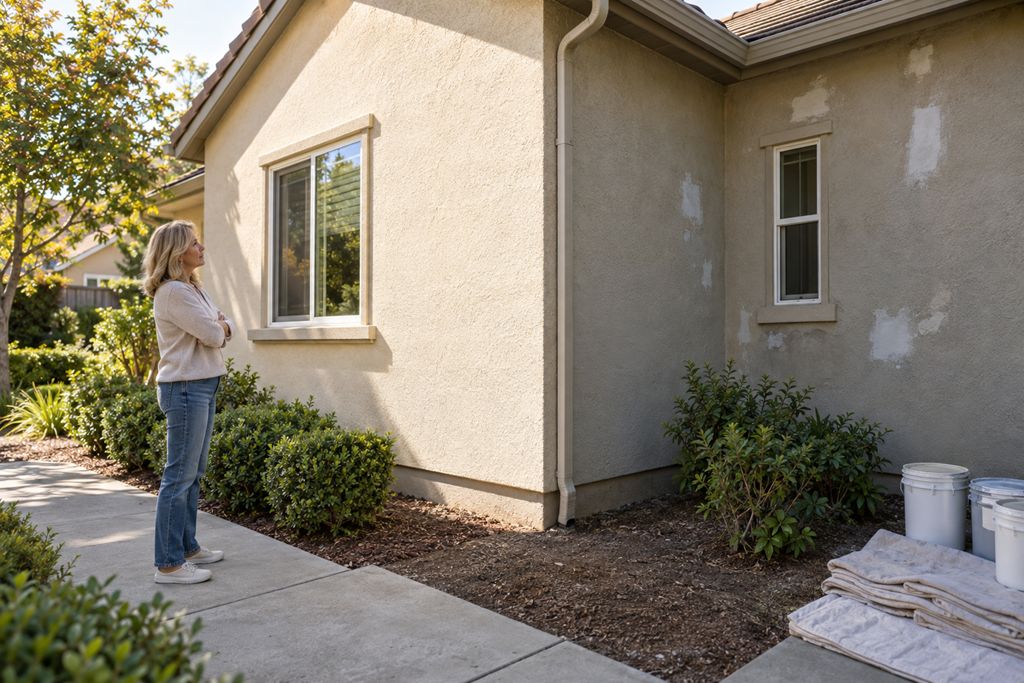
Painting timelines can change even when the project scope stays the same because paint depends on both the weather around the home and the condition of the surfaces being coated. Heat, direct sun, moisture, rain, damaged or dirty surfaces, and extra preparation needs can all change when work can begin, how sections are sequenced, and when the next stage can safely move forward.
That can be confusing for homeowners who receive an estimated project schedule and naturally expect each day to unfold according to that original plan. A timeline adjustment does not automatically mean something has gone wrong. Sometimes it simply means the conditions encountered at the property require the painter to change the order or pace of the work.
A Painting Schedule Is More Than A Count Of Walls And Rooms
It is easy to think of a painting timeline primarily in terms of project size. A larger house generally involves more surfaces than a smaller one, and several rooms involve more work than a single room.
But the amount of surface area is only part of the scheduling picture.
Painting also depends on whether those surfaces are ready for the next stage of the project. Two homes with similar painting scopes can require different amounts of time if one has relatively sound surfaces while the other needs substantially more cleaning, patching, repair preparation, or other preliminary attention.
For exterior work, environmental conditions add another variable. A painter may have to consider what is happening around different sides of the house rather than treating the entire exterior as though it is experiencing identical conditions.
Weather Can Change Which Part Of The Project Makes Sense To Work On
Sacramento-area homeowners are familiar with periods of heat, strong sun, dry conditions, and seasonal rain. Those conditions can influence an exterior painting schedule without necessarily stopping an entire project in the same way.
For example, direct sunlight may affect one side of a house differently from a shaded wall. Moisture after rain may remain longer in some areas than others. Temperature conditions can also change during the course of a day.
Because of that, a painting project may sometimes progress by changing the sequence of work rather than simply continuing around the house in one fixed order.
This is one reason a projected completion date is better understood as a planning estimate than as a guarantee that every section of the property will move through the project at exactly the same pace.
The Surface Under The Paint Can Matter As Much As The Paint Itself
Weather is highly visible. Surface conditions are often less obvious until the project is being evaluated or prepared.
A homeowner may look at an exterior wall and mainly notice that the color is faded. A painter may also be looking at peeling areas, cracks, worn trim, previous coatings, rough sections, staining, or other conditions that could affect preparation.
Interior projects can have similar surprises. Walls may contain patched areas, previous repairs, surface damage, residue, or other inconsistencies that become more noticeable once furniture is moved or the project area is examined closely.
The important distinction is that painting is not always simply a matter of covering the existing surface with a new color. If additional preparation is needed, the schedule may need to account for that work before the visible painting stage progresses.
One Difficult Area Does Not Always Mean The Whole Project Is Delayed
A timeline change can sound larger than it actually is.
Suppose one exterior section requires additional preparation or is temporarily affected by weather. That does not necessarily mean every other part of the project must remain untouched.
Depending on the project and conditions, a painter may be able to move attention to another wall, another room, trim work, preparation, or another part of the agreed scope.
That is why the most useful scheduling question is often not simply, “Are we delayed?”
A better question is, “How does this condition change the sequence of the remaining work?”
The answer gives you more information about whether the issue affects one portion of the job or the overall projected completion.
Preparation Time Can Be Hard To Judge From A Quick Look
One of the easiest misunderstandings is assuming that preparation is a minor preliminary stage that should take roughly the same amount of time on every painting project.
In reality, the condition of the surface can make preparation relatively straightforward in one area and more involved in another.
This does not mean homeowners should expect open-ended scheduling. It does mean that an estimate made before surfaces are fully accessible or closely evaluated may involve some assumptions.
When comparing Sacramento-area house painting providers, it can therefore be useful to understand what the proposed schedule assumes about surface condition.
A contractor who clearly distinguishes between expected painting time and possible preparation variables can give you a more useful picture than one who simply provides a completion date without explaining what could affect it.
A Changed Timeline And Poor Communication Are Different Issues
Weather and surface conditions can reasonably affect a painting schedule. Poor communication is a separate issue.
You should not have to guess why the project sequence changed.
If the painter finds an unexpected condition, the explanation should help you understand what was discovered, what part of the agreed project it affects, and whether the overall schedule is expected to change.
Likewise, if weather affects the work, there should be a practical explanation of what is being postponed or rearranged rather than a vague statement that conditions are simply “bad.”
This distinction can be useful when evaluating providers. A realistic timeline can change. The reasoning behind that change should still be understandable.
Be Cautious About Timelines That Leave No Room For Real Conditions
Homeowners understandably appreciate a clear start date and projected finish date. Precision can feel reassuring.
But an unusually rigid timeline is not necessarily more reliable if it ignores variables that are inherent to the work.
At the other extreme, a provider should not use weather or surface conditions as a catch-all explanation for an unclear schedule.
The more useful middle ground is a provider who can explain the expected sequence of the project, identify the conditions that could reasonably affect it, and communicate when those conditions actually arise.
That gives you something more useful than either an unrealistic promise or an indefinite timeline.
Questions Worth Asking About The Schedule
Before hiring a house painting provider or approving the project schedule, a few focused questions can help you understand how much flexibility may be built into the estimate:
- What assumptions does this timeline make about the current surface condition?
- What kinds of weather conditions could change the planned sequence?
- If one area cannot be worked on, can another part of the project usually continue?
- How will you communicate if additional surface preparation is discovered?
- What would cause the projected completion date to be revised?
The goal is not to predict every possible interruption. It is to understand how the provider thinks about variables before those variables become part of the project.
A Useful Timeline Explains The Variables, Not Just The Date
Painting schedules are easier to evaluate when you separate the planned timeline from the conditions that influence it.
Weather can affect when certain exterior areas are appropriate to work on. Surface condition can affect how much preparation is needed before painting progresses. Either issue may change the sequence of the project, and some conditions may affect the overall completion estimate more than others.
For Sacramento-area homeowners, the practical takeaway is to look beyond the promised number of days. Ask what the schedule assumes, what could realistically change it, and how the painter will communicate if conditions require the plan to be adjusted.
That makes it easier to compare providers and understand a schedule without assuming that every adjustment represents a problem—or that every highly specific completion promise can account for what the project will actually reveal.