Choosing a rainwater barrel is only one small part of deciding whether a rainwater collection system will work well for your property. A useful system also depends on where the water comes from, where it will be stored, how it will be used, how overflow will be handled, and whether the surrounding roof, gutters, downspouts, and drainage conditions can support the plan without creating new problems.
It is easy to focus on the barrel because it is the most visible part of the system. Homeowners can compare its size, shape, color, and material. They can picture it beside the house and imagine using the stored water on plants.
The less visible decisions often matter just as much.
A barrel may be perfectly adequate as a container but poorly matched to the roof area, intended use, available space, or drainage conditions. That is why a productive rainwater collection conversation usually begins with the property and the homeowner’s goals rather than with a particular product.
The Barrel Is Only the Storage Point
A rainwater barrel does not collect water by itself. It receives water from a larger chain of property features.
Rain falls on a roof surface. Gutters direct it toward a downspout. The downspout carries it toward the storage container. The container holds a limited amount, and any additional water must continue somewhere else.
Afterward, the stored water still needs to reach the area where the homeowner intends to use it.
This means the barrel sits in the middle of the decision rather than at the beginning. Roof conditions, gutter performance, downspout location, storage placement, intended use, access, and overflow all influence whether the arrangement makes practical sense.
A homeowner who starts by buying a barrel may later discover that the preferred location is too far from the garden, blocks a walkway, sits beneath an unsuitable downspout, or leaves no sensible place for excess water to go.
The Roof and Gutters Are Part of the System
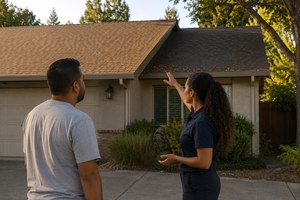
The amount and condition of the roof area feeding a downspout can affect how a collection setup performs.
A downspout connected to a small roof section may collect differently from one receiving runoff from several roof slopes. Valleys, roof additions, patios, and multiple gutter sections can also change how water moves across a property.
The condition of those surfaces matters as well. A collection container cannot correct sagging gutters, leaking seams, clogged sections, damaged downspouts, or drainage problems that already exist upstream.
This does not mean every home requires a major roofing or gutter project before rainwater collection can be discussed. It means those conditions should be understood before the storage equipment is chosen and placed.
For Sacramento-area homeowners, where rain may arrive seasonally rather than through evenly spaced watering opportunities, understanding the source of the water can be more useful than simply choosing the largest barrel that fits the budget.
The Intended Use Should Shape the Plan
A homeowner who wants occasional water for several planter pots has a different goal from someone hoping to support raised garden beds, young trees, or a broader section of landscaping.
The question is not only how much water a container can hold. It is also whether the stored water can be used where and when it is needed.
Distance matters. Elevation can matter. Hose access, watering habits, plant priorities, and the amount of landscape being served may all affect whether the system feels convenient enough to use regularly.
A modest container near a small group of priority plants may be more practical than a larger unit positioned far from the intended watering area. Conversely, a conveniently placed barrel may still fall short of expectations if the homeowner assumes it will support an entire yard.
A useful consultation should help define the purpose before equipment becomes the focus.
Placement Involves More Than Finding an Empty Corner
The open space beside a downspout may appear to be an obvious location for a barrel, but that space may already serve several functions.
It might be part of a gate path, trash-bin route, utility access area, side-yard walkway, air-conditioning service zone, patio entrance, or window clearance area. The ground may also slope toward the house or toward a place where additional runoff would be inconvenient.
The container itself must fit, but so must the way it will be used and maintained.
A lid or screen may need to remain accessible. A hose connection should not create a tripping problem. The tank should not make an important passage too narrow or prevent access to nearby equipment.
This is why a location that looks acceptable in a product photo may not work on a particular Sacramento-area property.
Overflow Is Not an Optional Detail
Every container has a limit. Once it is full, additional water needs a planned path.
A barrel that fills successfully but sends overflow against the foundation, across a walkway, toward a neighboring area, or into an already wet section of the yard may exchange one concern for another.
Overflow planning is especially easy to overlook when the decision is treated mainly as a container purchase. The homeowner imagines saving water but may not picture what happens during the portion of a storm that arrives after the barrel reaches capacity.
A qualified professional may discuss how the proposed setup relates to existing drainage conditions and whether the property offers a reasonable place for excess water to continue.
The goal is not merely to capture water. It is to manage the complete path responsibly.
Maintenance Access Can Affect Long-Term Use
Rainwater collection equipment may need periodic observation and care. Screens, lids, connections, gutters, and surrounding areas can collect leaves, sediment, insects, or other debris.
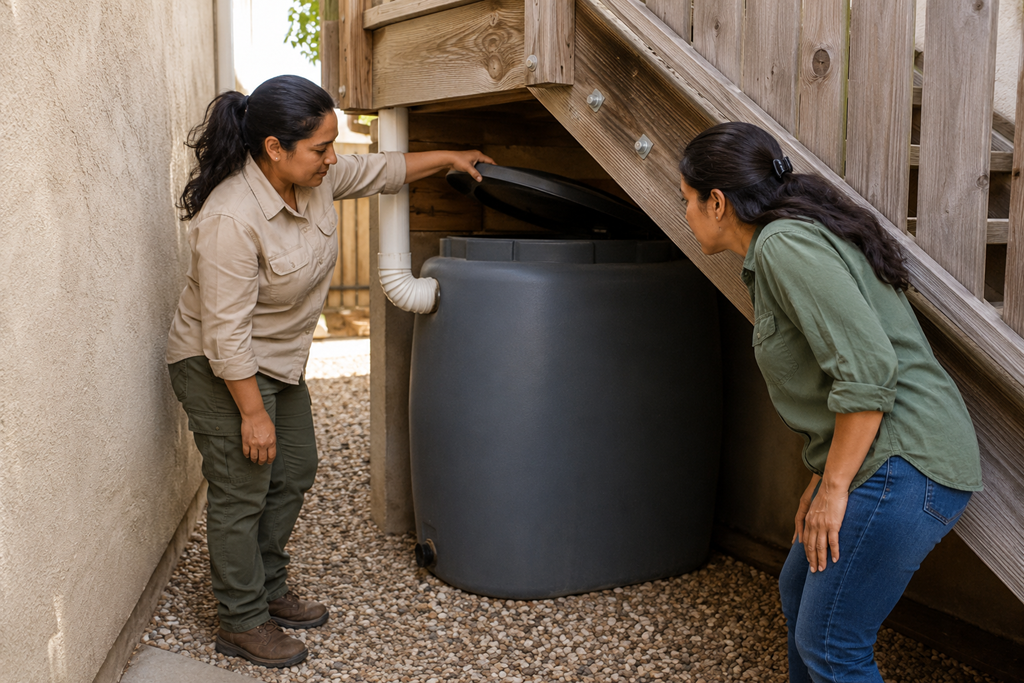
A container wedged tightly between a wall and fence may fit physically but still be difficult to inspect. A unit installed beneath a low shelf or stair structure may leave too little space to reach the top. A location hidden behind stored items may gradually become inconvenient enough that routine attention is postponed.
This is another reason the barrel decision should not be separated from the property layout.
The easier the system is to observe and access, the more realistic it may be for the homeowner to keep it part of normal yard care.
Product Comparisons Can Hide the Larger Questions
Barrel comparisons often emphasize capacity, appearance, material, fittings, and price. Those details can be useful, but they do not answer whether the overall collection plan is suitable for the property.
Two homeowners could purchase the same container and have very different experiences because their roof layouts, downspout locations, watering goals, access routes, and drainage conditions are different.
A low price does not automatically make a barrel a good value if it cannot be placed where it will be useful. A larger capacity does not automatically make a system more effective if the source, overflow route, or intended use has not been considered.
The product is only one part of the value question.
Questions That Keep the Conversation Focused
Before comparing equipment or estimates, Sacramento-area homeowners may find it helpful to ask:
- Which roof and gutter sections would supply this container?
- What area of the property is the stored water intended to serve?
- Why is the proposed location considered suitable?
- How will the container affect gates, walkways, utilities, and maintenance access?
- What happens when the container becomes full?
- How will the stored water reach the intended plants or landscape area?
- What ongoing observation or maintenance should the homeowner expect?
- Are there existing gutter, downspout, or drainage concerns that should be discussed first?
Clear answers can reveal whether a provider is considering the property as a connected system or simply recommending a container.
A Better Decision Starts With the Whole Water Path
Rainwater collection is not just a barrel decision because the barrel is only one point along the water’s path.
The roof supplies the water. Gutters and downspouts direct it. The storage container holds it. The property must accommodate the equipment. The homeowner needs a practical way to use the water, and overflow must still have somewhere appropriate to go.
Looking at those relationships before selecting equipment can help Sacramento-area homeowners set more realistic expectations, compare proposals more meaningfully, and have a more productive conversation with a qualified rainwater collection professional.