Yard preparation matters before turf installation because artificial turf only performs as well as the surface beneath it. A yard that looks simple from above may still have uneven soil, old roots, drainage concerns, hard edges, pet-use patterns, or worn paths that affect how the finished turf sits, feels, and holds up. For Sacramento-area homeowners, preparation is the part of the project that helps turn a surface change into a more reliable outdoor space.
Many homeowners first think about artificial turf in terms of appearance. They picture a cleaner-looking yard, less mud, fewer dry patches, or a surface that feels easier to maintain than natural grass. Those goals make sense, especially in yards where heat, sun exposure, dry soil, or heavy use have made the lawn frustrating. But the finished turf is only the visible layer. The work that happens before it is installed often determines whether the project feels smooth, stable, and well planned.
A Finished Turf Surface Starts Below the Turf
Artificial turf is not simply placed over a yard the way a rug is placed over a floor. The existing ground conditions matter. Low spots, soft soil, compacted areas, exposed roots, old lawn buildup, poor transitions, and unclear edges can all affect the finished result.
This is why a qualified turf installer will usually want to look beyond the square footage. They may ask how the yard is used, where people walk, where pets spend time, where water tends to collect, and which edges connect to patios, walkways, planting areas, fences, or side gates. Those details help shape expectations before the project starts.
Good preparation does not mean every yard needs the same amount of work. It means the yard should be evaluated honestly before decisions are made about scope, cost, timing, and finish.
Why “It Looks Flat Enough” Can Be Misleading
One common misunderstanding is assuming that a yard that looks mostly level is ready for turf. From a patio or kitchen window, a yard may look simple. Up close, it may have dips, uneven compacted soil, old root lines, irrigation remnants, or worn traffic paths that change how the surface behaves.
A small uneven area may not seem important when the yard is still grass or dirt. Once turf is installed, however, the surface becomes more continuous. That can make bumps, dips, awkward edges, or soft spots more noticeable. Preparation helps reduce the chance that hidden yard conditions become visible after the project is finished.
This is especially important near transition points. Patio edges, paver borders, tree wells, side yards, gates, drains, and planter beds can all create places where the turf needs careful planning. These are often the spots that affect how the yard feels in daily use.
Preparation Helps Match the Turf to Real Life
A yard is not just a surface. It is a space people move through, sit in, clean, share with pets, and use around other parts of the home. Yard preparation helps connect the turf plan to those real-life patterns.
For example, a family may have a direct walking route from the back door to a side gate. A dog may use one corner more than the rest of the yard. Patio furniture may sit along one edge. Kids may play in the same open area. Shade and sun may affect how often different parts of the yard are used.
These everyday patterns matter because they can influence expectations. The best-looking layout on paper may not be the most practical if it ignores how the yard actually functions. Preparation gives the homeowner and installer a chance to discuss those patterns before materials are placed and edges are set.
Drainage and Edges Deserve Early Attention
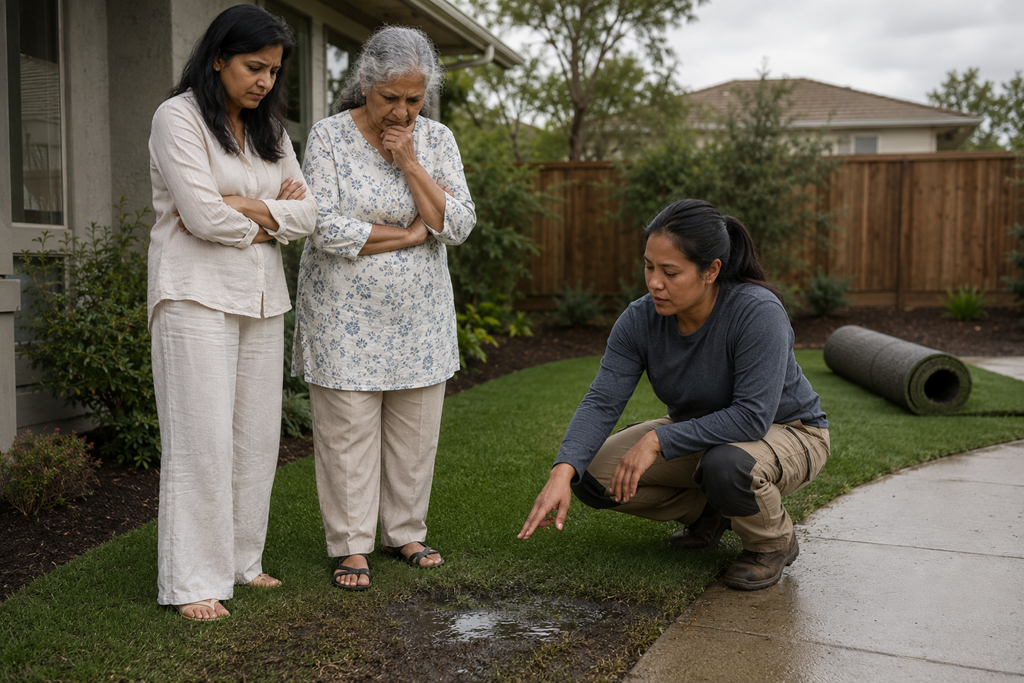
Drainage is one of the biggest reasons yard preparation should not be rushed. Artificial turf does not remove the need to understand where water goes. If a yard already has areas where water gathers, runs toward the house, or sits near hard surfaces, those concerns should be discussed before installation.
This does not mean a homeowner needs to diagnose the yard themselves. It means they should be ready to point out what they have noticed. Areas that stay damp, collect debris, smell after pet use, or feel soft underfoot are worth mentioning during a consultation.
Edges also deserve attention. Turf often meets concrete, fencing, mulch, planting beds, pavers, tree roots, or utility areas. If those borders are uneven or unclear, the finished look can feel less polished. Discussing edges early helps set better expectations about what will be adjusted, protected, avoided, or handled with care.
Yard Preparation Can Affect the Estimate
Preparation can influence the size and shape of the project. Two yards with similar square footage may not require the same amount of prep. One may have a clean, open area with simple transitions. Another may include tree roots, drainage questions, old landscaping, hard-to-reach side yards, uneven borders, or heavy pet use.
That is why the lowest quote is not always the clearest quote. A useful estimate should help the homeowner understand what preparation is included, what is not included, and what could change once the yard is evaluated more closely.
Sacramento-area homeowners comparing turf installers may want to pay attention to how each provider talks about the yard itself. A provider who only focuses on turf type and square footage may miss important context. A provider who asks about surface conditions, use patterns, drainage, and edges may be giving the preparation phase the attention it deserves.
Helpful Questions to Ask Before Committing
A turf consultation does not need to become complicated. A few practical questions can help clarify whether yard preparation is being considered carefully:
- What yard conditions could affect the finished surface?
- Are there any low spots, soft areas, roots, or edge transitions that need attention?
- How will existing drainage concerns be discussed before installation?
- What preparation is included in the estimate?
- What conditions could change the scope once work begins?
- How should pet-use areas, traffic paths, or furniture placement be considered?
These questions are not about challenging the installer. They are about understanding the project before approving the work. Clear answers can make it easier to compare providers and avoid confusion later.
Rushing Past Preparation Can Lead to Mismatched Expectations
Homeowners sometimes want to move quickly because the existing yard is frustrating. Dry grass, muddy spots, patchy areas, or constant maintenance can make turf feel like a straightforward fix. But rushing past preparation can create a gap between what the homeowner expects and what the project actually requires.
That gap often starts with assumptions. The homeowner assumes the ground is simple. The provider assumes the homeowner understands what preparation includes. The estimate assumes certain conditions. Later, details emerge that affect cost, timing, appearance, or the finished feel of the yard.
A better conversation starts earlier. When the yard is looked at as a full outdoor space rather than just an area to cover, the homeowner can make a more informed decision.
The Best Turf Decision Starts Before the Turf Goes Down
Yard preparation matters because it turns hidden conditions into visible decisions. It helps homeowners understand what needs attention before turf is installed, what questions to ask during an estimate, and why two projects that look similar at first may not be the same.
For Sacramento-area homeowners, the most useful turf conversation is not only about which product looks good. It is also about the ground, the edges, the drainage, the walking paths, the pet areas, and the way the yard is actually used. When those details are discussed early, the finished project is easier to understand before anyone commits.