Flooring durability is not simply a matter of choosing the hardest or most expensive material. It means choosing a floor that can handle the specific traffic, moisture, sunlight, cleaning habits, pets, furniture, and everyday accidents in the space where it will be installed. A material can be highly durable in one room and a poor fit in another.
That distinction is easy to miss when flooring samples are displayed in perfect condition and described with broad terms such as tough, waterproof, scratch-resistant, or long-lasting. Those descriptions may be useful, but they do not automatically tell you how the material will perform in your home.
For Sacramento-area homeowners, the better question is not, “Which flooring material lasts the longest?” It is, “Which material is most likely to hold up well under the conditions in this particular room?”
Durability Is a Match, Not a Universal Ranking
There is no single flooring material that is the most durable in every situation.
One material may resist scratches well but feel vulnerable to standing moisture. Another may tolerate spills but show dents from heavy furniture. A floor that performs well in a quiet bedroom may wear very differently in an entryway used by children, pets, guests, and rolling equipment.
Thinking about durability as a match helps prevent an overly simple comparison. It also makes conversations with flooring professionals more useful because you can discuss the demands of the space instead of asking for the toughest product in general.
A qualified flooring installer should be able to explain how a material responds to the conditions you describe, including where it performs well and where compromises may appear.
Start With the Wear That Will Actually Happen
A room’s daily routine often matters more than its official name.
Two kitchens can place very different demands on flooring. One may be used mainly by one or two adults. Another may have children moving between the backyard and refrigerator, a large dog near the water bowl, chairs sliding across the same area, and frequent spills around the sink.
The same is true for entryways, hallways, bedrooms, home offices, rental units, and small business spaces.
Before comparing materials, consider the kinds of wear that are most likely to occur:
- Repeated foot traffic along the same path
- Dirt, grit, or small stones tracked inside
- Pet claws and pet-related spills
- Moving chairs, stools, or rolling office equipment
- Heavy furniture concentrated in one area
- Water near sinks, doors, bathrooms, or laundry appliances
- Strong sunlight through windows or glass doors
- Frequent cleaning or the use of particular cleaning products
The goal is not to predict every possible accident. It is to identify the conditions the flooring will face repeatedly.
Repeated ordinary wear usually matters more than a rare dramatic event.
Different Types of Damage Should Not Be Treated as the Same Problem
The word durability can refer to several different qualities.
Scratch resistance describes how well a surface handles dragging, pet claws, or abrasive grit. Dent resistance relates more closely to pressure from heavy furniture, dropped objects, or narrow furniture legs. Moisture resistance concerns how the material responds to spills, dampness, and water exposure.
Sunlight, staining, surface wear, movement between flooring pieces, and damage beneath the visible surface can introduce additional concerns.
A material may be strong in one of these areas without being equally strong in all of them. That is why a single durability rating or sales description should not be treated as a complete answer.
When comparing products, ask what kind of damage each durability claim refers to. “Resistant” also does not always mean “unaffected.” Understanding the difference can help you form more realistic expectations.
The Toughest Surface Can Still Be Wrong for the Room
A highly wear-resistant surface does not automatically solve every flooring problem.
The condition of the subfloor, the installation method, the room’s moisture exposure, transitions between adjoining floors, and the way the building naturally moves can all affect long-term performance. The visible material is only one part of the finished floor.
This is especially important in older homes, remodeled properties, converted rooms, and spaces where the existing floor feels uneven or unstable. Installing a durable product over an unresolved underlying condition may not produce a durable result.
You do not need to diagnose these issues yourself. However, it is reasonable to ask whether the installer has evaluated what is beneath the current flooring and whether preparation work may affect the recommendation.
A clear estimate should separate material selection from any necessary preparation rather than treating durability as a feature of the product alone.
Sunlight and Room Conditions Can Change the Decision
Large windows, glass doors, and strong afternoon light can affect how a floor looks over time. Depending on the material, prolonged exposure may contribute to changes in color or create visible differences between covered and uncovered areas.
This does not necessarily mean the material is unsuitable. It means sunlight should be part of the discussion before a selection is made.
Sacramento-area properties may also have rooms that experience dry outdoor grit, seasonal wet entry traffic, or noticeable temperature differences near exterior doors and windows. The importance of those conditions depends on the home and the room.
Bring them up when comparing options. A flooring professional should be able to explain whether the material requires particular installation allowances, maintenance practices, or expectations in those areas.
Maintenance Is Part of Real-World Durability
A floor is only practically durable if its care requirements fit the household.
Some materials may require quick spill cleanup, specific cleaning products, periodic resealing, refinishing, or limits on how much water is used during cleaning. Others may be easier to maintain but more difficult to restore once the visible surface is damaged.
Neither approach is automatically better. The more useful question is whether the expected care routine is realistic for you.
A material that performs well only when maintained in a way your household is unlikely to follow may not be the most durable choice in practice. It is better to understand that before installation than after visible wear begins.
Ask how the floor should normally be cleaned, what should be avoided, and whether periodic professional maintenance may be recommended. Clear answers are more useful than a vague promise that the floor is easy to care for.
Repairability Can Matter as Much as Resistance
Durability is often discussed as the ability to avoid damage, but repairability also affects the floor’s long-term usefulness.
Some floors can be refinished. Some use individual planks or tiles that may be replaceable when damage is limited to one area. Others may be difficult to repair without disturbing a larger section.
Matching the original color, pattern, size, or production run can also become more difficult later. This is one reason homeowners sometimes keep a modest amount of unused material after installation.
Before choosing, ask what happens if one small section is damaged. Can an individual piece be replaced? Would a repair be visually noticeable? Is refinishing possible? Would access to the damaged area require removing cabinets, trim, or adjoining pieces?
These questions do not assume the floor will fail. They help you understand how manageable a localized problem may be.
Samples Should Be Compared in the Actual Space
A small sample viewed under showroom lighting cannot reveal everything about long-term performance, but it can still help you notice practical differences.
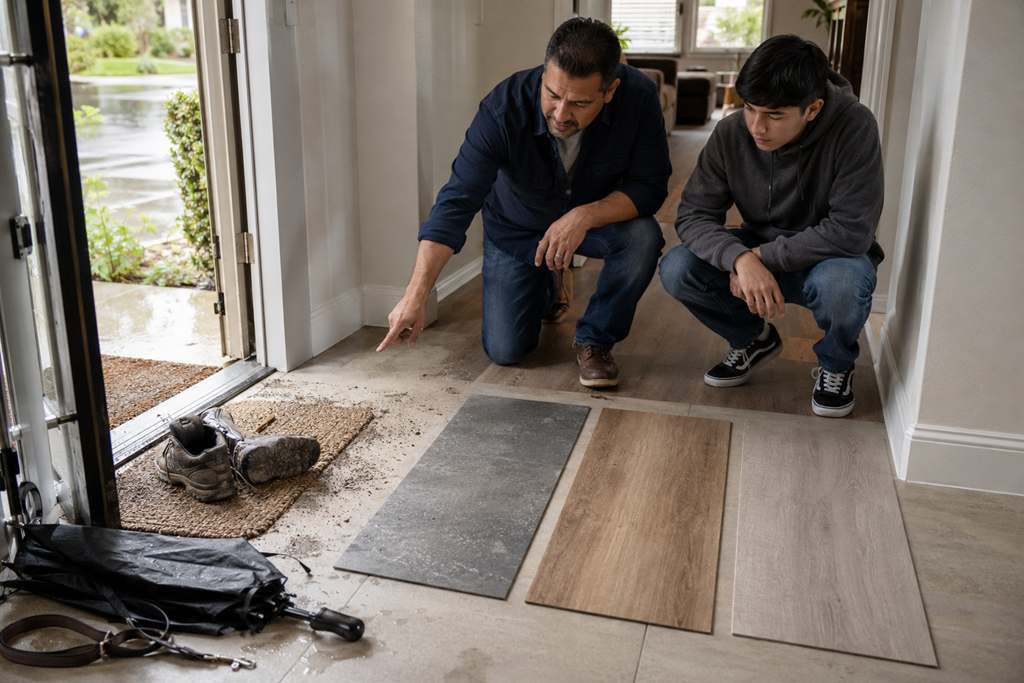
Look at samples in the room where the flooring may be installed. Observe them in daylight and evening light. Place them near existing cabinets, walls, doors, and adjoining flooring.
Also consider how easily dust, pet hair, footprints, small scratches, and surface variation may show against the color and finish. A floor can remain structurally sound while looking worn sooner than expected because its appearance highlights ordinary marks.
This is not only an aesthetic concern. If a surface is likely to bother you after normal use, that should be included in the durability decision.
Questions That Can Lead to a More Useful Recommendation
You do not need an extensive technical checklist. A few specific questions can help a flooring professional understand what durability means in your situation:
- What type of wear is this material designed to handle well?
- What kinds of damage are most likely to remain visible?
- Is this material appropriate for the moisture and sunlight in this room?
- How does the subfloor affect the recommendation?
- What regular maintenance does the material require?
- Can a small damaged area be repaired or replaced?
- Are there limitations that are not obvious from the product description?
- How might this option perform differently from the other materials in the estimate?
Useful answers should connect the recommendation to your room, household, and expected use. Be cautious when every concern is answered with a broad assurance that the product is indestructible, completely maintenance-free, or suitable everywhere.
A Lower Price Can Change the Durability Tradeoff
Durability and price are related, but not in a simple way.
A higher-priced material is not automatically the best match, and a lower-priced material is not automatically a poor choice. The difference may involve surface thickness, construction, appearance, repair options, installation requirements, warranties, or expected maintenance.
When reviewing estimates, make sure you are comparing more than the material name and total price. Two products that appear similar may have important differences in construction or suitability.
The installation scope also matters. An estimate that includes appropriate preparation may cost more than one that assumes the existing surface is ready without evaluation. Asking what is included can help you understand whether a price difference reflects material quality, installation preparation, or an entirely different project scope.
Choose for the Life of the Room, Not the Sample Rack
Flooring durability is best understood as the relationship between a material and the life happening on top of it.
The right choice does not have to be the hardest, most expensive, or most heavily advertised option. It should be able to handle the room’s most common demands, fit the maintenance routine you can realistically follow, and offer acceptable options if localized damage occurs.
Before hiring a Sacramento-area flooring professional or approving an estimate, describe how the room is actually used. Ask how the recommended material handles the specific wear you expect, what limitations come with it, and how installation conditions may affect performance.
A thoughtful durability conversation should leave you understanding the tradeoffs—not simply hearing that one product is the best.