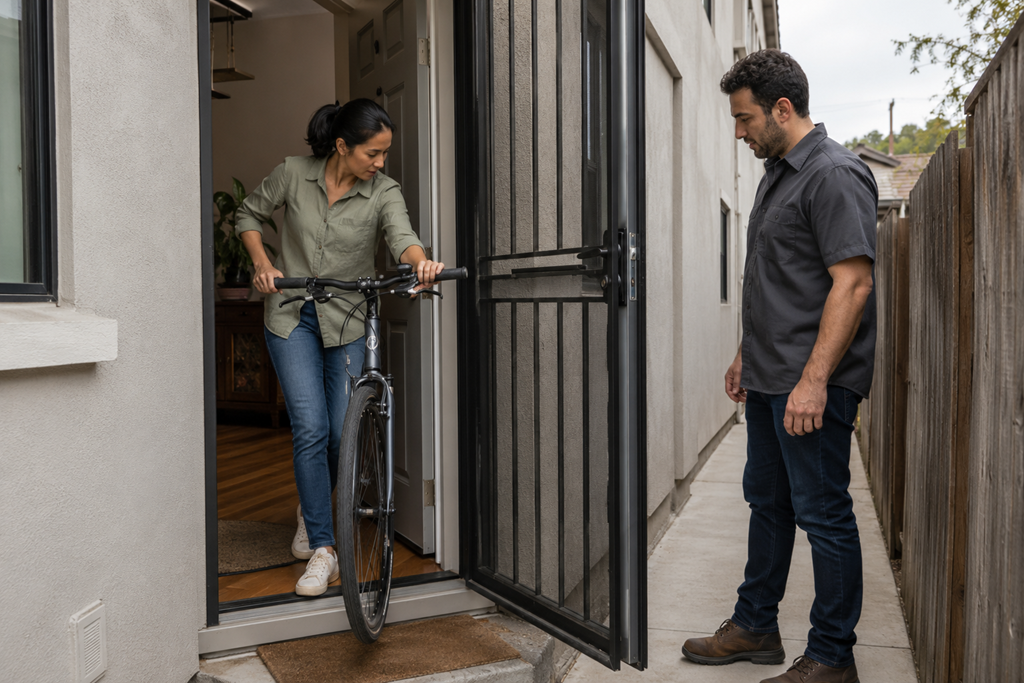
A security door should be planned around the way your entryway is actually used, not only around the size of the opening or the appearance of the door. For Sacramento homeowners, that means considering how people, pets, packages, groceries, mobility devices, and both doors move through the same limited space before choosing a product or approving an installation plan.
An entry may seem straightforward when only the primary door is present. Adding a second door can change where someone stands, which hand reaches each handle, how far the outer door can swing, and whether there is enough room to move through while carrying something. These details are easy to overlook because they rarely appear in product photos, yet they often determine whether the finished entry feels natural or inconvenient.
The Doorway Is More Than a Measured Opening
Width and height measurements are important, but they describe only the space where the security door may be installed. They do not explain how the entire entry functions.
The surrounding area may include a porch railing, wall, column, step, planter, light fixture, doorbell, narrow landing, or walkway. The primary door may open inward while the security door opens outward. Handles, locks, and door closers may occupy space that previously remained unused.
These parts should be considered together. A security door can fit the opening and still create an awkward entry sequence if its swing reduces the usable landing or places the door directly in a common walking path.
This is why the installation discussion should include both the doorway and the area around it.
Plan Around an Ordinary Day, Not an Empty Porch
The easiest time to operate a door is when no one is carrying anything, the porch is clear, and there is no reason to move quickly. That is not how most households use an entrance every day.
Someone may arrive with grocery bags, guide a child through the doorway, hold a dog’s leash, receive a large package, or move a stroller, walker, bicycle, or rolling cart across the threshold. A family member may need extra standing room while unlocking the door or repositioning before opening the primary door.
A helpful planning conversation focuses on these ordinary situations. The goal is not to prepare for every imaginable circumstance. It is to identify the few activities that regularly shape how the household enters and leaves.
For example, a shallow porch may work comfortably for one person but feel crowded when someone is managing a pet or carrying a wide object. A security door that opens toward a railing may leave enough space for normal foot traffic but not enough for a mobility device.
The right installation plan reflects the household’s actual routines rather than an idealized demonstration of the door.
Door Swing Can Change the Entire Entry Sequence
The swing direction and travel path of the security door deserve attention before the final selection is made.
Consider where a person will stand while unlocking the outer door. Once it begins to open, that person may need to step backward, move sideways, or stand near the edge of the landing. The door may also approach a wall, railing, column, planter, step, or frequently used walkway.
The next movement matters too. After opening the security door, the person still needs to operate the primary door. The positions of the two handles can make this sequence comfortable or force the person to switch hands, reposition, or partially close one door before using the other.
This does not automatically make one door style or swing direction unsuitable. It means the full movement should be considered rather than assuming that a door works well simply because it can open fully.
A provider should be able to explain how the proposed door will move within the existing space and what a person will experience while operating both doors.
Different Households Need Different Kinds of Clearance
There is no single definition of enough entryway space.
One household may mainly need a clear path for adults entering one at a time. Another may regularly move a stroller, walker, large work bag, sports equipment, pet carrier, or delivery cart through the opening. Someone with limited balance or mobility may also need a stable place to stand while opening and closing each door.
Even the location of a doormat, shoe rack, package box, or decorative planter can affect the usable path. These items may be temporarily moved during measurements, but they often return after installation.
It can be useful to show the installer how the entrance normally looks instead of presenting a completely cleared space that does not reflect everyday use. The discussion can then address which objects can reasonably be repositioned and which entryway conditions should shape the door plan.
Ventilation, Visibility, and Privacy Are Everyday Needs
Security may be the main reason for adding the door, but it is often not the only reason.
Some Sacramento-area homeowners want to open the primary door during cooler parts of the day while keeping a secure outer barrier closed. Others want more light near the entrance, greater visibility toward the porch, insect screening, or a degree of privacy from the street or neighboring properties.
These goals can influence the choice of mesh, screen, pattern, opening design, and surrounding hardware. A design that allows a clear outward view may provide less visual privacy than another option. A more enclosed design may change the amount of light or airflow reaching the interior.
Households with pets may have additional concerns about screen durability, gaps, visibility, or how the animal reacts when the primary door is open.
These are not secondary preferences that must wait until after the door is selected. They are part of defining what the door needs to accomplish in daily life.
The Existing Entry May Limit What Is Practical
A security door is installed against an existing structure, and that structure may not be perfectly level, square, solid, or unobstructed.
Painted trim, stucco edges, thresholds, weatherstripping, lighting, doorbells, decorative molding, and the condition of the jamb can affect the installation approach. An older or previously modified entry may also contain repaired areas, uneven surfaces, or limited fastening space that is not obvious from a basic measurement.
A temporary frame or on-site evaluation can help reveal these conditions before the final door is ordered or installation begins.
This does not mean every irregularity will create a major problem. It means homeowners should understand whether the quoted work assumes a ready-to-use opening or includes preparation, repair, trimming, relocation, or other adjustments.
When an existing frame appears damaged, separated, compressed, or unstable, it may be appropriate to have the condition evaluated before relying on it to support a new security door.
A Useful Estimate Connects the Door to the Entryway
An estimate should do more than identify a door model, finish, and total price. It should help the homeowner understand how the proposed installation relates to the existing entrance.
Useful questions may include:
- Which direction will the security door open, and what will it approach?
- Where will someone stand while operating both doors?
- Will the handles, locks, or closer interfere with the primary door?
- How much usable passage will remain when the security door is open?
- Do the frame, trim, threshold, or surrounding surfaces need preparation?
- How will the selected screen or mesh affect airflow, visibility, and privacy?
Clear answers make it easier to compare providers because the homeowner is comparing installation plans, not only product descriptions.
If one provider discusses how the door will function while another focuses only on appearance or lock features, the estimates may not represent the same level of planning.
Product Features Cannot Correct a Poor Entryway Fit
A stronger lock, heavier frame, decorative pattern, or upgraded screen may add value, but those features do not solve every entryway problem.
They cannot create additional porch depth, move a railing, widen a narrow walking path, or prevent two poorly positioned handles from competing for the same space. They also cannot correct an unstable jamb or make an inconvenient door sequence feel natural.
This is a common planning misunderstanding. Homeowners may spend most of the consultation comparing materials and security features because those choices are easy to see. The physical relationship between the door and the home can receive less attention, even though it may have a greater effect on everyday satisfaction.
The product and the entryway should be evaluated as one working system.
Pay Attention to What Happens After the Demonstration
A newly installed door may feel easy to operate when the installer demonstrates it on a cleared porch. The more meaningful question is how it will function after normal household items and routines return.
Will there still be room for the doormat and package deliveries? Can someone close the security door while standing safely on the landing? Does the door remain manageable when carrying something? Can family members reach both handles comfortably? Is the closer speed appropriate for the people and pets who use the entrance?
These observations do not require homeowners to perform technical inspections. They simply connect the installation to the activities the door is expected to support.
Unclear operation, unexpected interference, or a door that requires unusual positioning should be discussed with the provider rather than accepted as an unavoidable feature of adding a security door.
The Best Plan Works on the Household’s Busiest Days
Planning a security door around real entryway needs means looking beyond whether a product fits the opening. The better question is whether the complete entrance will continue to work for the people, objects, pets, and routines that pass through it.
Before comparing final quotes or approving an installation, Sacramento homeowners can describe how the entry is normally used and ask the provider to explain the proposed door swing, standing space, handle relationship, frame preparation, and functional tradeoffs.
A well-planned security door should not feel like a separate object added in front of the home. It should operate as a practical part of the entire entry.