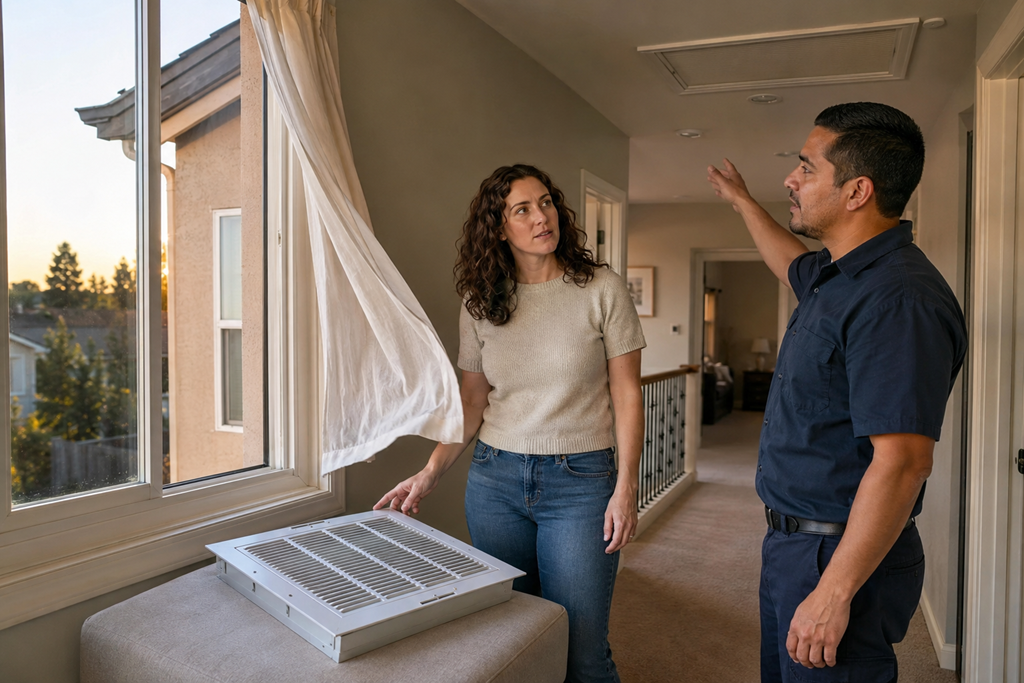
A whole house fan may be a good fit when you can regularly bring cooler outdoor air into the home, give that air a clear path through open windows, and move the warmer indoor air safely into a properly vented attic. It is less likely to match your needs if outdoor air often stays warmer than the house, smoke or allergens make open-window ventilation impractical, or you expect the fan to work like air conditioning.
The decision is not simply about whether Sacramento gets hot. It is about whether the temperature outside, the layout of your home, your household routines, and the way you expect to use the system all work together.
Start With When You Expect To Use the Fan
A whole house fan is designed to exchange indoor air with outdoor air. It draws cooler air into the living space through open windows while pushing warmer indoor air toward the attic, where that air must be able to escape through appropriate ventilation.
That makes timing central to the decision.
The fan is most useful when the outdoor air is cooler and comfortable enough to bring indoors. Depending on the property and household routine, that may be during the evening, overnight, or early morning rather than during the hottest part of the day.
Consider when someone is normally home and available to open windows, operate the fan, and close everything again when conditions change. A system that theoretically fits the climate may still go unused if its most useful operating period does not fit the household’s schedule.
A Whole House Fan Is Not a Substitute for Air Conditioning
One of the easiest ways to misunderstand a whole house fan is to think of it as another type of air conditioner.
Air conditioning recirculates and cools indoor air. A whole house fan relies on outdoor air already being cooler than the indoor air. It does not make hot outside air cold, and it cannot provide the same controlled cooling when windows need to remain closed.
The two systems may serve different purposes within the same home. A homeowner might consider a whole house fan for periods when outdoor conditions are favorable while still relying on air conditioning when the outside air is too warm or unsuitable to bring indoors.
Before comparing proposals, ask the provider to explain the conditions under which the recommended fan is expected to be useful. The answer should be based on how the system operates, not a broad promise that it will eliminate the need for air conditioning.
Your Window Habits Matter More Than They May Seem
A whole house fan needs an intentional path for incoming air. That generally means opening selected windows before using the fan rather than operating it in a closed house.
This requirement can affect suitability in ways homeowners do not always anticipate.
Some households prefer to keep windows closed because of security concerns, pets, young children, outdoor noise, dust, insects, or nearby odors. Others may be comfortable opening windows but only in certain rooms or at certain times.
The important question is not whether your windows can open. It is whether opening them as part of the fan’s normal use feels practical enough that your household will consistently do it.
A professional evaluation should consider where air can enter, how it is expected to travel through the home, and whether the proposed setup works with the rooms you actually use.
Attic Venting Is Part of the Suitability Question
The fan does not only affect the rooms below it. The air moved out of the living space must also have a suitable way to leave the attic.
That means attic venting is not a small installation detail to be addressed after the fan has been chosen. It is part of determining whether the overall concept is appropriate for the property.
A qualified provider should evaluate the attic, the available ventilation, the proposed fan location, and any property conditions that could affect the project. Homeowners do not need to make these technical determinations themselves, but they should expect the provider to explain what was evaluated and how it influenced the recommendation.
Be cautious when a proposal recommends a fan size or placement without discussing the attic or the path the discharged air will follow.
Outdoor Air Quality Can Change How Often You Use It
A whole house fan brings outdoor air directly into the home. That can feel refreshing when conditions are pleasant, but it also means outdoor air quality deserves serious consideration.
Smoke, pollen, dust, traffic-related odors, landscaping activity, and other outdoor conditions may make open-window ventilation less desirable at certain times. This does not automatically rule out a whole house fan, but it may reduce how often the system fits your needs.
Think about whether anyone in the household is especially sensitive to outdoor particles or odors. Also consider how frequently you already open windows for natural ventilation. If the windows usually remain closed because the outdoor air is uncomfortable, a whole house fan may not change that preference.
A provider should be able to explain that the fan exchanges air rather than filtering and recirculating it like a conventional heating and cooling system.
Noise Depends on More Than the Fan’s Published Rating
Noise is another area where a system can be technically suitable but disappointing in daily use.
The sound experienced inside the home may be influenced by the fan design, its location, the surrounding structure, the airflow level, the controls, and the distance from bedrooms or frequently used rooms. A sound level that seems acceptable in a hallway during the day may feel more noticeable near a sleeping area at night.
Before choosing a system, ask where the fan and intake grille would be located and what household members are likely to hear from nearby rooms. Discuss whether the system provides different operating speeds or control options and how those choices affect the expected sound.
Avoid relying only on words such as “quiet” or “low noise.” Ask the provider to explain what those descriptions mean for the proposed location in your particular home.
Controls Can Determine Whether the Fan Feels Convenient
A whole house fan that requires more attention than the household expects may not be used as often as planned.
Controls can affect how easily residents start the fan, select an operating level, set a run period, and turn it off when outdoor conditions change. The right control arrangement depends partly on who will use the system and when.
A household that mainly expects evening use may have different priorities from one that wants to ventilate the home early in the morning. A rental property may raise different questions about occupant instructions, access, and consistent operation.
Ask which controls are included in the proposal, where they would be placed, and what the normal operating routine would involve. The goal is not to choose the most elaborate option. It is to make sure the controls fit how the household realistically expects to use the fan.
The Home’s Layout May Affect the Experience
Rooms do not always receive the same airflow simply because they are under the same roof.
Closed interior doors, isolated rooms, multiple levels, additions, and the location of open windows can all affect how air moves through the home. A homeowner may be interested in cooling an upstairs bedroom, for example, while the proposed fan location and available window path favor another part of the house.
This is why a whole house fan should not be evaluated only by the home’s overall square footage. The provider should also ask which rooms become uncomfortable, when the problem occurs, and what result the homeowner expects.
A useful recommendation connects the proposed system to the lived experience inside the home rather than treating every property of a similar size as identical.
Signs the Idea May Fit Your Household
A whole house fan may be worth discussing further when you regularly notice that the outdoor air becomes more comfortable than the indoor air, you are willing to open windows as part of normal operation, and your main goal is to remove built-up indoor heat during favorable conditions.
It may also make sense when you understand that the fan and air conditioner serve different roles and you are comfortable using each according to the conditions.
The idea may be less suitable when windows must usually remain closed, outside air quality frequently concerns the household, the preferred operating times conflict with sleeping or security needs, or the expected result depends on the fan producing cold air during hot outdoor conditions.
These are not universal pass-or-fail rules. They are practical signals that can help you decide whether a professional evaluation is worth scheduling.
Questions To Ask During an Estimate
A focused conversation with a local provider can reveal whether the recommendation is tailored to your home or based mainly on a standard sales presentation. Consider asking:
- Under what indoor and outdoor conditions should this fan be used?
- How did you evaluate the home’s ventilation path and attic venting?
- Which rooms are expected to receive the most noticeable airflow?
- What sound should we expect near bedrooms and common areas?
- Which controls and operating options are included?
- How might outdoor smoke, pollen, or dust affect when we use it?
- What work and materials are included in the proposed scope?
- What assumptions about our household routine influenced your recommendation?
The provider should be able to answer in plain language and explain any property conditions that still need to be evaluated. A recommendation that clearly connects the fan, the home, and the household’s expectations is more useful than a general claim that every hot-climate home needs one.
Make the Decision Around Real Use, Not Just Potential Benefits
A whole house fan is right for a home when the property can support it and the household can use it under the conditions that make it effective. The decision depends on more than heat alone.
Before moving forward, think about outdoor temperatures, open-window ventilation, attic venting, air quality, noise, controls, room layout, and your normal schedule. Then compare those realities with what the provider says the proposed system will accomplish.
That approach helps Sacramento-area homeowners evaluate the service as a practical household choice rather than assuming that a whole house fan is automatically right or wrong for every home.