Artificial turf may fit your yard when it solves a real use problem, not just when the grass looks tired. For Sacramento-area homeowners, the better question is whether the space, foot traffic, sun exposure, pets, drainage, and daily routines make turf a practical choice for how the yard is actually used. A yard that looks simple from the patio can still have shaded corners, hot zones, worn paths, or habits that change whether turf makes sense.
Many homeowners start thinking about artificial turf after getting tired of patchy grass, dry spots, muddy areas, or uneven wear. That makes sense. A yard that never looks quite right can become frustrating, especially when it is supposed to be a place for kids, pets, guests, or quiet time outside.
But artificial turf is not just a different surface. It changes how the yard feels, drains, heats up, cleans, and handles daily traffic. The decision is less about whether turf looks good in general and more about whether it fits your actual yard.
Start With How the Yard Is Really Used
A helpful first step is to look at how people and pets already move through the space. Some yards have obvious traffic paths from the patio to the side gate. Others have one area where kids play, one shaded corner where adults sit, and another section that mostly gets ignored.
Artificial turf may be worth discussing when the same areas keep wearing down no matter how much the lawn is watered, seeded, or maintained. It may also make sense when a small yard needs a cleaner, more usable surface for everyday activity.
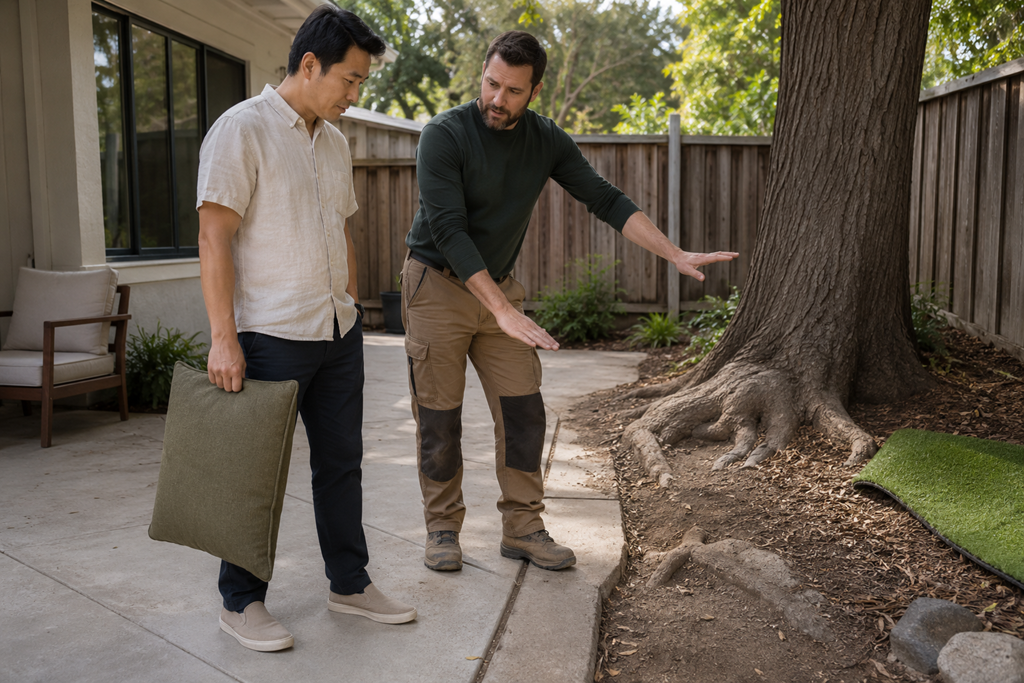
On the other hand, if the yard has drainage concerns, heavy tree debris, extreme sun exposure, or uneven transitions around patios and walkways, those details should be part of the conversation before anyone talks about square footage alone.
A Tired Lawn Does Not Automatically Mean Turf Is the Best Fit
One common misunderstanding is assuming that artificial turf is simply the next step after natural grass becomes difficult. Sometimes it is. Other times, the real issue may be shade, soil conditions, poor drainage, irrigation problems, tree roots, pets, or how the yard is laid out.
That does not mean turf is wrong. It means the reason behind the lawn problem matters.
For example, a narrow side yard that turns muddy may need a different conversation than a sunny backyard used for children’s play. A pet area has different needs than a decorative front strip. A yard with frequent foot traffic has different priorities than a space mostly viewed from a window.
Before comparing artificial turf installation quotes, it helps to understand what problem you are trying to solve. “I want the yard to look better” is a starting point. “I need a usable surface where the dog runs every day” is a more useful planning detail.
Sacramento Yards Can Have Practical Surface Challenges
Sacramento-area yards often have to function through heat, dry conditions, sun exposure, and changing outdoor routines. That does not automatically make artificial turf a good or bad choice, but it does make the planning conversation important.
A surface that looks appealing in a sample may feel different in a full-sun area. A section that seems simple to cover may need careful thought around edges, slopes, trees, drains, fences, or existing hardscape. A yard used by pets may need different expectations than a yard used mainly for curb appeal.
The goal is not to make the decision complicated. The goal is to avoid treating every yard as if it has the same needs.
Think Beyond Appearance
Artificial turf is often chosen for appearance, but appearance is only one part of the decision. The better question is how the yard will work after installation.
Will people walk across it every day? Will pets use it? Will children sit or play on it? Will furniture sit on it for long periods? Will leaves, seed pods, or dirt collect on the surface? Will the area sit in direct sun during the times people actually want to use it?
These are simple questions, but they change the conversation. A good-looking turf product may still be the wrong match if the yard’s layout, use, or maintenance needs are misunderstood.
Maintenance Expectations Should Be Realistic
Artificial turf can reduce some lawn care tasks, but it does not make a yard maintenance-free. Leaves, dust, pet waste, spills, and debris still need attention. Edges still matter. Surrounding landscaping still affects the surface.
This is where some homeowners get surprised. They expected less mowing and watering, which may be part of the appeal, but they did not think about brushing, rinsing, odor control, debris, or how nearby trees and planting beds might affect the area.
A qualified artificial turf installer should be able to discuss what ongoing care may look like for the type of yard you have. The answer may vary depending on pets, shade, trees, use patterns, and the layout of the space.
Pets, Kids, and Foot Traffic Change the Decision
Artificial turf for a lightly used side yard is different from turf for a busy family yard. Pets, children, outdoor furniture, and repeated walking paths can all affect what should be discussed before installation.
For pet owners, the conversation may include drainage, cleaning expectations, odor control, and how the surface will be used day after day. For families, it may include comfort, heat, durability, and where people naturally gather. For small yards, it may include whether turf will make the space more usable or simply cover a problem without improving how the yard functions.
The more specific you are about real use, the easier it becomes to compare options.
The Estimate Should Match the Yard, Not Just the Square Footage
When homeowners compare artificial turf quotes, it can be tempting to focus mainly on the final price. But the scope of the work matters just as much.
A clear estimate should make sense for the yard in front of you. It should not feel vague about preparation, edges, drainage considerations, materials, seams, cleanup, or what is and is not included. If one quote seems much simpler than another, the difference may be worth asking about before assuming they cover the same work.
This does not mean the most detailed quote is automatically the best one. It means unclear details can make comparison harder.
Helpful Questions Before Talking With an Installer
You do not need to become an artificial turf expert before contacting a local pro. A few practical questions can make the conversation more useful:
- What parts of this yard may affect whether turf is a good fit?
- How should we think about heat, shade, and daily use in this space?
- Are there drainage or grading concerns that should be evaluated first?
- What should pet owners or families expect after installation?
- What maintenance will still be needed?
- What is included in the estimate, and what could change the scope?
These questions keep the discussion focused on fit, not just product samples or price.
When Artificial Turf May Be Worth Discussing
Artificial turf may be worth considering when natural grass is difficult to maintain, the yard gets repeated wear, or the homeowner wants a more consistent usable surface. It may also help when a small space needs to serve a clear purpose, such as a pet area, play area, sitting area, or low-maintenance visual improvement.
It may be less straightforward when the yard has unresolved drainage problems, heavy debris from trees, intense sun where people plan to gather, unclear property transitions, or expectations that turf will eliminate all upkeep.
In those situations, artificial turf may still be possible, but the planning conversation becomes more important.
A Better Decision Starts With the Yard You Actually Have
Artificial turf fits best when the choice is based on how the yard works in real life. The surface should match the way people, pets, furniture, sun, shade, and water interact with the space.
Before hiring, comparing quotes, or committing to a design, take time to notice what the yard is already telling you. Worn paths, muddy spots, unused corners, hot areas, and pet routines are all useful clues. When those details guide the conversation, it becomes easier to decide whether artificial turf is a practical fit for your yard or whether another approach deserves discussion first.