Door replacement is usually worth considering when the existing door no longer closes, seals, locks, or operates reliably, and a targeted repair would not correct the underlying problem. A worn finish, loose handle, or single damaged part may not justify a full replacement, but recurring problems that affect security, comfort, weather protection, or everyday use can make replacement a practical long-term choice.
The difficult part is that door problems often develop gradually. You may start pulling harder to close the door, lifting it slightly to engage the lock, placing something near the bottom to reduce a draft, or avoiding an entrance that has become inconvenient. Each issue may feel minor on its own, but the combined effect can make the door less dependable than it should be.
Replacement Is Easier To Justify When the Door Stops Doing Its Job
A door has several basic responsibilities. It should open and close without unreasonable effort, latch consistently, support a dependable lock, and help separate the inside of the home from outdoor conditions.
When the door continues to perform those functions, replacement may be more of an appearance or preference decision. When it repeatedly fails at one or more of them, replacement becomes a functional decision.
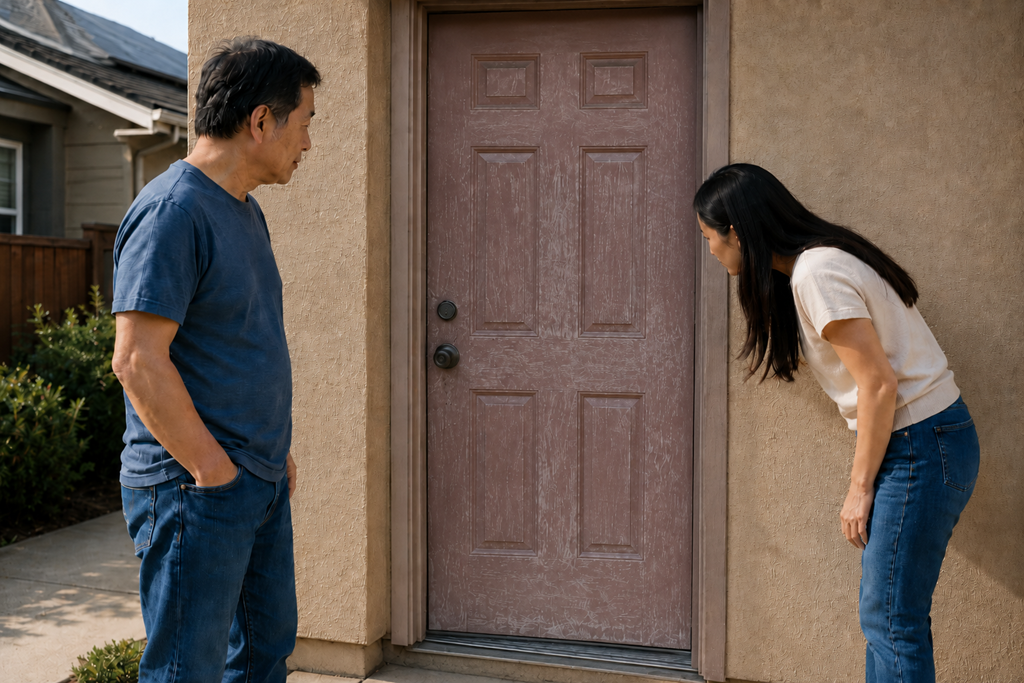
For example, a Sacramento-area homeowner may be looking at a faded or scratched door that still operates properly. That door might benefit from maintenance or a smaller repair rather than replacement. A different door may look acceptable but regularly stick, leave visible gaps, allow noticeable drafts, or make locking difficult. The second situation gives the homeowner stronger practical reasons to discuss replacement.
The question is not simply, “Is this door old?” A more useful question is, “Can this door continue doing what I reasonably need it to do?”
Separate a Repairable Problem From a Recurring Pattern
Many homeowners become uncertain because the same symptom can have more than one cause. A door that does not latch correctly might have a limited hardware issue, or it might be part of a larger alignment, frame, or door-condition problem.
That distinction matters because replacing an entire door to correct one isolated component may be unnecessary. At the same time, repeatedly paying for small fixes that never restore dependable operation may not be a good long-term use of money.
A repair may still be reasonable when:
- The problem is limited to one identifiable component.
- The door and surrounding frame appear generally sound.
- The door operated properly until a recent, isolated issue developed.
- A qualified professional can clearly explain how the repair should correct the problem.
- The repair is expected to restore normal operation rather than temporarily reduce a symptom.
Replacement may deserve stronger consideration when:
- The same operating problem keeps returning.
- The door has significant deterioration, distortion, or damage.
- Closing or locking the door requires repeated force or adjustment.
- Gaps, drafts, or weather exposure remain after previous repairs.
- Several parts of the door system are failing at the same time.
- The proposed repair would cost a substantial amount without resolving the underlying condition.
No single sign automatically decides the issue. The overall pattern is usually more informative than one scratch, gap, sound, or difficult day.
The Value of Replacement Goes Beyond Appearance
A new door can change the look of an entryway, but appearance alone does not determine whether replacement is worth the expense.
The more meaningful value may come from improving how the entrance functions every day. A door that operates smoothly can reduce small but repeated frustrations. A dependable latch and lock can make the entrance feel more secure. Better sealing may improve comfort near the doorway and reduce exposure to dust, outdoor air, or seasonal rain.
Sacramento-area properties can also experience strong sun, dry conditions, heat, and periods of wet weather. An exterior door’s exposure, material, finish, and level of protection can influence how it holds up over time. A door beneath a deep covered porch may experience different wear than one facing direct afternoon sun.
This does not mean every weathered door needs replacement. It means the door’s location and exposure should be part of the evaluation rather than treated as an afterthought.
Daily Inconvenience Is a Legitimate Part of the Decision
Homeowners sometimes dismiss an operating problem because the door still opens eventually. They may believe replacement is excessive unless the door becomes completely unusable.
That standard can be too narrow.
A front door that must be pushed, pulled, lifted, or slammed several times a day is already affecting the household. The same is true of a patio door that family members avoid, an entry that is difficult for an older adult to operate, or a door that cannot be locked without a specific sequence of movements.
These issues may not look dramatic during a short estimate appointment. Explaining how the door behaves during normal use can help a professional understand the real problem.
Useful details include whether the issue changes with weather, whether it happens every time, which household members have difficulty, and whether previous repairs provided lasting improvement.
The Surrounding Opening Matters Too
A door replacement decision should not focus only on the visible door slab. The frame, threshold, hardware, surrounding trim, and condition of the opening may affect what work is appropriate.
This is one reason estimates for what appears to be the same project can differ. One provider may be discussing a limited door replacement, while another may be including work involving the frame, trim, weather protection, hardware, finishing, or nearby deterioration.
A lower estimate is not automatically incomplete, and a higher estimate is not automatically more thorough. The scope needs to be clear enough for you to understand what each provider is proposing.
When the surrounding opening shows signs of moisture damage, movement, deterioration, or another structural concern, ask whether additional evaluation is needed. A new door may not perform properly if the underlying condition is ignored.
Questions That Make a Door Replacement Estimate More Useful
A useful consultation should help you understand why replacement is being recommended and what the proposed work includes.
Consider asking:
- What appears to be causing the current problem?
- Could a focused repair reasonably restore dependable operation?
- Which parts of the existing entry would remain?
- Does the estimate include the frame, trim, hardware, finishing, and disposal?
- Are there conditions that could change the price after work begins?
- How will the proposed door suit the entry’s sun and weather exposure?
- What maintenance will the new door require?
- What product and workmanship warranties apply?
The goal is not to challenge every recommendation. It is to make sure the recommendation connects clearly to the problem you are trying to solve.
Watch for Pressure and Vague Explanations
Door replacement can feel harder to evaluate when the conversation moves quickly from a minor complaint to a full project proposal.
Be cautious when a provider cannot explain why repair is unsuitable, avoids describing what is included, or pressures you to approve the project before you understand the options. Statements such as “the whole thing is bad” are not especially useful without a clearer explanation of what has failed and how that affects the door.
It is also reasonable to question an estimate that leaves major details open. You should know whether you are comparing similar scopes before using price as the deciding factor.
Clear communication does not guarantee that replacement is the right choice, but it gives you a better basis for deciding.
A Practical Way To Think About Whether Replacement Is Worth It
Door replacement is more likely to be worthwhile when it solves an ongoing functional problem, improves dependable daily use, and reduces the likelihood of repeated repairs. It is less likely to be worthwhile when the concern is mostly cosmetic or limited to an inexpensive, repairable component.
Try to base the decision on the door’s overall condition, the cause of the problem, the expected life of a repair, the completeness of the proposed scope, and how much the issue affects your household.
A qualified door professional should be able to explain those factors in plain language. Once you understand what is failing and what each option is expected to accomplish, you can compare estimates based on value and scope rather than reacting only to the lowest price or the strongest sales pitch.