Security screens fit well only when the opening, frame, hardware, swing path, and everyday use all work together. A door or window can look suitable at first glance yet still create problems if the frame is uneven, handles interfere, the screen blocks normal movement, or the opening needs repair before installation. The right decision starts with evaluating the entire opening rather than choosing a screen by appearance alone.
For Sacramento-area homeowners, the question is not simply whether a security screen can be made in the correct width and height. The more useful question is whether the screen can be installed securely, operate properly, and remain practical during normal daily use.
A screen that technically covers an opening may still be a poor fit if it makes the door awkward to use, restricts a window, creates an uncomfortable threshold, or depends on a weakened mounting surface.
Fit Means More Than Matching the Measurements
Width and height matter, but they are only the beginning.
A security screen usually depends on the surrounding frame or structure for support. That means the condition, shape, depth, and alignment of the opening can matter just as much as its dimensions.
Two openings with identical measurements may require different solutions because one has a solid, square frame while the other has:
- An uneven or shifting jamb
- Loose or deteriorated wood
- Decorative trim near the mounting area
- A recessed opening
- Limited room for hinges or locks
- A sill or threshold that is not level
- Hardware positioned too close to the proposed screen
This is why a full evaluation is more useful than relying only on measurements supplied over the phone.
A qualified security-screen professional should be able to explain where the screen would attach, how the opening’s condition affects installation, and whether any preparation or repair should be considered first.
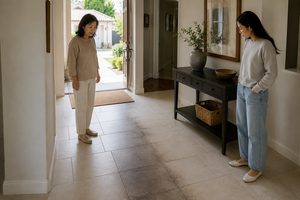
A Door Screen Must Work With the Entire Entry
Security screens installed over doors are often evaluated while the entrance is empty and no one is carrying anything. Daily use can expose problems that are not obvious during a quick measurement.
Consider what regularly passes through the entrance:
- Grocery bags
- Delivery packages
- Strollers
- Pet leashes
- Mobility equipment
- Bicycles
- Furniture
- Yard equipment
- Trash and recycling containers
The security screen and primary door must operate as one entry system. If one door opens outward and the other opens inward, the available standing room between them becomes important.
The screen’s swing should not force someone into a railing, wall, planter, step, or narrow section of the porch. Its handle should also remain reasonably accessible when the primary door is open or partly closed.
A screen may fit the doorway structurally but still feel inconvenient every time someone enters the home. Testing the full entry sequence before installation helps reveal whether the proposed arrangement supports the way the entrance is actually used.
Porch Space Can Change What Is Practical
The area outside the door often determines whether a hinged security screen is comfortable to operate.
A shallow landing, nearby stair, narrow walkway, exterior wall, or porch column can restrict the screen’s swing. Even when the screen can open fully, it may leave very little room for the person using it.
This can become more noticeable when someone needs to unlock the screen, hold the primary door, manage a child or pet, and move through the entrance at the same time.
The hinge side also matters. Reversing the swing direction may improve access in some openings, but it can create new conflicts with switches, railings, walls, or the normal walking path.
Rather than assuming that one swing direction is standard, ask the installer to show how the proposed screen would move within the actual porch or landing.
Window Screens Must Match How the Window Operates
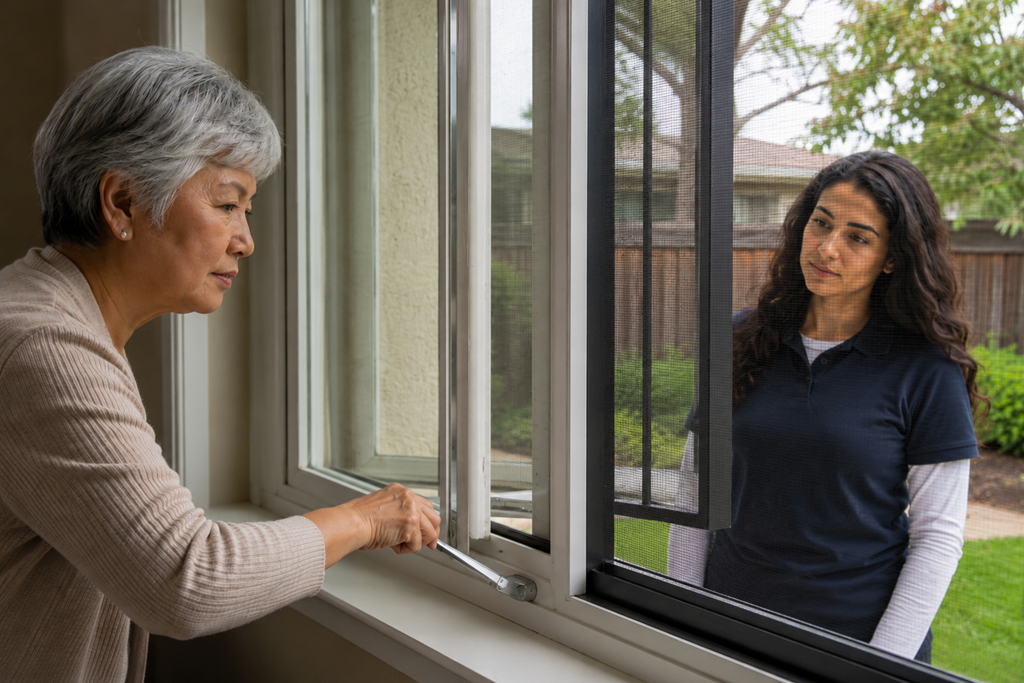
Window security screens also need to be evaluated as part of the complete opening.
A fixed window, sliding window, single-hung window, double-hung window, casement window, and awning-style window do not all interact with screens in the same way. The screen should not interfere with normal operation, handles, cranks, locks, cleaning access, or planned ventilation.
For example, a window that opens outward may require a different screen arrangement from one that slides vertically. A deep exterior recess may provide useful mounting space, while a flush or unusually trimmed opening may leave fewer practical options.
It is also worth considering whether the screen would need to open or be removed for:
- Cleaning the glass
- Reaching window hardware
- Repairing the window
- Accessing the exterior side
- Using the opening for emergency access where applicable
Security should not make an opening unnecessarily difficult to operate or maintain. Bedrooms and certain other window locations may also involve safety or emergency-access considerations that should be discussed with a qualified professional.
The Existing Frame May Be the Real Issue
Sometimes the screen is not the part creating uncertainty. The surrounding door or window frame is.
Paint can hide separation, soft wood, old fastener holes, movement, water-related deterioration, or repairs that are no longer holding firmly. Stucco edges and decorative trim may also make an opening appear more solid than the underlying mounting area actually is.
A security screen should not be treated as a way to reinforce a frame that already needs attention. The screen’s performance depends partly on the material supporting it.
Signs that the opening may need a closer evaluation include:
- Visible gaps around the frame
- Loose trim
- A door that rubs or no longer closes evenly
- Cracks near mounting areas
- Soft, compressed, or separating wood
- Movement when the existing frame is pressed
- Previous repairs that appear temporary
- Water staining near the sill or lower jamb
These conditions do not automatically mean a security screen cannot be installed. They do mean the frame’s condition should be addressed openly before the project is approved.
Custom Sizing Does Not Solve Every Conflict
Homeowners sometimes assume that a custom-made screen will automatically fit any opening.
Custom sizing can address unusual dimensions, but it cannot eliminate every limitation. A made-to-measure screen may still conflict with a door handle, window crank, porch railing, exterior light, trim detail, or restricted swing path.
The word “custom” should describe more than width and height. A thoughtful proposal may also need to account for:
- Hinge placement
- Lock and handle position
- Frame depth
- Threshold clearance
- Opening direction
- Nearby architectural features
- Access for cleaning or maintenance
- The homeowner’s normal movement through the space
When comparing proposals, ask what has actually been customized. A provider should be able to explain how the design responds to the specific opening rather than relying on the word alone.
Ventilation and Visibility Are Part of the Fit
Physical installation is only one part of the decision.
Security mesh can affect airflow, daylight, outward visibility, inward privacy, and the visual appearance of the door or window. These differences may feel more noticeable in openings used frequently for ventilation.
Sacramento-area homeowners may want screens that allow them to use natural airflow while maintaining an added barrier at the opening. However, denser materials, frame members, decorative patterns, and the screen’s color can influence how open or enclosed the result feels.
Viewing a small material sample can be helpful, but it does not always show how the full screen will look across an entire door or window.
Ask whether you can view a full-size installation, a large sample, or photographs showing the material under lighting conditions similar to your home. Consider looking through the screen from both inside and outside.
A screen fits the home more successfully when its airflow, visibility, and appearance meet the homeowner’s expectations as well as its physical dimensions.
The Same Screen May Not Suit Every Opening
Using one security-screen style throughout the property can create a consistent appearance, but consistency should not override function.
The front entrance may need comfortable daily access and a clear view of visitors. A side door may have limited swing space. A bedroom window may require different access considerations from a fixed living-room window. A window exposed to intense afternoon sun may also feel different from one located in a shaded area.
Each opening should be evaluated according to its role.
This does not necessarily mean choosing a different product for every location. It means confirming that the proposed design works appropriately at each door or window rather than assuming one successful installation can be copied everywhere.
Questions That Reveal Whether the Fit Has Been Considered
Before approving an installation, ask the provider to explain the proposed screen in relation to the actual opening.
Useful questions include:
- Where will the screen frame be attached?
- Does the existing frame need repair or preparation?
- How will the screen interact with the current door or window hardware?
- What direction will it open, and what will be in its swing path?
- Will it affect cleaning, ventilation, or maintenance access?
- Can the handle and lock be used comfortably with the primary door open?
- What happens if the door or window frame shifts after installation?
- Are there alternative screen styles that would work better for this opening?
The quality of the explanation matters. Clear answers should connect the product to the home rather than focusing only on general product features.
A Quick Measurement Can Miss Everyday Problems
Several misunderstandings can make the decision harder than it needs to be.
One is assuming that a screen fits because a standard or custom size is available. Another is choosing from photographs without considering the mounting surface or swing path.
Homeowners may also focus heavily on mesh strength or lock features while giving less attention to the condition of the frame supporting those components.
A rushed evaluation can produce a screen that looks appropriate when closed but feels awkward whenever it is opened.
The better approach is to slow the decision down long enough to examine:
- The opening
- The surrounding structure
- The nearby space
- The existing hardware
- The screen’s movement
- The way people use the area
These elements work together. A weakness or conflict in one area can affect the experience of the entire installation.
A Good Fit Should Feel Natural After Installation
The best security screen is not merely one that can be attached to the property. It is one that works securely and predictably without turning an ordinary door or window into a daily inconvenience.
Before hiring a local professional, make sure the discussion includes more than measurements and product appearance. Ask how the screen will attach, move, lock, ventilate, and interact with the existing opening.
When those questions are answered before the screen is ordered, Sacramento-area homeowners are better positioned to choose an installation that supports both security and practical everyday use.