Deciding whether you need pool cleaning, a specific repair, or ongoing full pool service usually comes down to the type of problem you are seeing and whether it keeps returning. Routine debris, light surface buildup, or ordinary chemical balancing may point to cleaning. A single equipment or structural issue may call for repair. Repeated water-quality, circulation, or maintenance problems often suggest that broader service is worth discussing.
The confusing part is that several pool problems can look similar at first. Cloudy water might reflect a cleaning or water-balance issue, but it can also be connected to poor circulation or malfunctioning equipment. Debris may simply need to be removed, or it may keep accumulating because a cleaner, skimmer, or circulation component is not working as expected.
The condition of the pool on one afternoon does not always reveal the full service need. The pattern behind the problem usually matters more than the appearance alone.
Start With the Pattern, Not Just the Symptom
A pool that looks untidy after wind, yard work, or heavy use may only need routine cleaning. A pool that repeatedly becomes cloudy, develops buildup, or collects debris soon after being serviced may have a broader maintenance or equipment issue.
Before deciding what type of provider to contact, think about three things:
- Is this a routine condition or an unusual change?
- Is the problem limited to one identifiable part of the pool?
- Does the same issue return after cleaning or temporary adjustments?
These questions help separate a surface-level maintenance need from a problem that may require diagnosis or ongoing attention.
This distinction matters for Sacramento-area homeowners because sun exposure, dry conditions, wind-blown debris, landscaping, pool use, and seasonal weather changes can all affect how a pool looks from one week to another. A temporary change does not automatically mean something is broken, but a repeating pattern should not be dismissed as ordinary debris.
Pool Cleaning Fits Routine, Surface-Level Care
Pool cleaning is generally the most appropriate starting point when the pool is functioning normally but needs ordinary upkeep.
Common examples include:
- Leaves, insects, pollen, or other floating debris
- Dirt or light sediment on pool surfaces
- A waterline that needs routine attention
- Baskets that need to be emptied
- Water that needs ordinary testing and balancing
- A pool that has gone longer than usual between cleanings
The key distinction is that the pool’s major systems still appear to be doing their jobs. Water is circulating, equipment is operating normally, and the condition improves after routine maintenance.
A cleaning visit may also give the service professional an opportunity to notice something that deserves a closer look. For example, the person cleaning the pool may observe weak circulation, an unusual equipment sound, a damaged cleaner hose, or water collecting around the equipment pad.
That does not necessarily mean you need comprehensive service. It simply means the original cleaning request may uncover a separate repair question.
Pool Repair Fits a Defined Failure or Malfunction
Repair is usually the better category when there is a specific component, surface, or system that is damaged or not functioning properly.
Examples may include:
- A pump that will not start or repeatedly shuts off
- Water leaking around pool equipment
- A cleaner that no longer moves or operates correctly
- Weak or irregular circulation
- Damaged lights, fittings, tiles, or visible pool surfaces
- Unusual noises coming from equipment
- A filter, heater, control, or other component that is not working as expected
A repair visit is different from routine cleaning because the main goal is to identify and address a particular failure. Cleaning the pool may improve its appearance, but it will not correct equipment that is leaking, damaged, or unable to perform its intended function.
It is also possible for a repair problem to create what looks like a cleaning problem. Weak circulation, for example, may contribute to debris collecting in certain areas or make water conditions harder to maintain.
This is why repeatedly scheduling cleanings without investigating the underlying pattern can leave a homeowner paying for temporary improvement without resolving the actual concern.
Full Pool Service Makes Sense When the Needs Are Connected
“Full pool service” can mean different things depending on the provider, so it is important to ask what is included. In general, it refers to ongoing care that may combine cleaning, water testing and balancing, equipment observation, routine maintenance, and communication about developing problems.
Broader service may be worth discussing when:
- The pool requires frequent attention to stay usable
- Several maintenance issues are happening at the same time
- Water conditions repeatedly change between cleanings
- The homeowner does not want to manage testing, debris removal, and routine equipment observation separately
- Small equipment concerns are being noticed but not consistently followed
- Previous one-time visits have not created lasting improvement
- The pool’s condition is difficult to monitor because of travel, rental use, a busy household, or limited availability
Full service does not necessarily mean every repair is included. A regular service provider may identify a malfunction and recommend a separate repair visit or specialist.
The value of ongoing service is often continuity. Instead of evaluating the pool only when something looks wrong, the same provider can observe patterns over time and explain when a change appears routine, unusual, or worth investigating further.
The Same Pool Problem Can Lead to Different Decisions
Cloudy water is a useful example of why the service category is not always obvious.
If the water became cloudy after unusually heavy use and returns to normal with routine maintenance, cleaning and balancing may be enough.
If the water stays cloudy because circulation equipment is not operating properly, a repair may be needed.
If cloudiness, debris, buildup, and inconsistent equipment performance continue appearing together, broader ongoing service may be more appropriate than repeatedly addressing each symptom separately.
The same reasoning applies to debris. Leaves on the surface after a windy day are different from debris that repeatedly collects in the same area because circulation is weak or a cleaner is not operating correctly.
The goal is not to diagnose the pool yourself. It is to give the provider enough context to determine whether you are requesting appearance-focused maintenance, investigation of a defined malfunction, or continuing management of several connected needs.
One Bad-Looking Day Does Not Always Reveal the Scope
Homeowners sometimes assume that a badly neglected-looking pool automatically requires full service. In other cases, they assume that a quick cleaning will solve any visible problem.
Both assumptions can lead to mismatched expectations.
A pool covered with leaves may still have fully functioning equipment and only need cleaning. A pool that looks relatively clean may have a leak, failing component, or circulation problem that requires repair.
Appearance is useful evidence, but it is not the entire diagnosis.
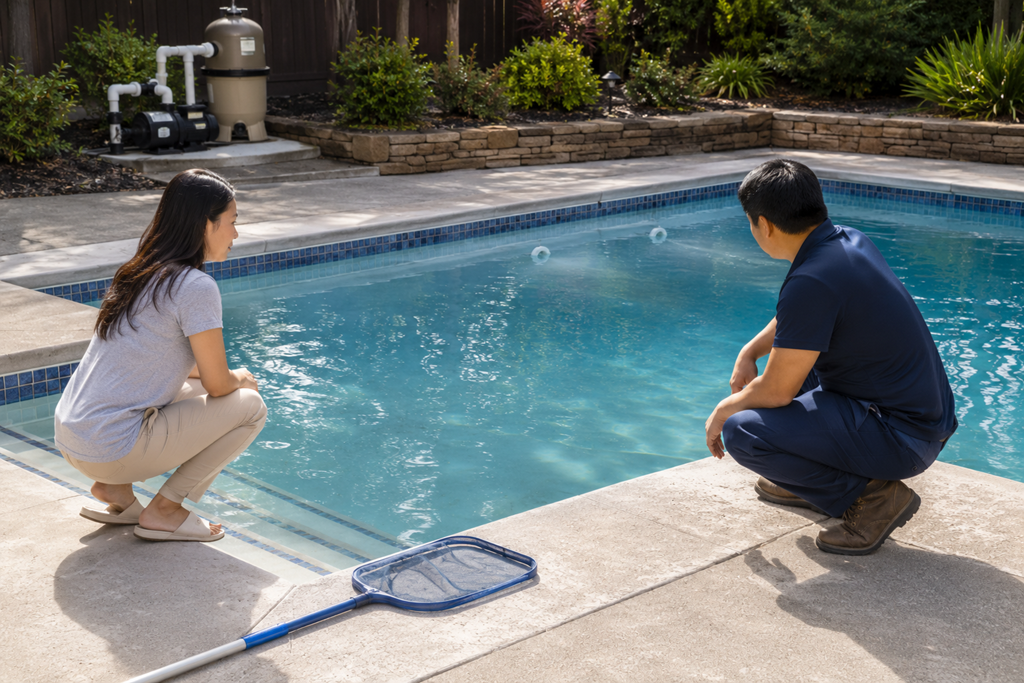
A better approach is to describe what changed, how long it has been happening, and whether the problem returns after the pool is cleaned. Photos of the pool and equipment area may also help a local pool professional understand the situation before scheduling the most appropriate type of visit.
Questions To Ask Before Scheduling
A brief conversation with the provider can help prevent confusion about the appointment.
Consider asking:
- Does this sound like a cleaning visit or a diagnostic repair visit?
- What is included in your regular pool service?
- Will the technician evaluate equipment during the appointment?
- Are repairs quoted separately from cleaning or maintenance?
- What information or photos would help you determine the right visit?
- What happens if the technician discovers a different problem?
Clear answers are especially important when comparing Sacramento-area pool service providers. One company’s “full service” may include tasks or observations that another provider treats as separate services.
Ask for the scope in plain language rather than relying only on the service name.
Choose the Service That Matches the Ongoing Need
Pool cleaning is generally appropriate for routine debris, surface care, and ordinary water maintenance. Pool repair is more appropriate when a particular component or part of the pool is damaged or malfunctioning. Full pool service is worth discussing when maintenance needs are recurring, connected, or difficult to manage through occasional visits.
You do not need to identify the technical cause before contacting a professional. You only need to explain what you are seeing, when it started, whether it keeps returning, and what has already been tried.
That information gives a local pool professional a better chance of recommending the right starting point—and gives you a clearer basis for comparing the scope, expectations, and cost of the service being offered.