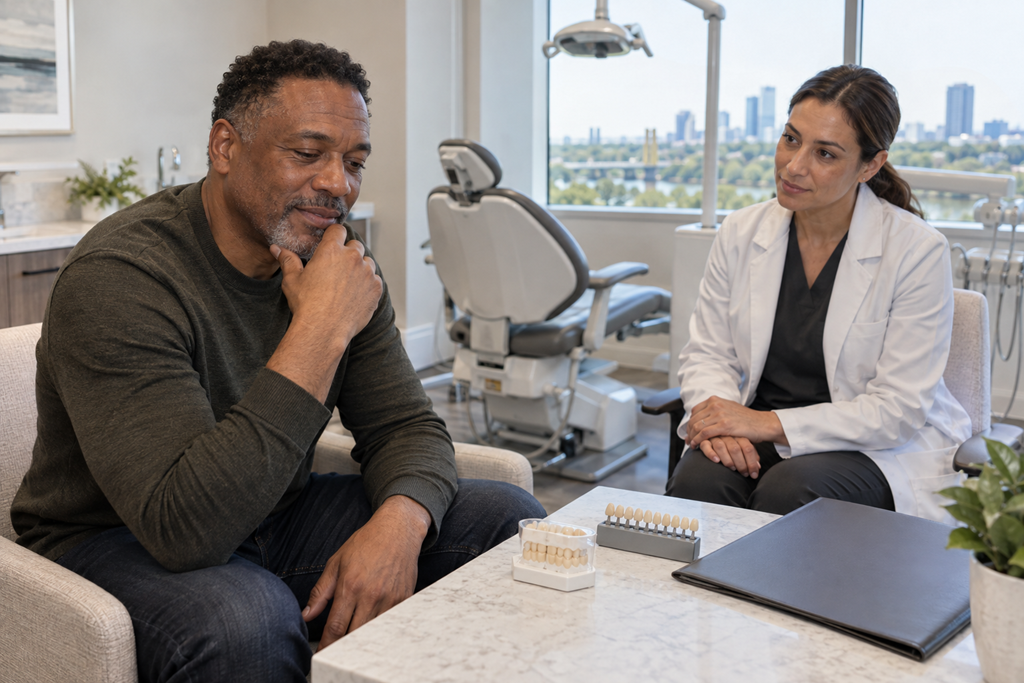
Evaluating a cosmetic dentist before starting treatment is less about finding the most impressive website or the biggest list of services and more about understanding how clearly the dentist explains your options, expectations, costs, limitations, and next steps. A good evaluation gives you enough information to decide whether the proposed treatment makes sense for your goals before you commit.
That can be harder than it sounds. Cosmetic dentistry often involves appearance, personal preferences, and expectations that may be difficult to describe precisely. A consultation can also include unfamiliar treatment terms, photos, examples, timelines, and cost discussions all at once. The goal is not to become an expert yourself. It is to determine whether you feel adequately informed about what is being proposed and why.
For Sacramento-area patients comparing cosmetic dentists, paying attention to the quality of that conversation can be more useful than focusing only on advertising, office appearance, or a long menu of available services.
Start With Whether the Dentist Understands Your Goals
A cosmetic dentistry consultation should not feel as though the treatment decision was made before the conversation began.
Your reasons for considering cosmetic treatment may be very specific. You might be concerned about the appearance of one tooth, several teeth, the color of your smile, an older restoration, or another aesthetic issue you would like to discuss.
What matters is whether the dentist takes enough time to understand what you are hoping to change before recommending an approach.
Listen for whether the conversation connects your concerns to the options being discussed. A dentist may offer many cosmetic services, but the important question is not how many services are available. It is whether the recommendation being discussed is appropriate to explore for your individual goals and circumstances.
Only a qualified dental professional who has evaluated you can determine candidacy, treatment considerations, risks, and appropriate options for your specific situation.
Look Beyond Before-And-After Photos
Before-and-after photographs can help you understand the type of cosmetic work a dentist performs, but photographs should not carry the entire decision.
Every patient starts with different dental conditions, preferences, and treatment considerations. A photograph showing an attractive result for someone else does not establish what your own result would look like.
Instead of asking only, “Do I like these photos?” consider what the dentist explains alongside them.
Are the examples being used to help explain possibilities, or do they seem to be presented as a promise of what you will receive?
A useful conversation keeps the focus on your situation rather than encouraging you to expect another patient's result.
Notice How Clearly Your Options Are Explained
You should not have to understand dental terminology to have a useful conversation about cosmetic treatment.
When more than one approach could reasonably be discussed, the dentist should be able to explain the differences in language you can follow. That may include what each option is intended to address, what the treatment process generally involves, and what limitations or ongoing considerations may apply.
You are evaluating more than the treatment itself. You are also evaluating how information is communicated.
If an explanation feels too technical, asking for a simpler explanation is reasonable. If important details remain unclear after you ask questions, that is useful information to have before making a decision.
The strongest consultation is not necessarily the one with the longest explanation. It is the one that leaves you understanding the proposal well enough to make an informed choice.
Realistic Expectations Matter As Much As Treatment Options
Cosmetic dentistry can involve highly personal expectations.
Two patients may describe the same desired change very differently. One person may prefer a subtle result, while another may have a different aesthetic goal.
That makes expectation-setting especially important.
Pay attention to how the dentist discusses what treatment is intended to accomplish and what cannot be predicted or guaranteed. A thoughtful discussion should leave room for limitations, individual differences, and questions rather than creating the impression that a particular appearance is assured.
If your expectations and the dentist's description of the likely treatment goal do not seem aligned, that is worth clarifying before proceeding.
Understand What You Are Agreeing To Before Treatment Begins
A cosmetic treatment decision involves more than deciding whether you like the proposed appearance.
Before committing, you should understand the general treatment plan being discussed, what the process may involve, and what financial commitments are associated with it.
Depending on the proposed treatment, useful topics to clarify may include the expected number or sequence of appointments, what is included in the quoted fee, whether additional treatment could change the plan, and what follow-up or maintenance considerations should be discussed.
This does not mean every detail can always be predicted in advance. Individual circumstances can affect treatment.
The goal is to understand what is currently known, what may vary, and how unexpected changes would be communicated to you.
Communication Style Is Part Of The Evaluation
Technical qualifications and experience matter, but so does your ability to communicate comfortably with the dentist and dental team.
Cosmetic treatment may involve multiple conversations about preferences, expectations, timing, and changes along the way. If you already feel reluctant to ask questions during the initial consultation, consider whether that communication dynamic will work for you throughout the process.
Notice what happens when you raise a concern.
Does the dentist answer the question you actually asked? Are uncertainties acknowledged? Do you have enough opportunity to think through the explanation?
You do not need every conversation to be lengthy. You do need to feel that reasonable questions can be discussed without making the appointment feel unnecessarily pressured.
A Few Questions Can Reveal A Lot About The Consultation
You do not need a long interrogation or a complicated checklist. A few focused questions can help you understand how the dentist approaches your situation.
Consider asking:
- What are the main options you would discuss for the result I am hoping to achieve?
- What are the important differences between those options?
- What limitations or tradeoffs should I understand?
- What would the treatment process generally involve?
- What costs are included in the proposed plan?
- What might cause the plan, timing, or cost to change?
- What ongoing care or maintenance should I understand?
- What questions do patients sometimes wish they had asked before starting?
The answers matter, but so does the way those answers are provided.
A dentist who explains the reasoning behind a recommendation gives you more useful information than one who simply tells you which treatment to choose.
Be Careful When The Decision Starts Feeling Rushed
It can be easy to move quickly when you are excited about a possible cosmetic change.
That excitement does not mean you need to make an immediate commitment.
Be cautious when important questions remain unanswered, when limitations receive little attention, when the conversation focuses heavily on an idealized result, or when you feel pushed toward scheduling before you understand the proposal.
That does not automatically mean a provider is unsuitable. It does mean you may need more information before deciding.
Taking enough time to understand the proposed treatment can help separate enthusiasm about the possible result from confidence in the provider and treatment plan.
You Are Evaluating The Fit, Not Searching For Perfection
There may not be one cosmetic dentist who is objectively right for every patient.
The better question is whether the provider appears to be a good fit for your particular goals, expectations, communication preferences, and treatment considerations.
A polished office, positive reviews, sophisticated technology, and impressive photographs can all contribute information. None replaces a clear discussion about your own situation.
Before starting cosmetic dental treatment in the Sacramento area, give yourself enough room to understand what is being proposed, why it is being recommended, what expectations are realistic, and what questions remain.
You do not have to know everything about cosmetic dentistry to evaluate a consultation well. You simply need enough understandable information to decide whether you are comfortable taking the next step with that provider.